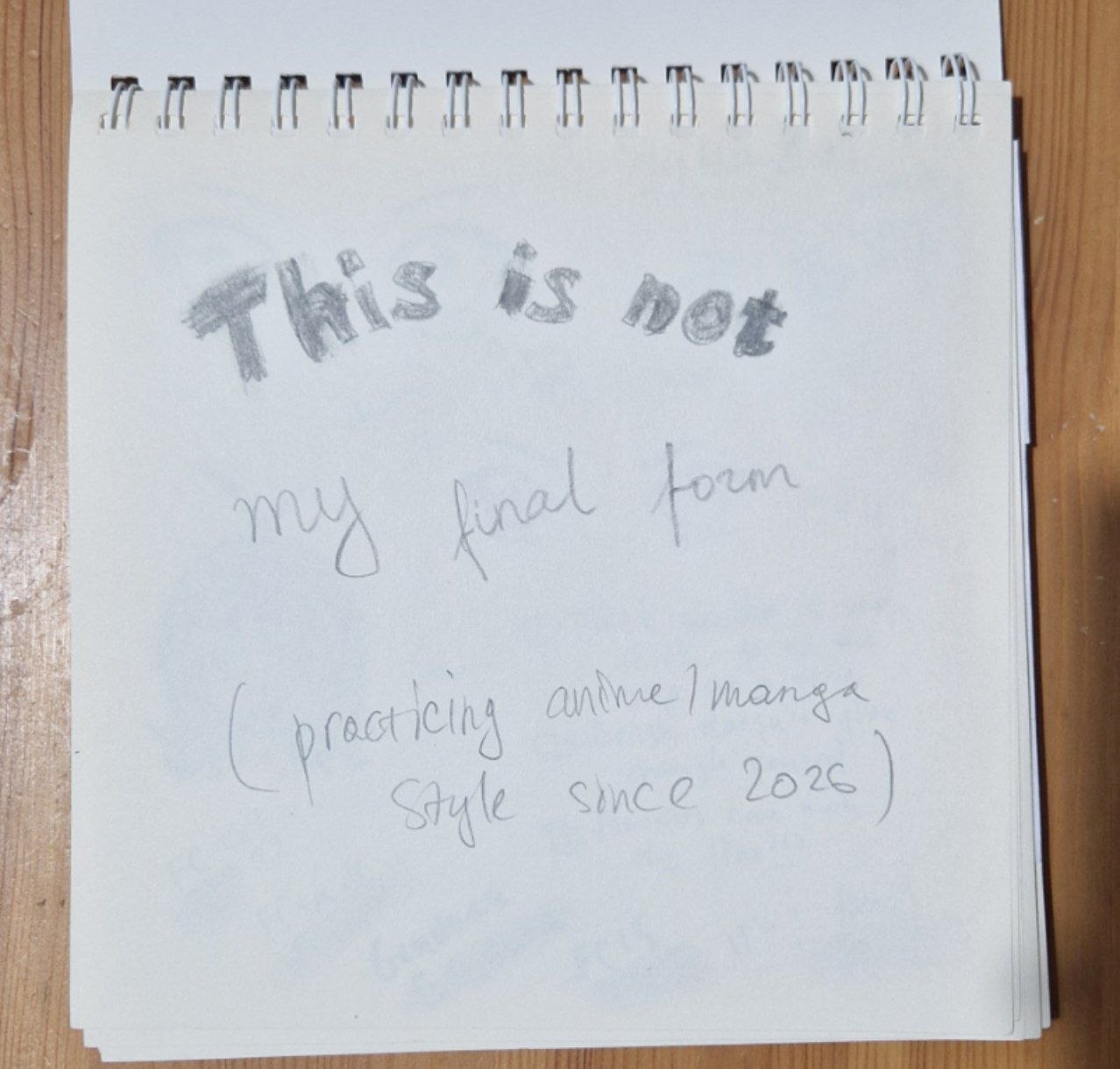
This is not my final form / This is not my last sketchbook
Notes on getting back to drawing as a beginner, by Nina Kalinina, 12th of July 2026
I’ve wanted to draw for over a decade, but couldn’t. In early 2025, after merely 40 hours of practising, I went from scribbles to being able to complete a self-portrait with considerable likeness. Then I wrote about my first experiences and my first complete digital illustration.
And then... And then life happened. I basically stopped drawing between August 2025 and May 2026. Not that I didn't want to pursue my goals of improving my skills, making art for games, or drawing comics; I just couldn’t stick with them. In the meantime, my awkward attempts at drawing felt like I was repeating myself and not learning anything. Were my skills plateauing? So early in my artistic journey? Cries.
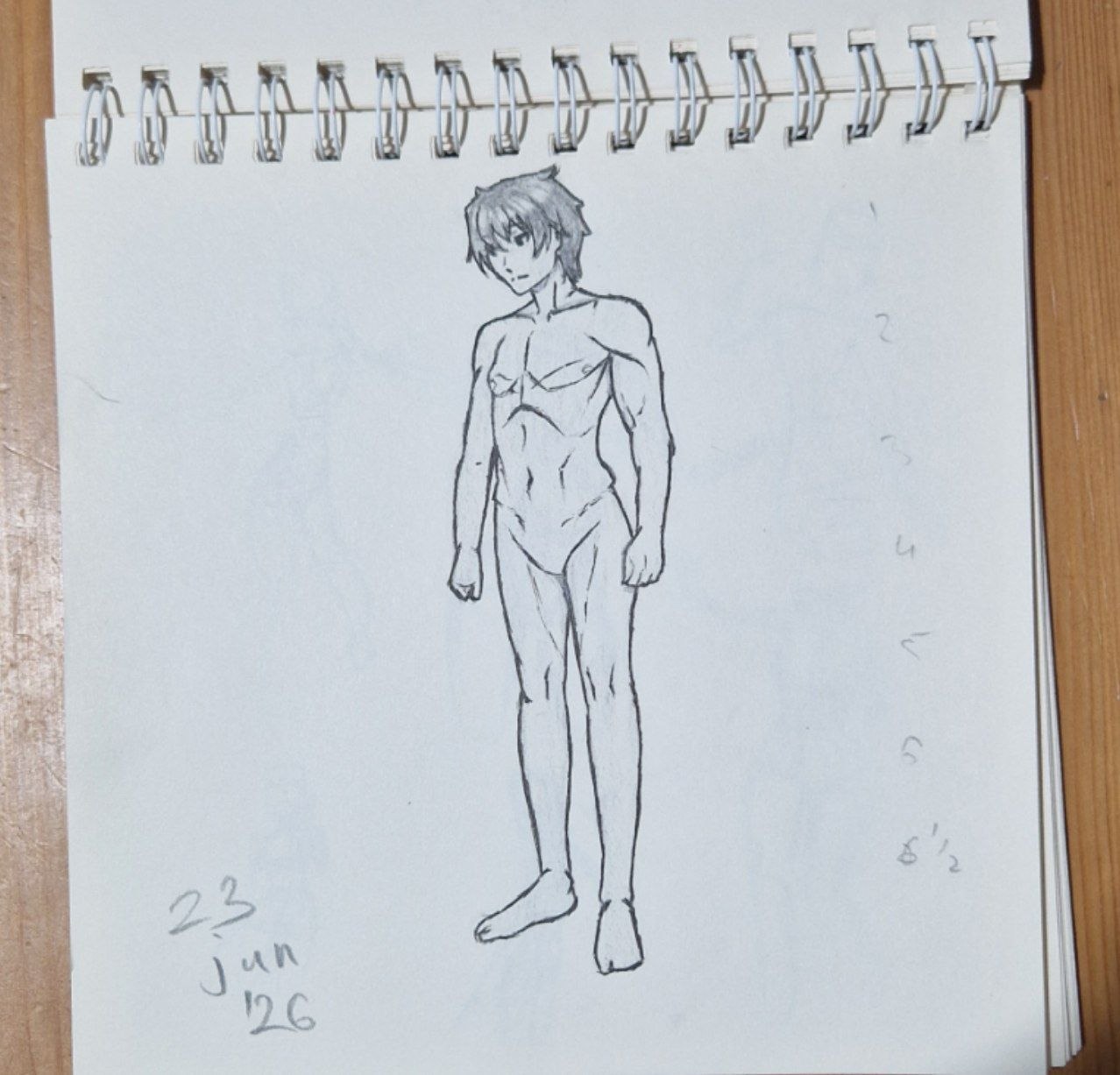
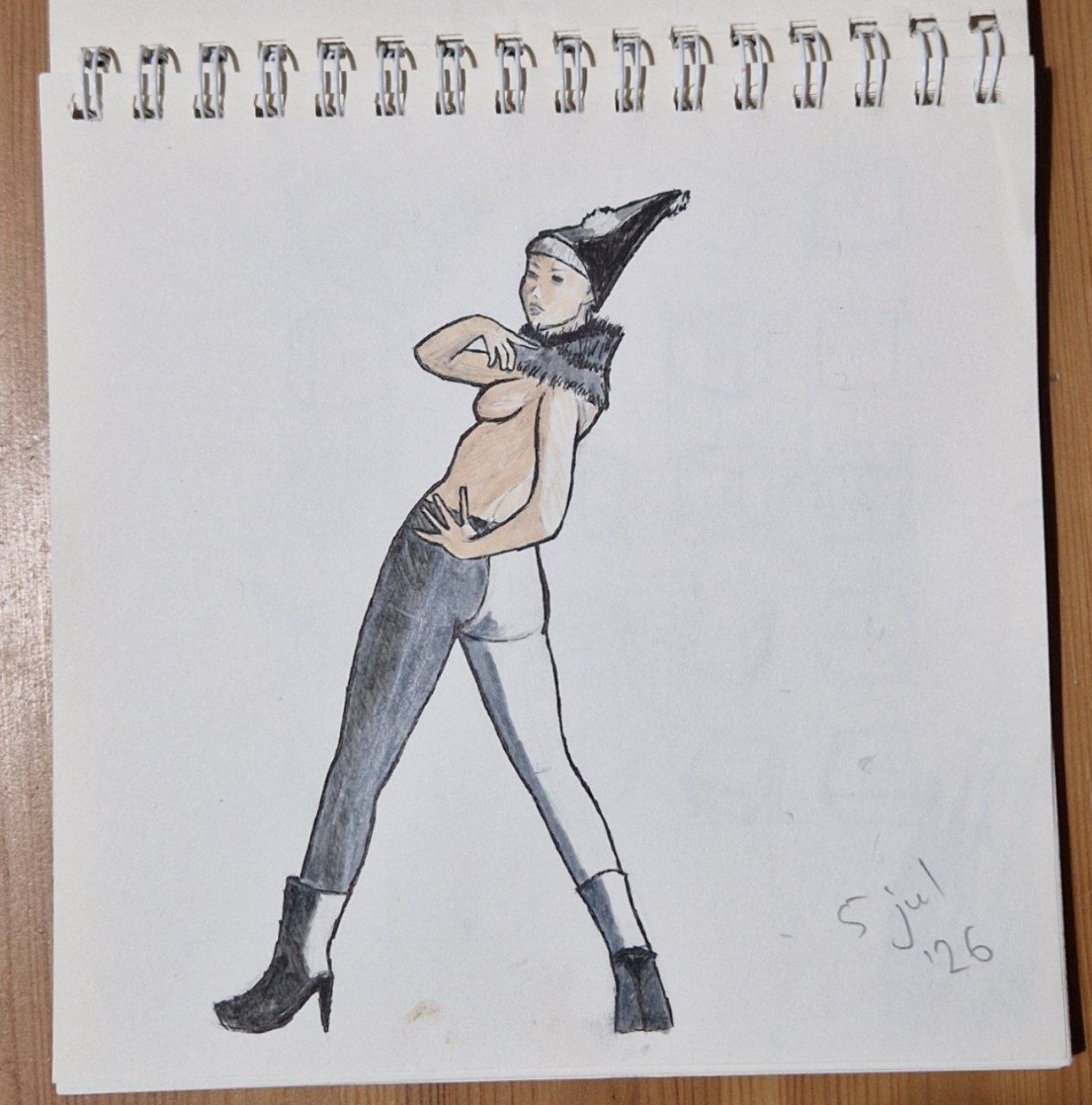
A famous illustrator I follow on YouTube mentioned in one of his videos that filling out a sketchbook can help to unblock one’s growth. I had a sketchbook lying around that seemed oddly appropriate for such a task, so I started drawing in it with the intention of filling it out one day. Such a day came after roughly 60 hours of drawing, and in those 60 hours, I’ve learned a lot. Now I can draw sketches like this one based on photographs:
If you are an experienced artist, you probably won’t find this note interesting. But I think fellow beginners can get a few insights from it; not many people post their failed sketches and projects. Maybe some art educators find value in it, too. I will be very happy to hear from you! Please direct your comments to this Mastodon thread (you don't have to use the same Mastodon server).
Note: this note contains nude/semi-nude drawings and might be "not safe for work". If your workplace is not okay with you looking at studies of human anatomy, please accept my condolences.
Note: this series is not a substitute for an art teacher. Quite on the contrary, if you want to learn how to draw, seek out professional guidance (including free courses and tutorials).
Highlights, insights, TL;DR
On digital vs traditional
I am blessed to have a choice between a screen drawing tablet, a screen-less digital drawing tablet and an assortment of traditional drawing tools. I discovered that it is far easier for me to have a habit of drawing when I am using traditional drawing tools (pencil and paper).
I attribute this to the time cost of the setup. I do not have a fixed drawing workstation, so it takes me some 10 minutes to clean up the desk, put a tablet there, figure out the screen resolution issues, and so on. This is simply too long for a 30-minute drawing session.
Or maybe I just like the smell of pencils and the feel of the kneaded eraser.
On studying human body
You might remember from my previous post that it is important to have references (especially photo references) for illustrations featuring humans, as good illustrations often require complex poses and unusual angles. So, I kept trying to draw sketches of humans, but… Complex poses never looked right.
I think it was wrong of me to continue stubbornly drawing humans the same way even after I realised that it doesn't work. My ideas of what human bodies are made of were, well, wildly inaccurate, and it was showing in my sketches. I was looking at the references, but I couldn't see important things on them. A large part of my recent practice was focused on (instructed!) studies of human anatomy and gesture drawing, and it is thanks to this organised, structured process that I managed to improve.
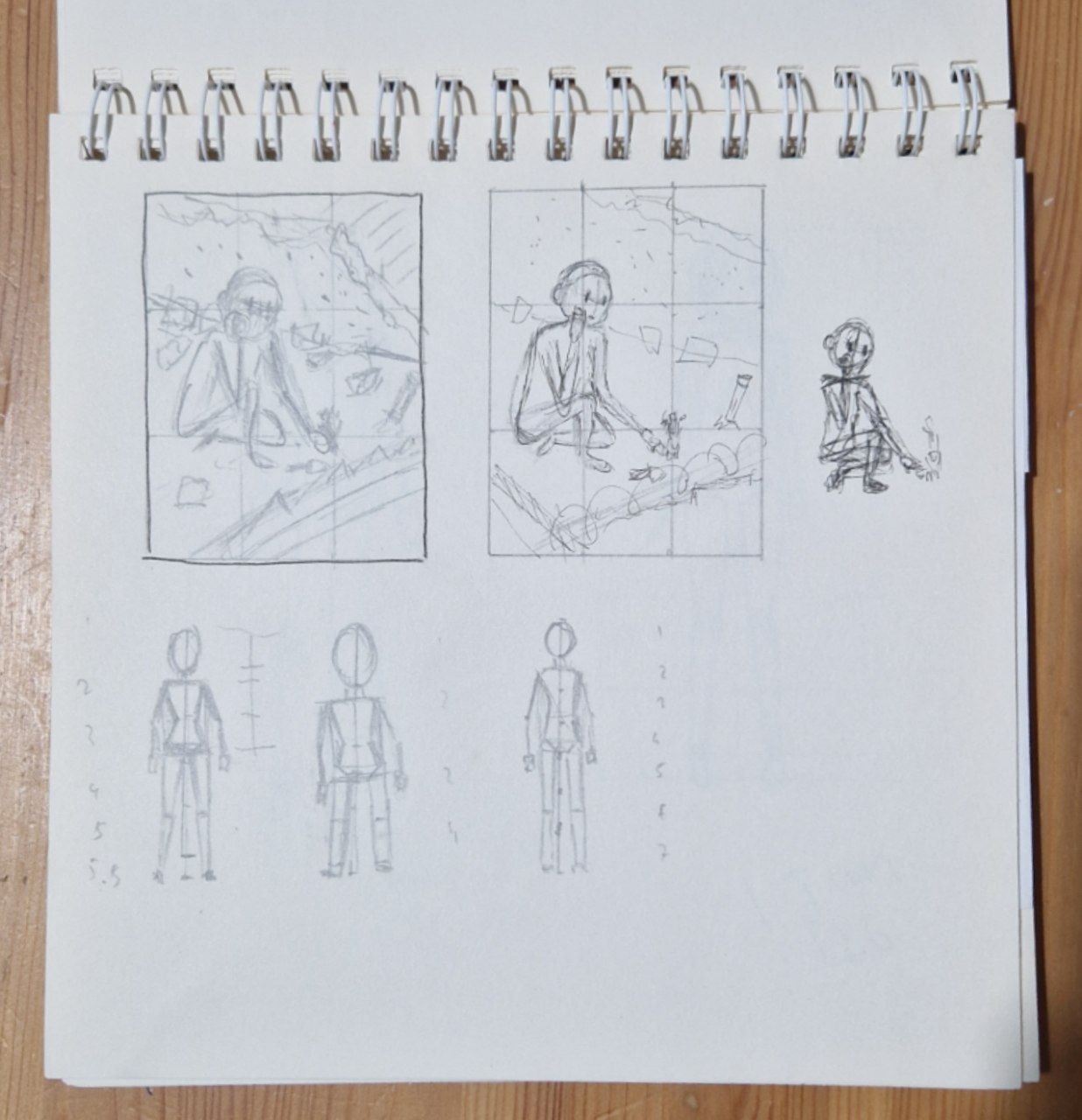
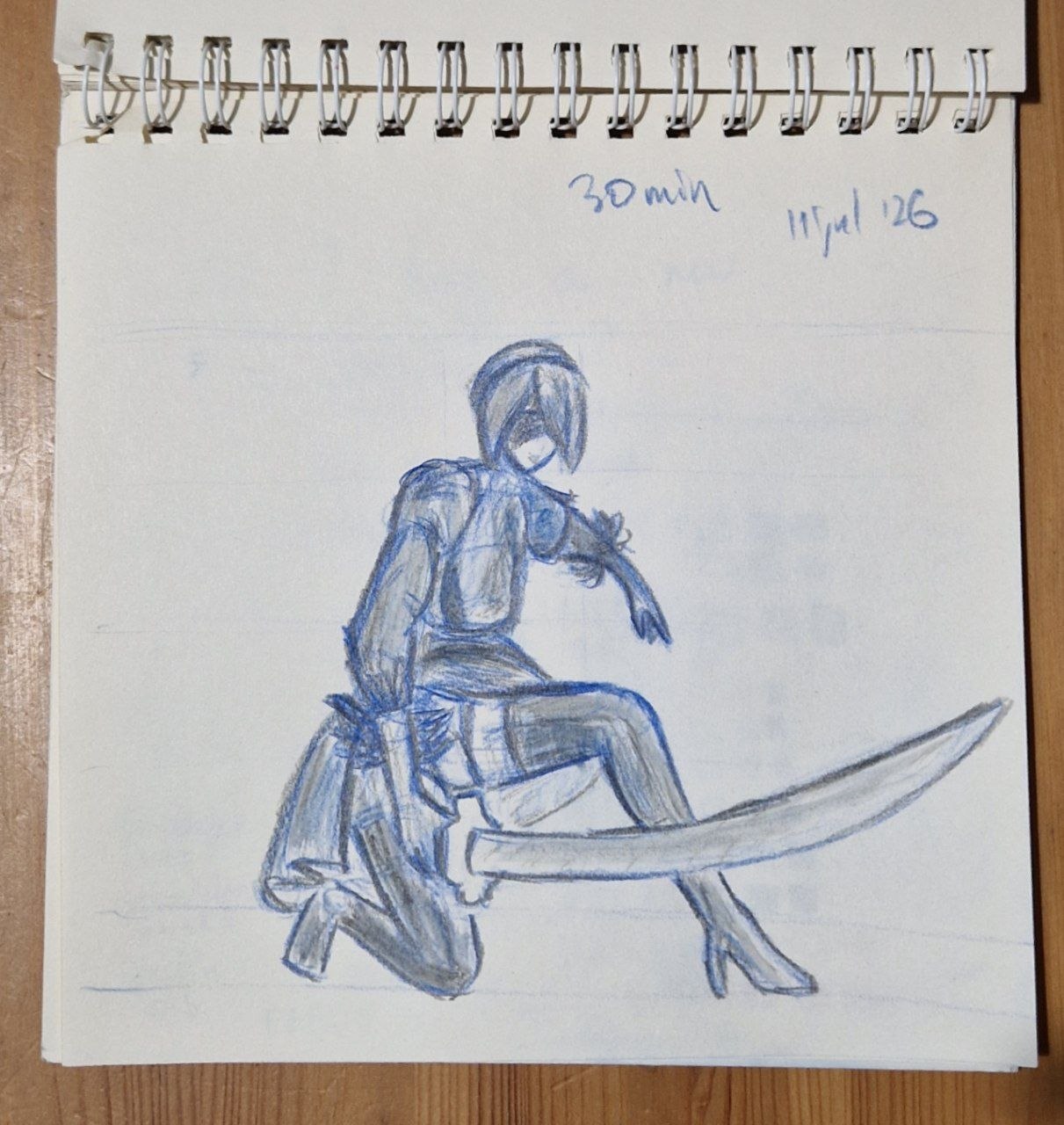
Compare 30 minutes spent on drawing while looking at a photographic reference; 30th of May 2026 versus 11th of July 2026. The latest sketch is not good (I couldn't figure out the position of the hips), but it is better. This time you probably can even tell who I tried to draw.
On enjoying the process
On one of the practice days, I’ve had a new, interesting experience: I wanted to draw because I knew I’d enjoy drawing as a process.
Obviously, I must have experienced this as a child, but I think I forgot. Obviously, I have experienced it many times with other things, but I didn’t even think this feeling could apply to drawing. And that’s wild.
I’ve experienced pleasant feelings from drawing coming from the sense of flow or accomplishment before, but it was always either “I want to draw because I want to get better at drawing” or “I want to draw because I want to express/draw a specific thing”. On that day, for the first time in probably 25 to 30 years, I wanted to draw just because I wanted to draw.
It’s a bizarre experience, precisely because it’s that simple.
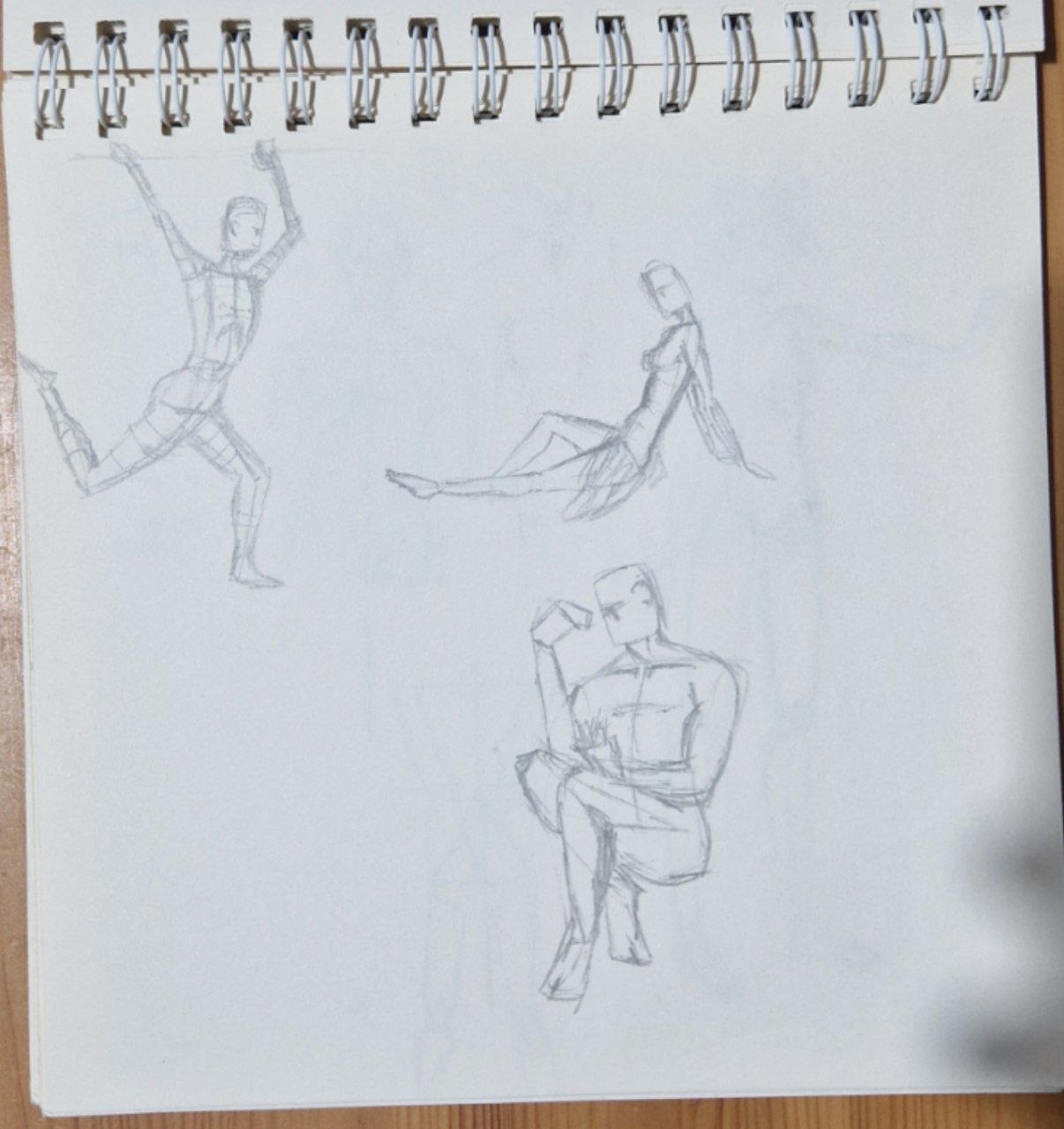
I think it was embracing gesture drawing and related sketching practices that has helped me to rediscover this feeling.
"I know" versus "I can"
One of the parts of studying human anatomy that I find interesting is the clear difference between "I know" and "I can". As a software engineer, the closest analogy for this difference I can offer is the difference between "I can understand this code" and "I can write code like this without any hints".
When I started working on the sketchbook, I knew about human body proportions. That a body can be measured in the number of heads, and that certain body parts are supposed to be connected in a certain way. When I followed the human drawing guides, I managed to replicate a human figure more or less reliably (sometimes with too many or too few fingers, LOL).
But it took some time until this knowledge converted into an ability to draw human bodies from photographic references. Until it did, I'd regularly draw bodies with wildly wrong proportions, or bodies that had a "torso" part instead of "chest" and "hips" (and such a fundamental mistake makes it hard to continue drawing the body correctly). Heck, I still make those mistakes (see above), but I make fewer of such mistakes even when I don't follow a "human body drawing checklist".
On perspective and drawing boxes
Most drawing courses say, time and again, that the knowledge of 3-point perspective is important for many types of drawing and illustration. Some art instructors could be very insistent on making students draw boxes. “Why don’t you get it? You need to be able to draw boxes in perspective”. But drawing boxes is boooooring.
I picked up a bit of knowledge about perspective from my drawing course (“The art and science of drawing”) back in 2025. Back then, I drew a few pages of great boxes and, satisfied with myself, decided that I wouldn’t need to worry about boxes ever again.
Fast forward to a couple of weeks ago. I started a course on drawing anime faces from different angles, and one of the first things it said was “draw a box; that’d be a placeholder for the head”. Thanks to my familiarity with what makes a box a decent box, I realised that the placeholder boxes I started to draw were good for nothing. The problem was: I forgot how to draw a box.
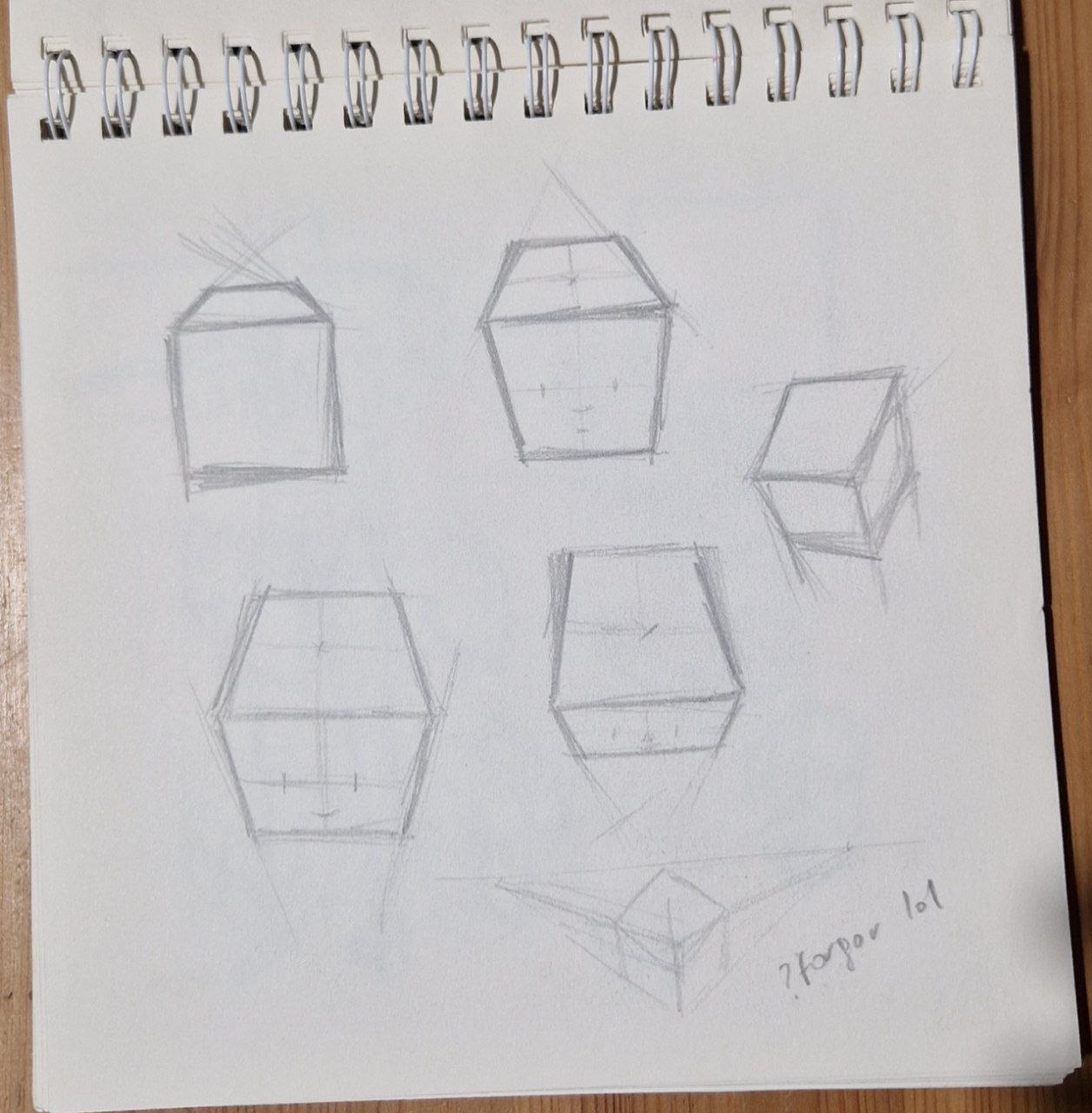
This is a hidden danger of “know vs can”, I guess. I did not have the ability to just draw the boxes, and when I forgot how to do it, I felt completely stumped. So I went and learned more about drawing boxes. I don’t think I can draw a good box just yet, but I’m a bit more confident in my skill. Bonus point? It was far less boring because I knew why I would want to draw a box.
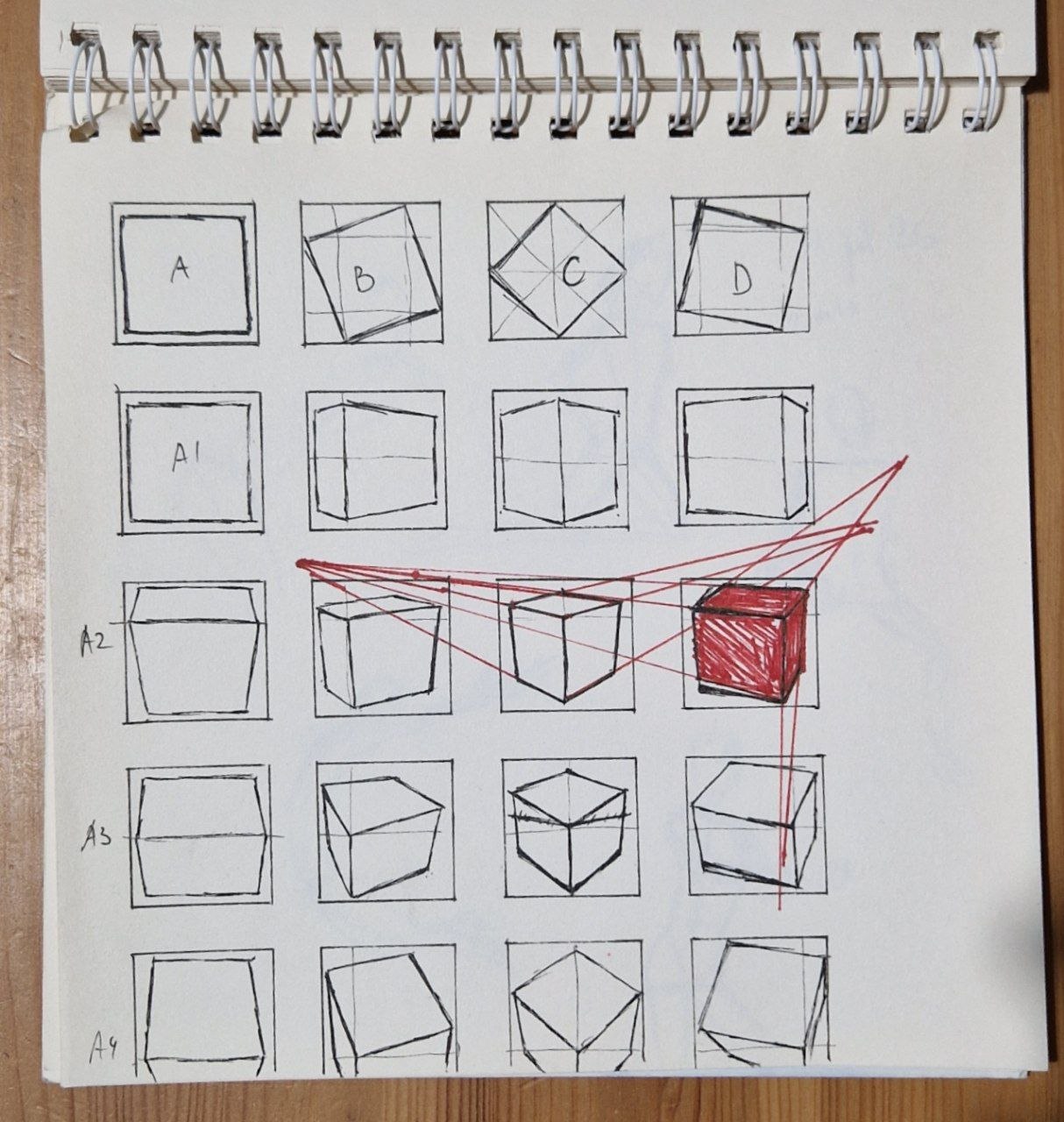
Note: People aware of "drawabox" exercises probably noticed that I am doing the exercises "wrong". This is a semi-conscious choice.
The sketchbook
In this section, I will flip through the pages of the sketchbook with you. Most of the pages were filled out in chronological order, and thus appear here in a near-chronological order, too. It took me 49 days to fill out ~50 pages of the sketchbook. I have not been drawing every day, but I tried to draw at least for 30 minutes every 2-3 days, and on days after long breaks I'd put more time in. Feel free to scroll through or skip completely (I mean, who am I to tell you how to spend your free time?)
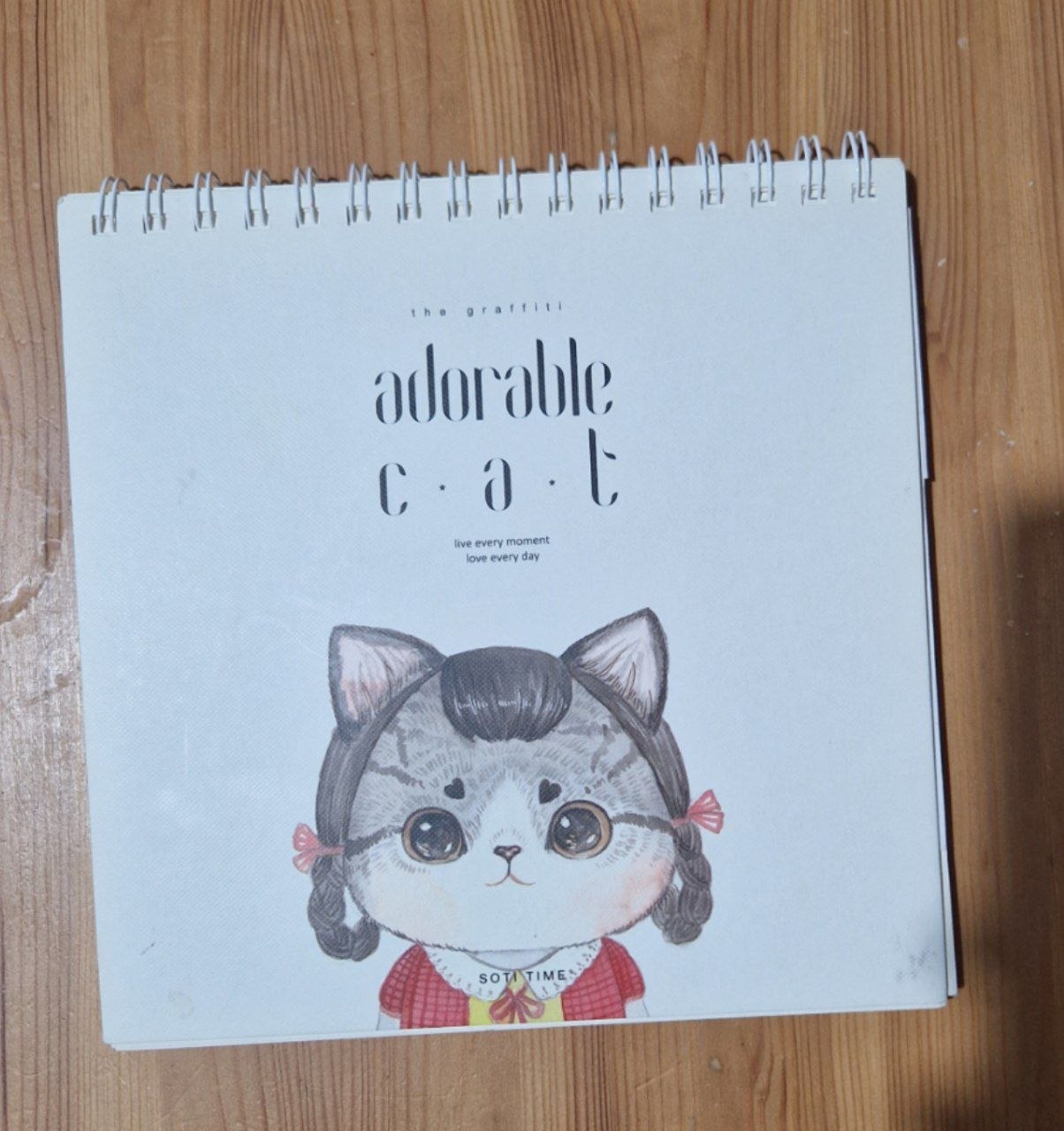
If I am not misremembering, I got this sketchbook from my ex, who received it as a gift from my other ex (It's complicated). I suspect that the aspect ratio and the dimensions of the paper were major reasons for this sketchbook to stay blank for nearly a decade. Simply put, it is difficult to draw if your sketchbook is too small or too large.
Thrashing around
As the cover page says, I was intending to use this sketchbook to practice anime/manga style. I started with doing some exercises from a cheap "How to draw manga" book, trying to apply them to my own illustrations.
On the very first page, I've discovered the limitations of my tools: the paper is not great for inking or markers.
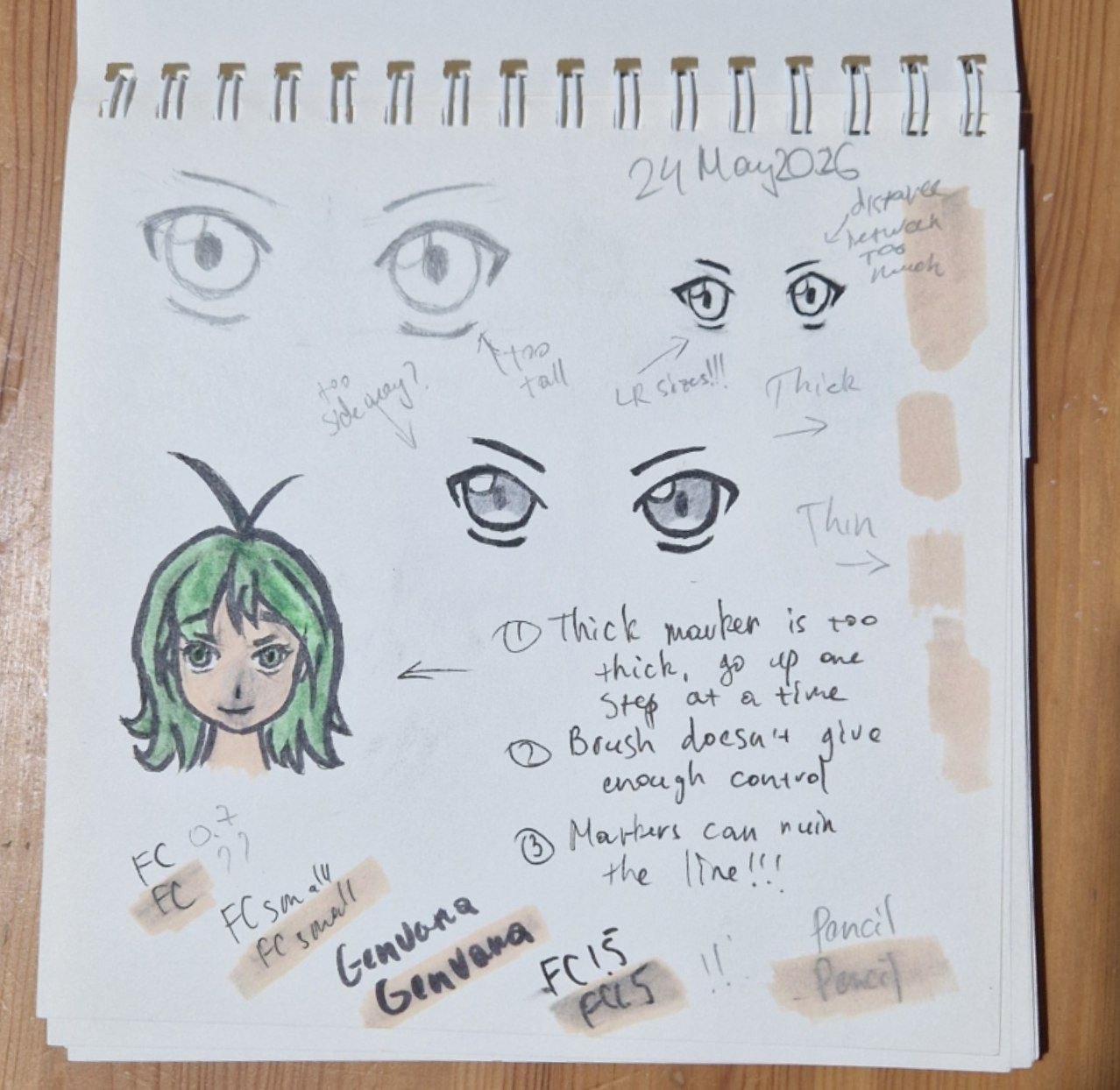
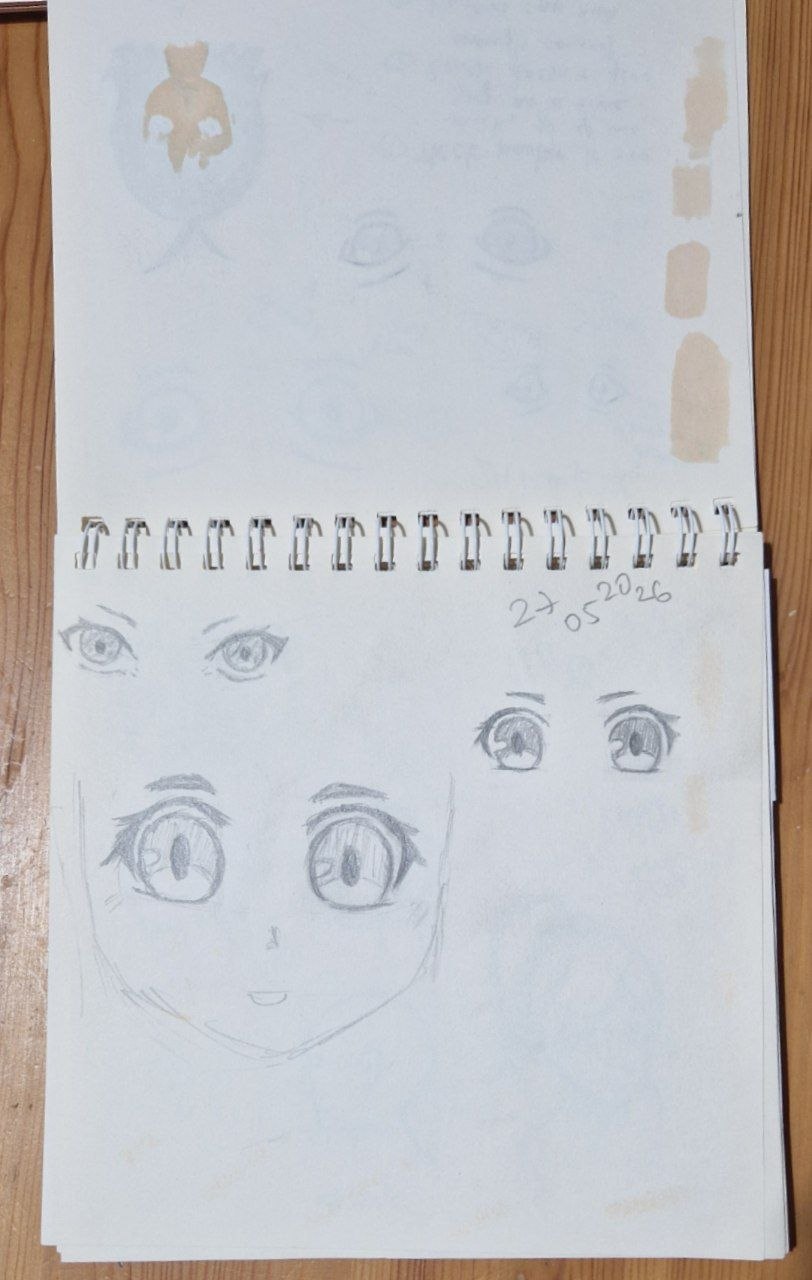
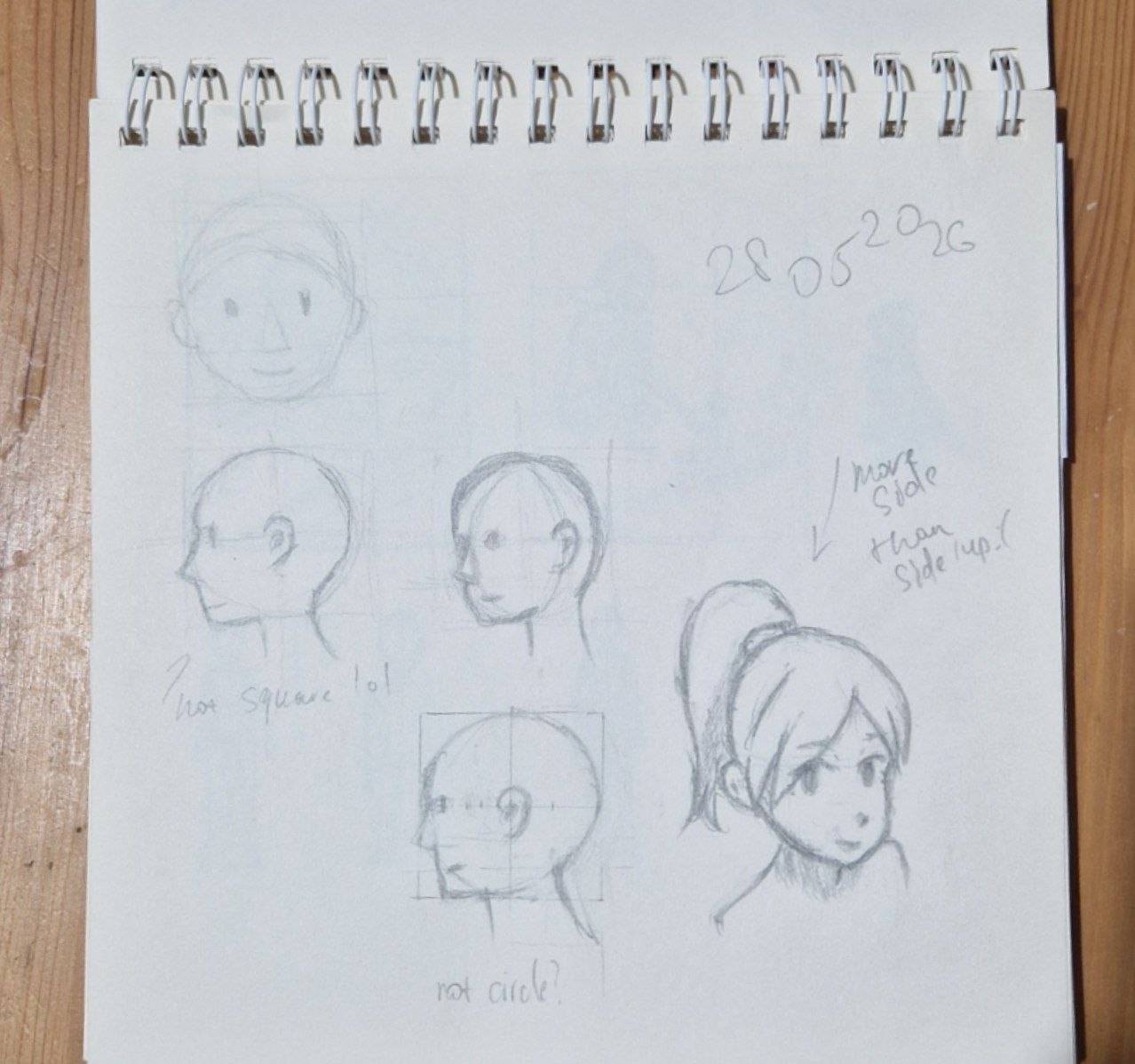
A couple of pages in, I started to think about the next illustration I wanted to draw. I've used a photograph as a reference for the sketch (sadly, I've lost the photo), but I couldn't figure out how to capture the pose from it after multiple attempts.
Anatomy and gesture drawing
The quality of the study material matters. I've checked the books available in the UK, found them (unsurprisingly) lacking in terms of anime/manga styles, and ordered a couple of textbooks from Japan. I switch between multiple textbooks, mostly gravitiating towards イラスト解体新書 by ダテナオト now. There is no English version of this book, but there's a somewhat similar "Complete Guide to Drawing Manga & Anime: A Comprehensive 13-Week "Art Course" with 65 Clear and Easy Daily Lessons" by the same author that is translated to English, if you're interested.
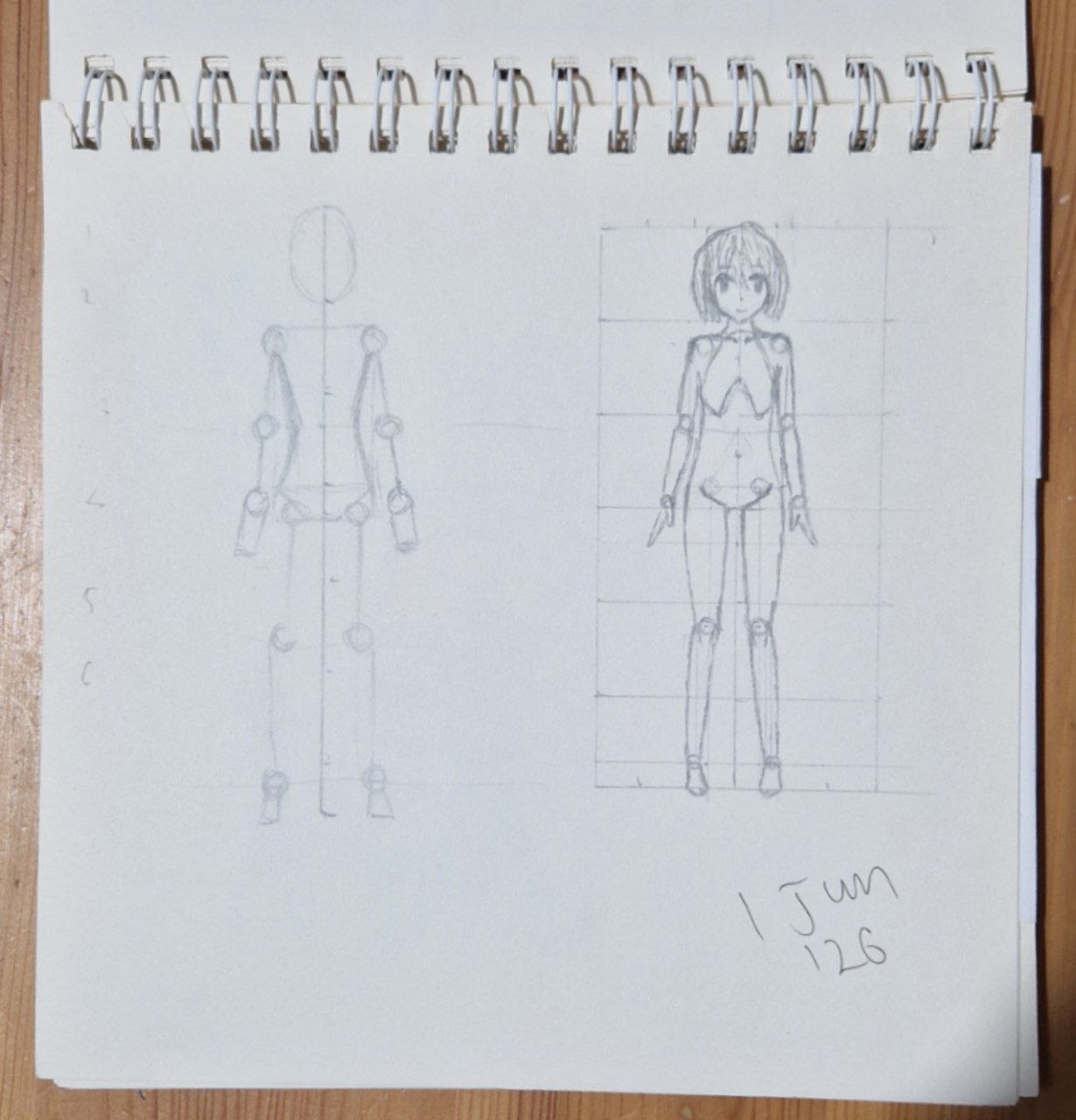
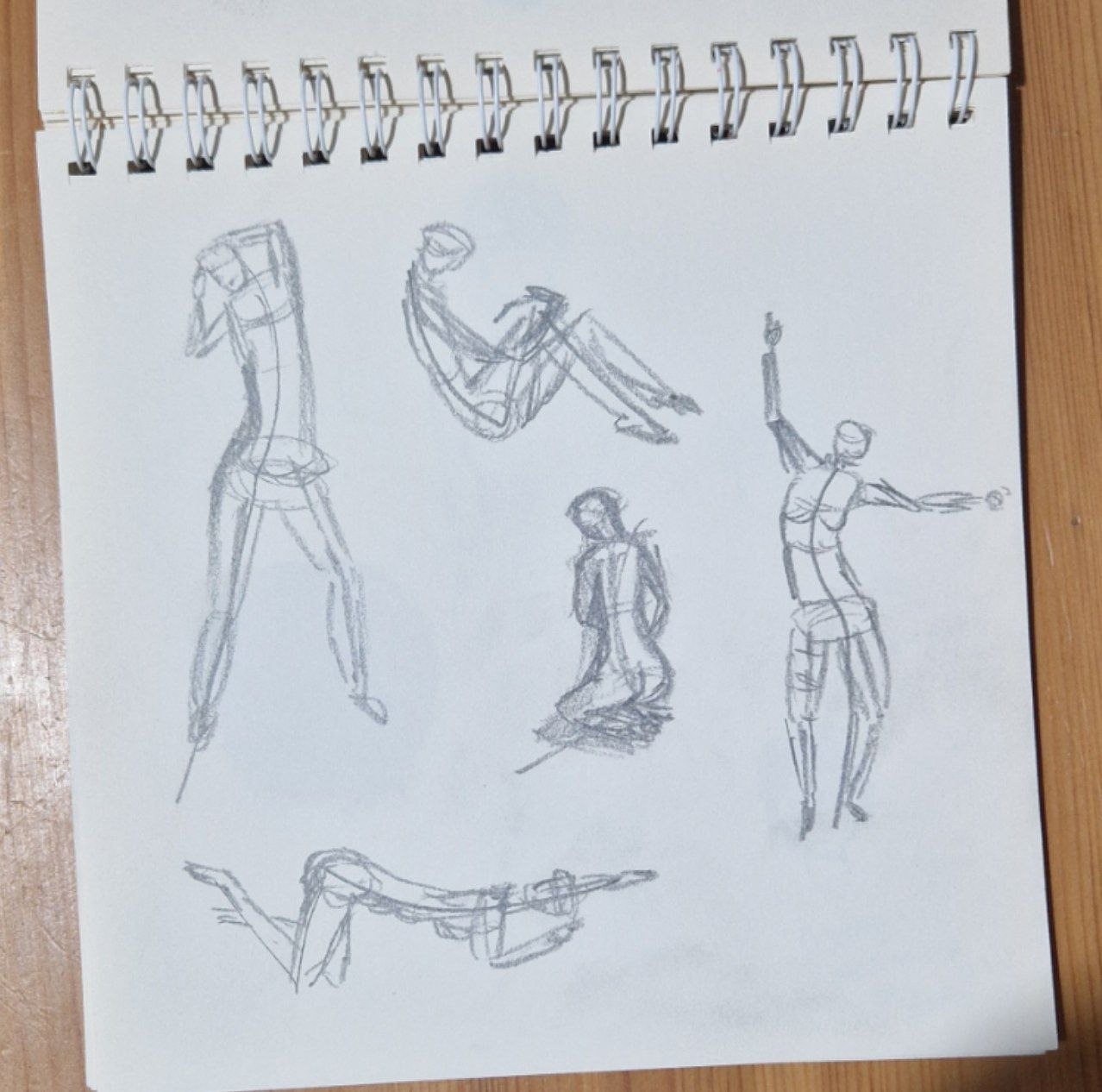
I picked up a book on gesture drawing to improve my sketching and idealisation skills, too. The appeal here is "there's no right and wrong, as long as it captures what you want to capture", which helps to unlock the creativity.
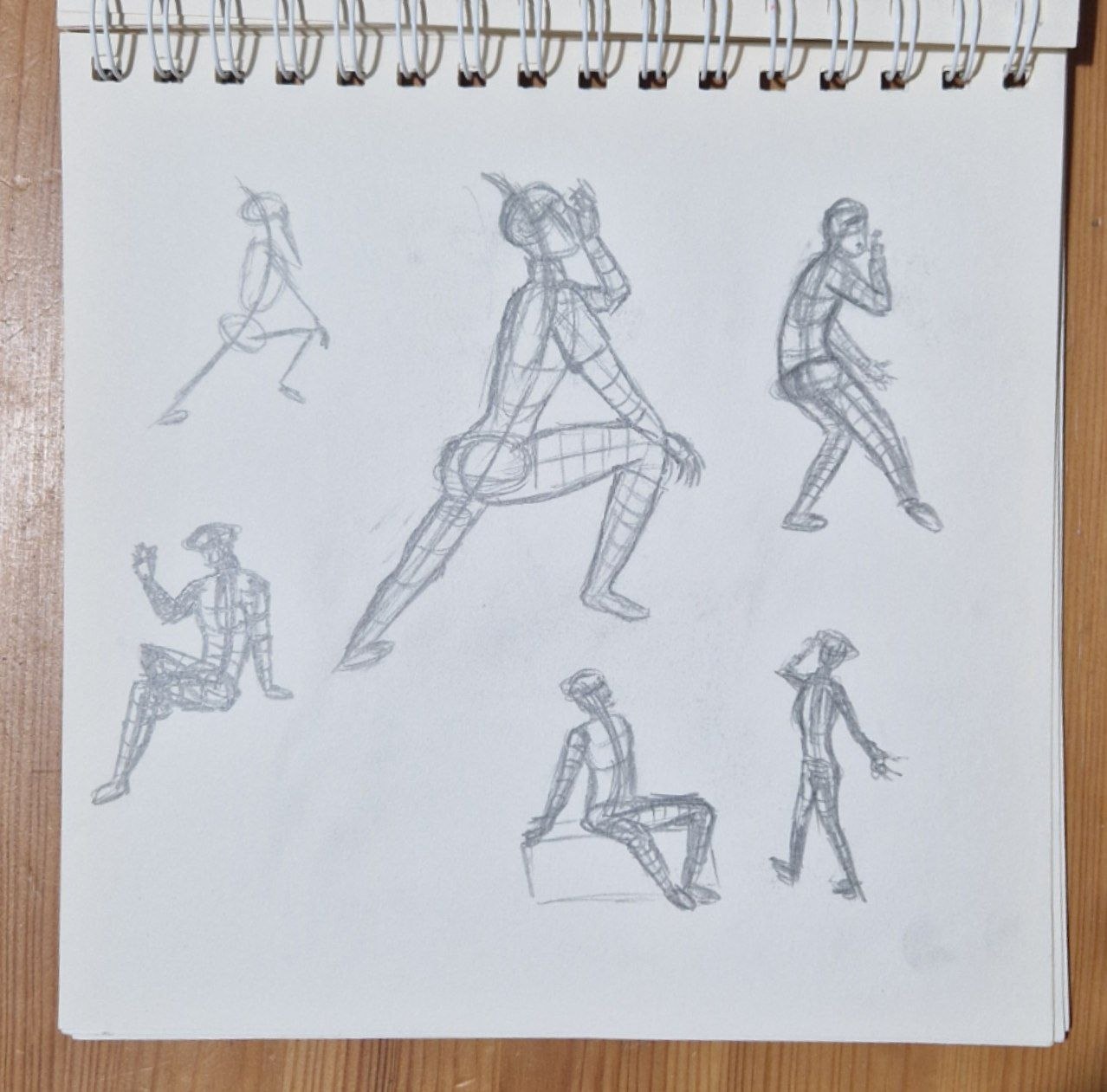
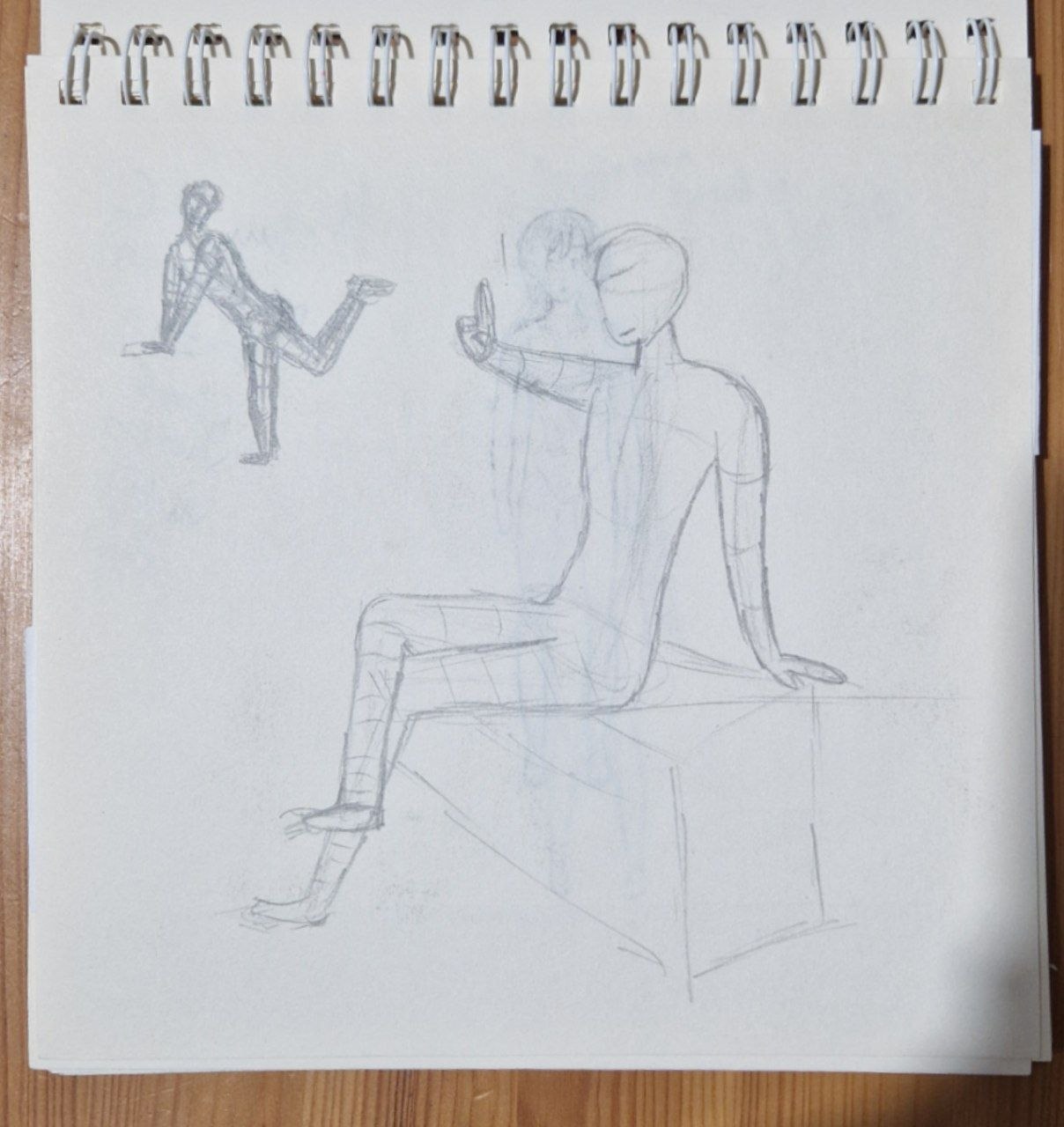
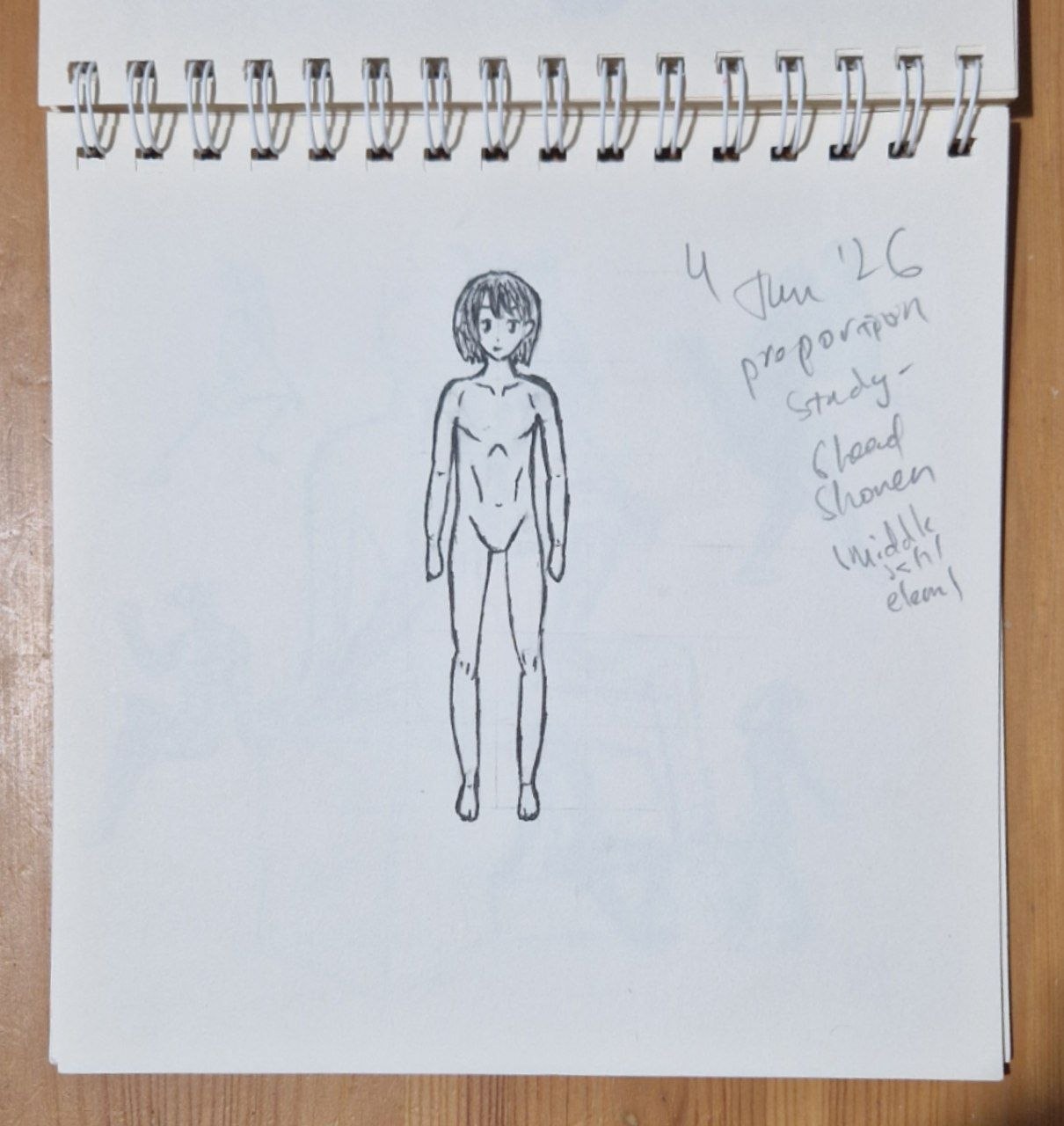
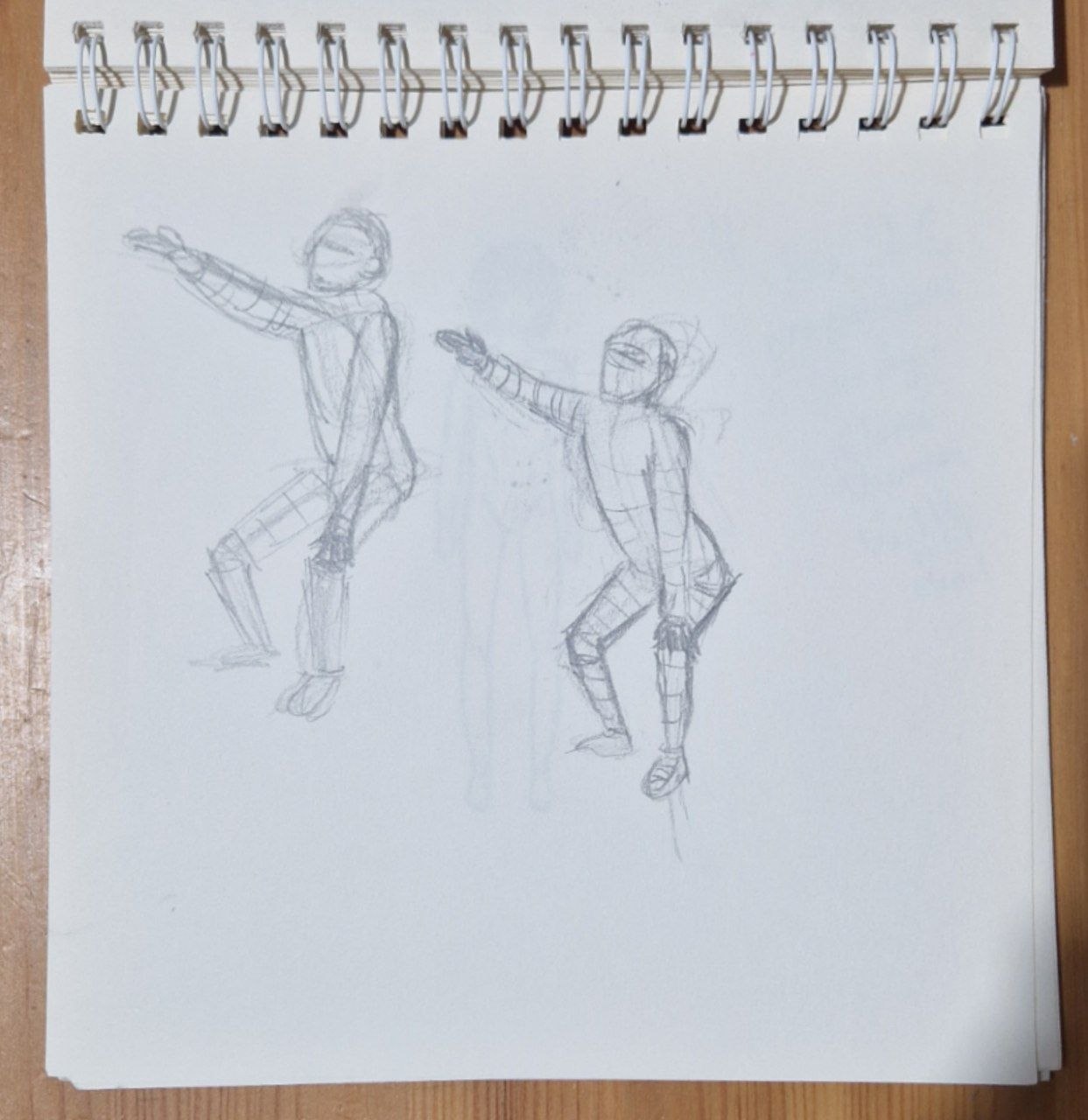
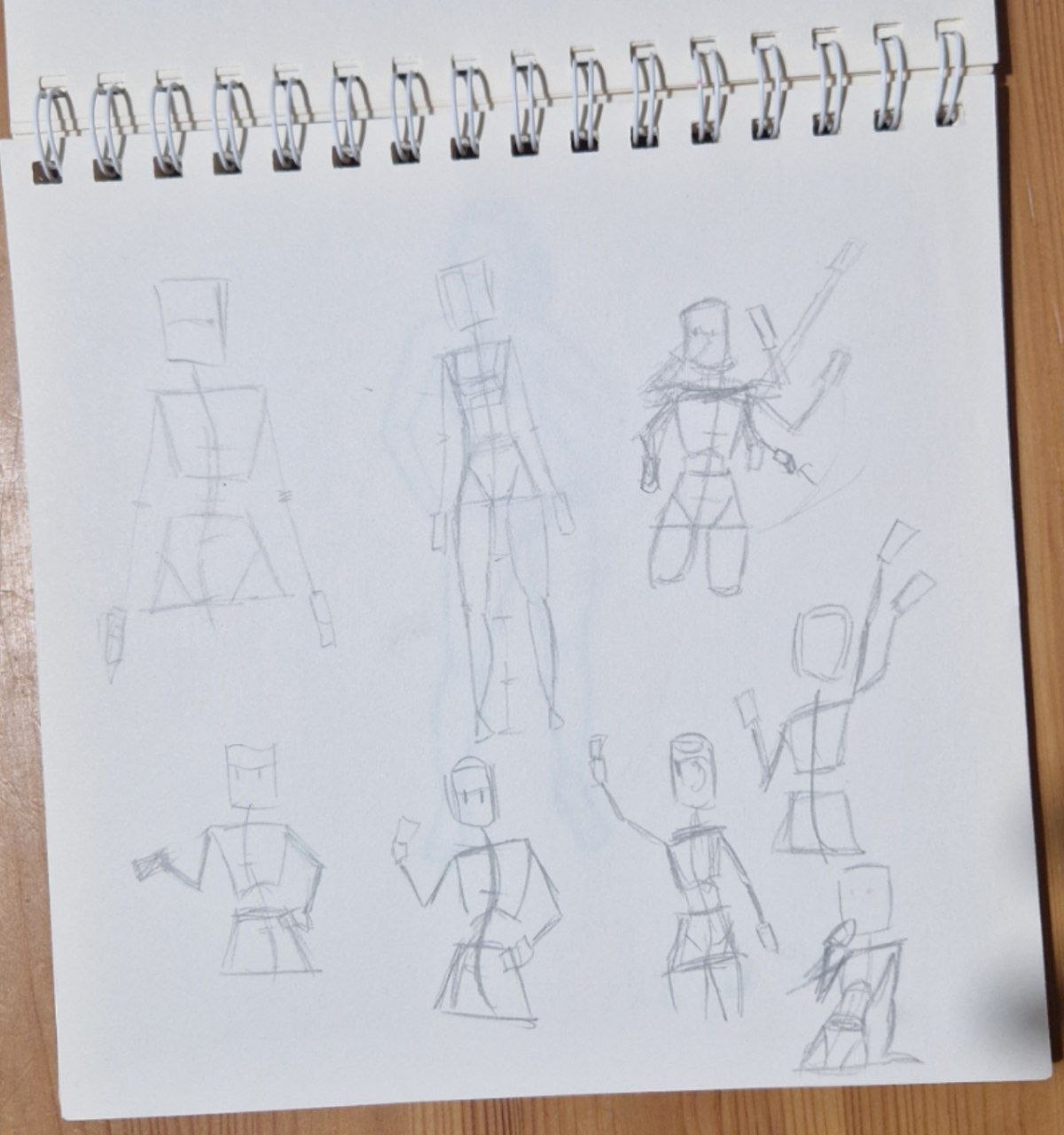
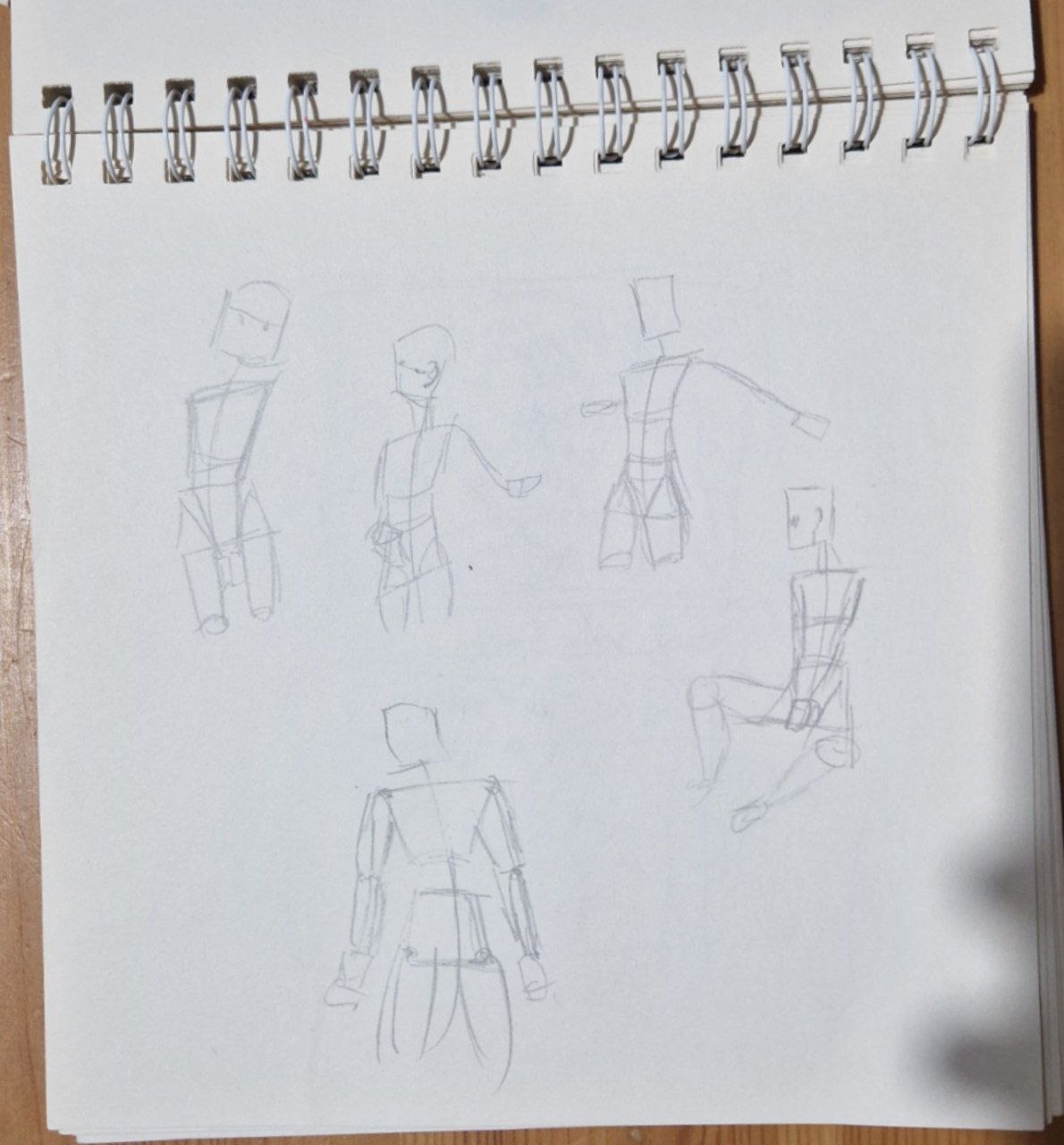
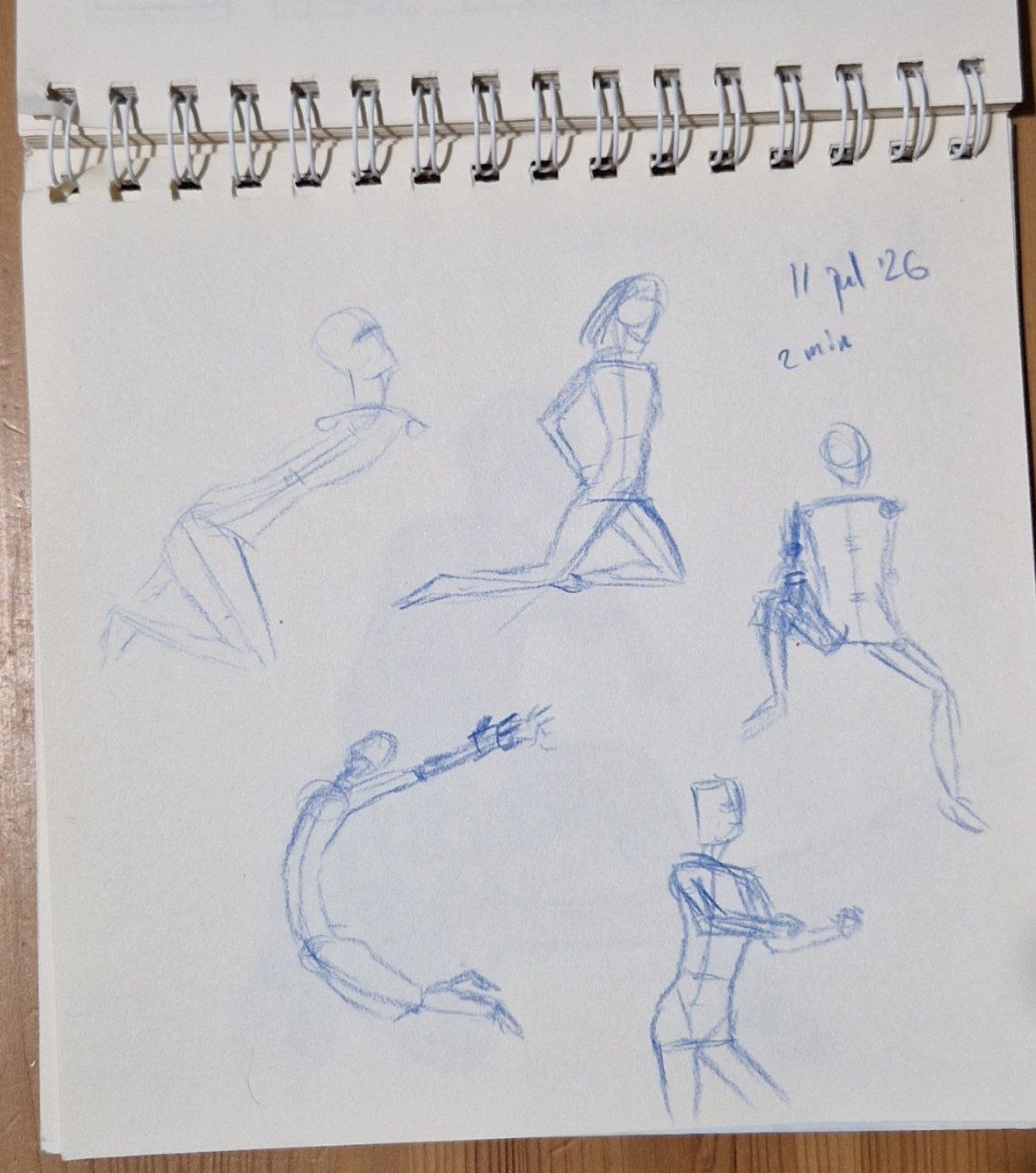
I think gesture drawing and quick poses were essential for me to get into a habit of daily drawing. I'd say something like "well, I'll draw a few poses for 2-5 minutes each, and then, if I'm in the mood, I'll do a proper anime anatomy lesson". More often than not, the sketches helped me to get in the right mood.
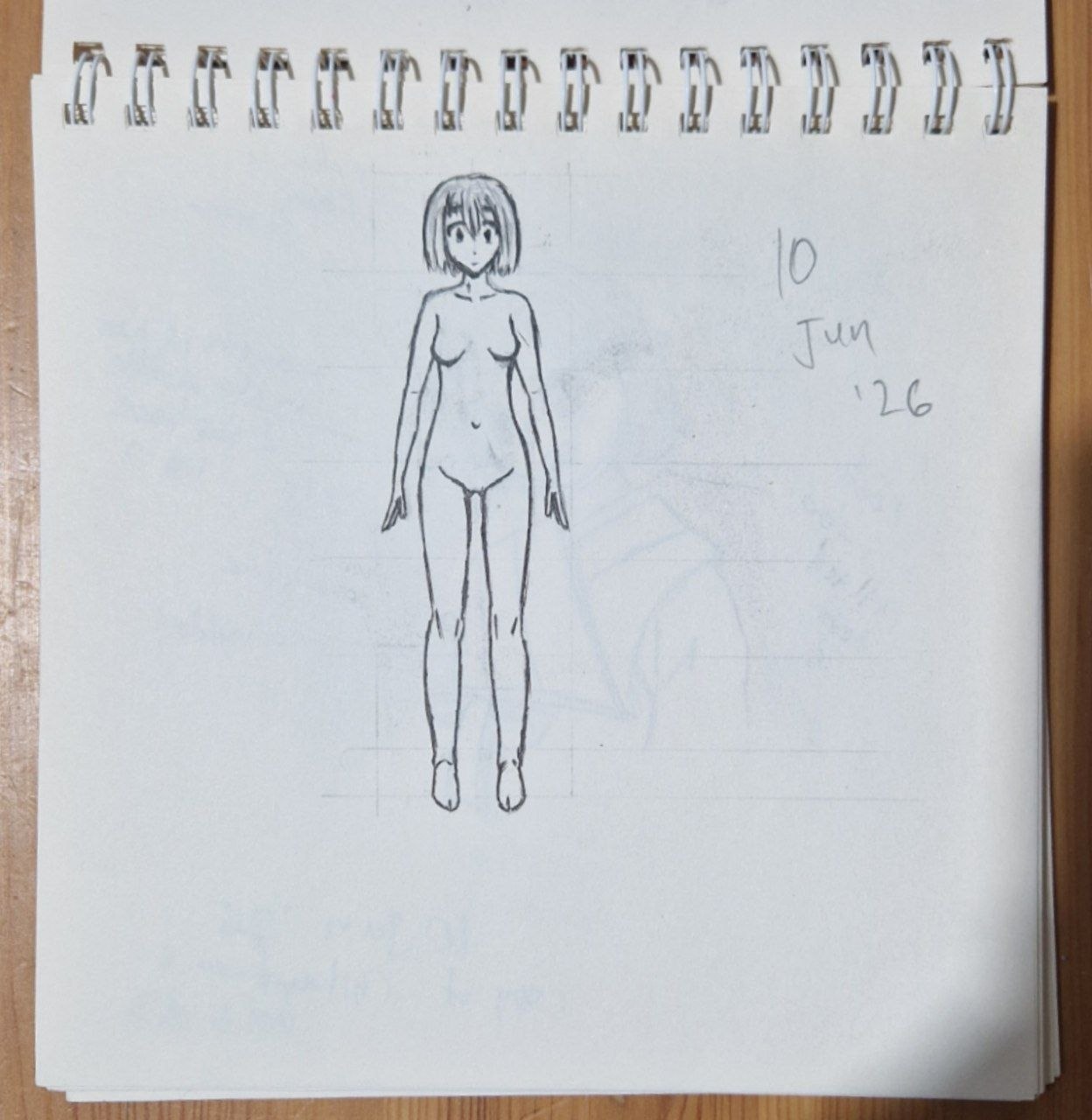
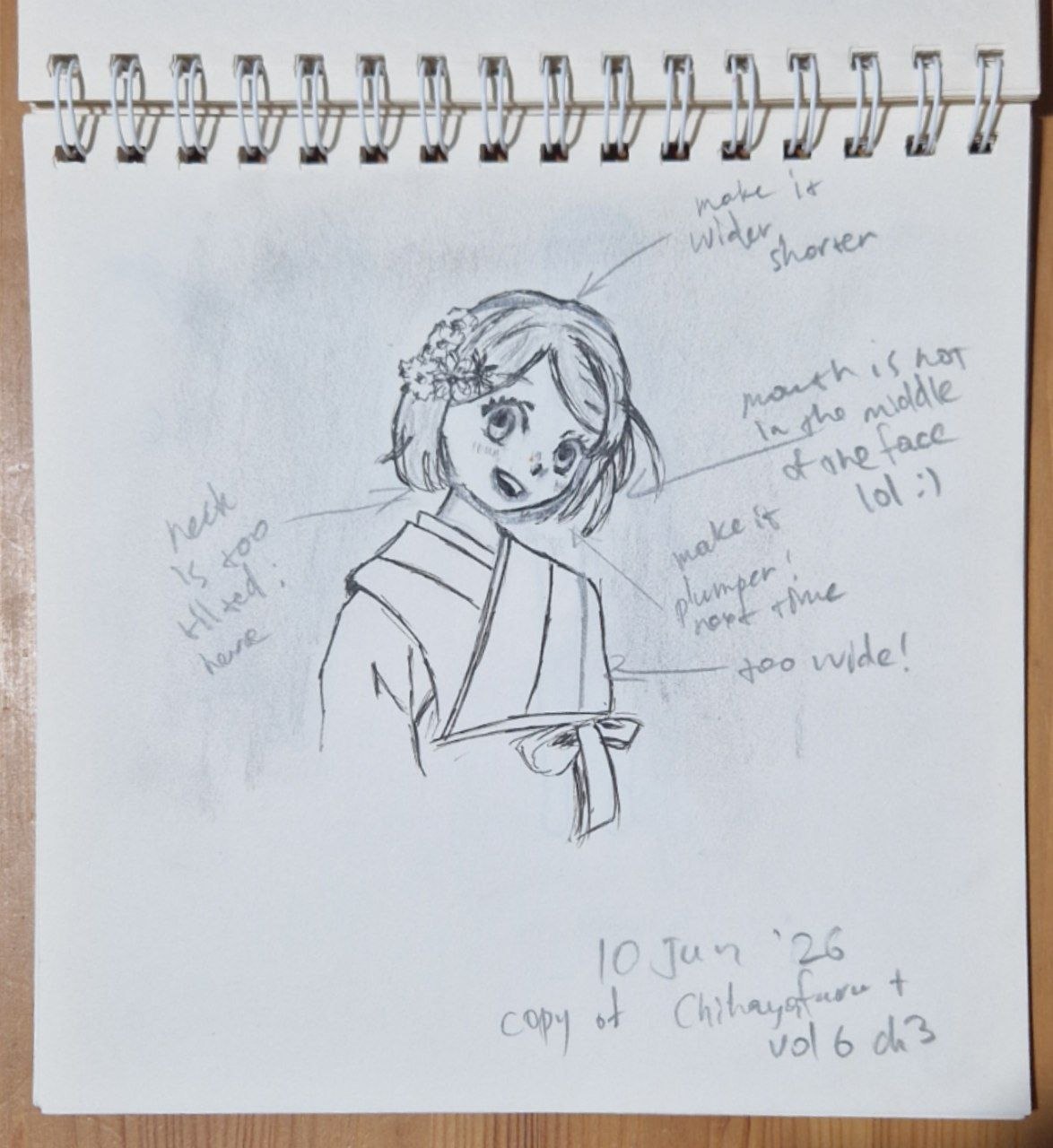
At the time, I've been reading Chihayafuru Plus (it's great!). I tried to redraw a character from the comic. The result doesn't look particularly well, but I learned a few things, and I had fun, too.
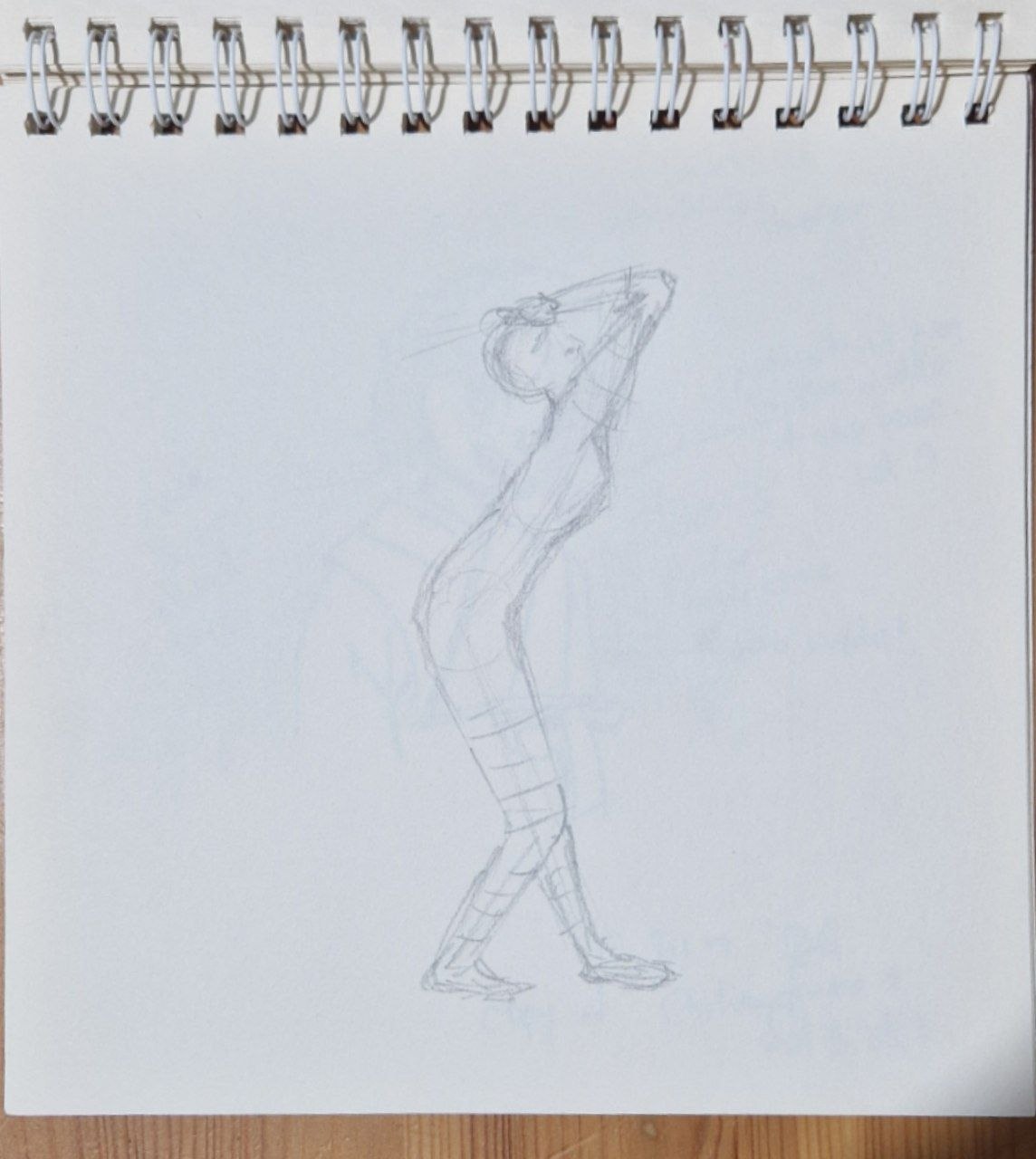
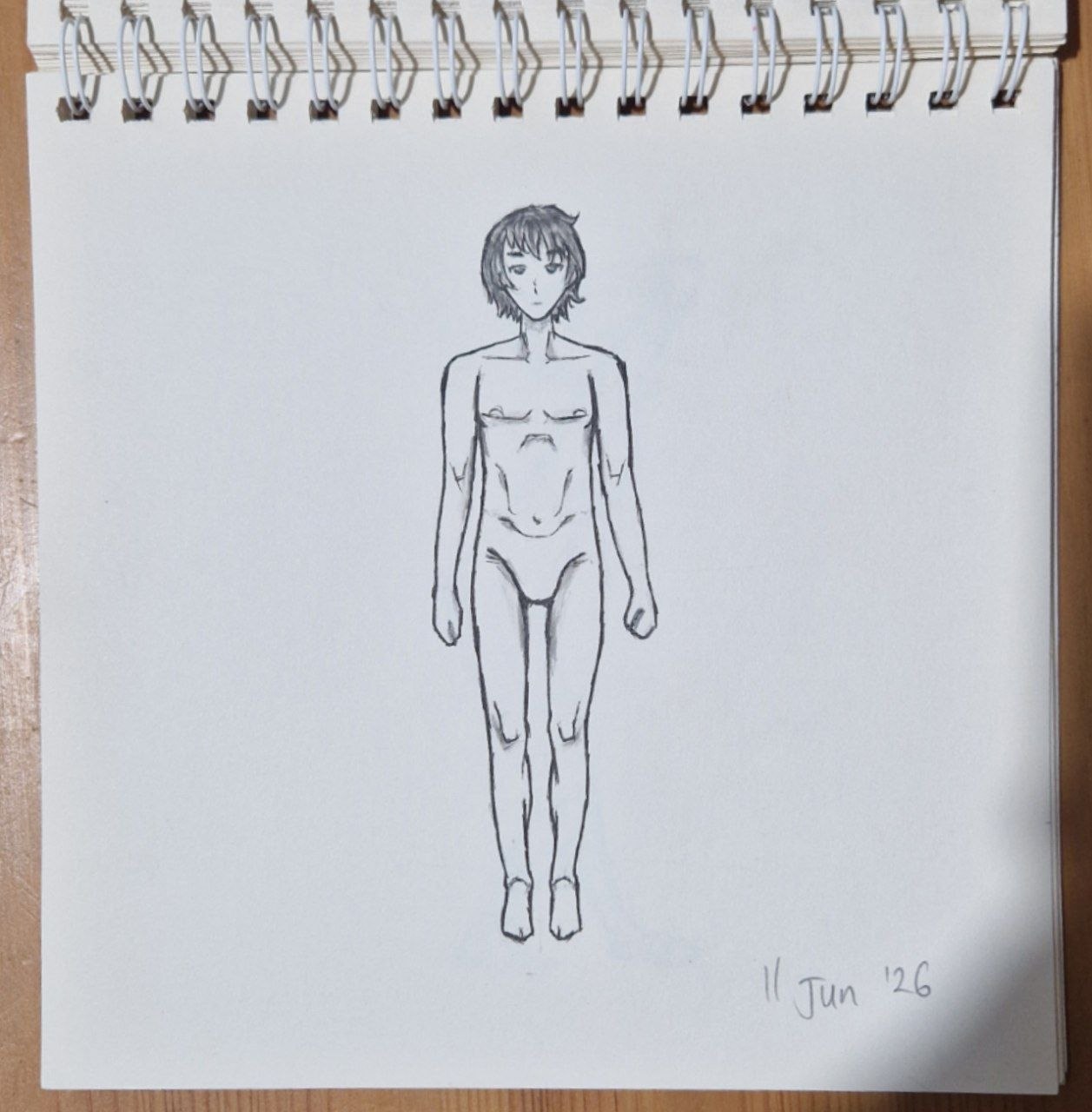
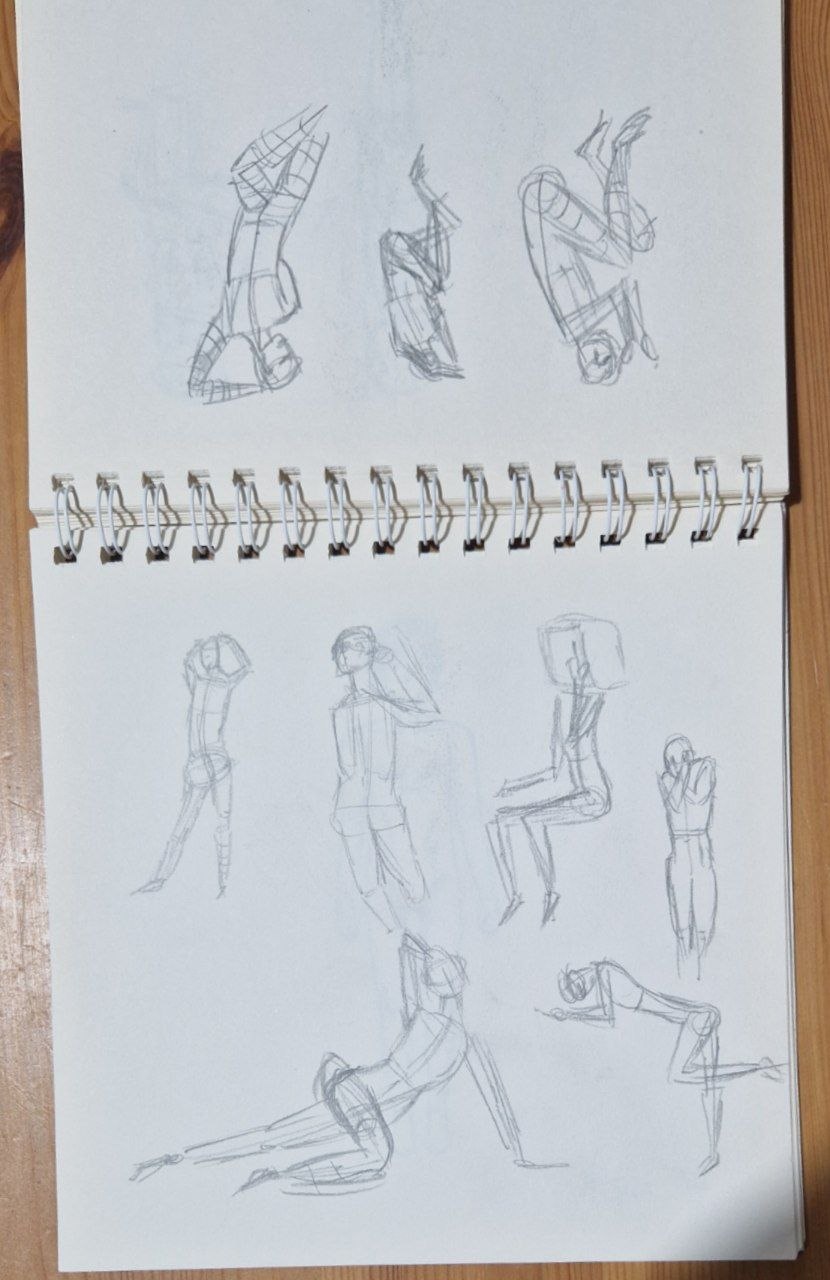
Making mistakes is fun! The textbook specifically said, "avoid drawing the spine as a vertical line". I tried and failed. The next attempt, on the very next page, went a bit better.
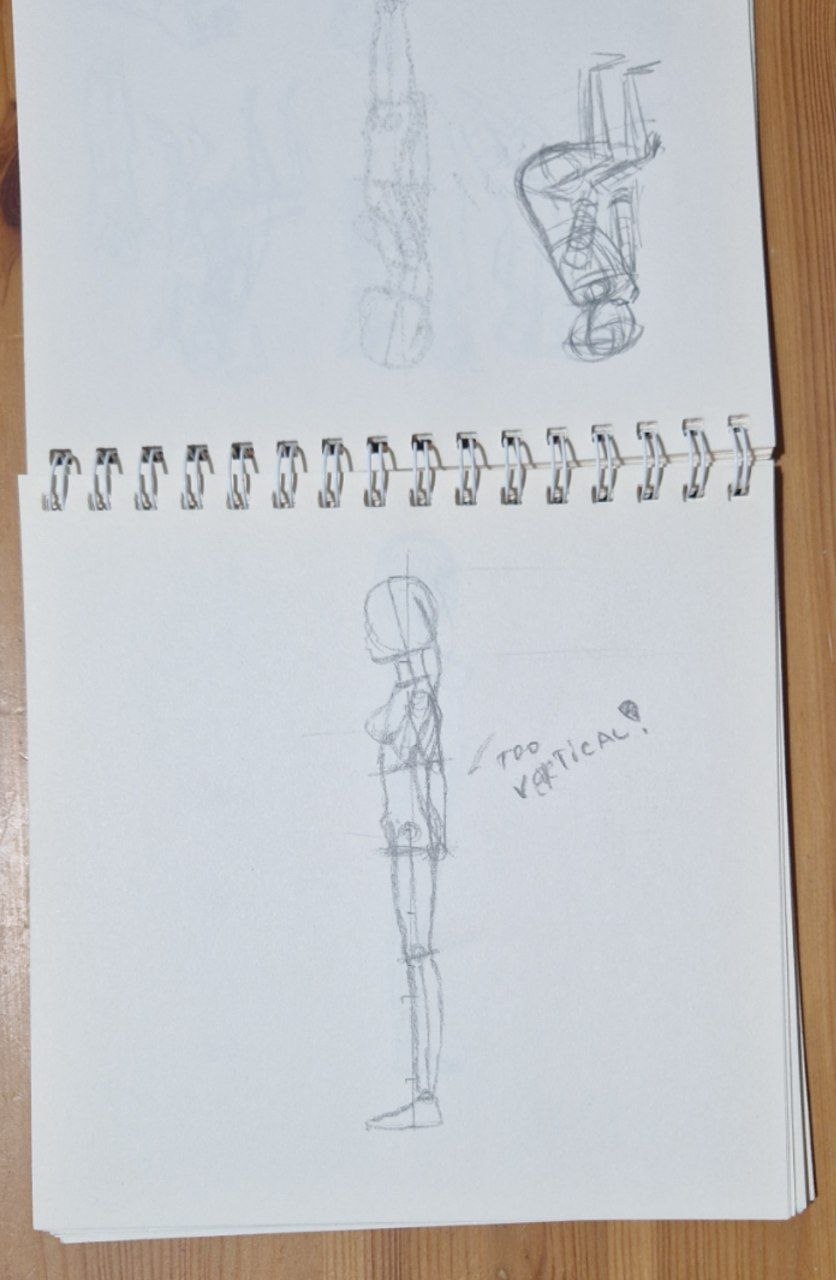
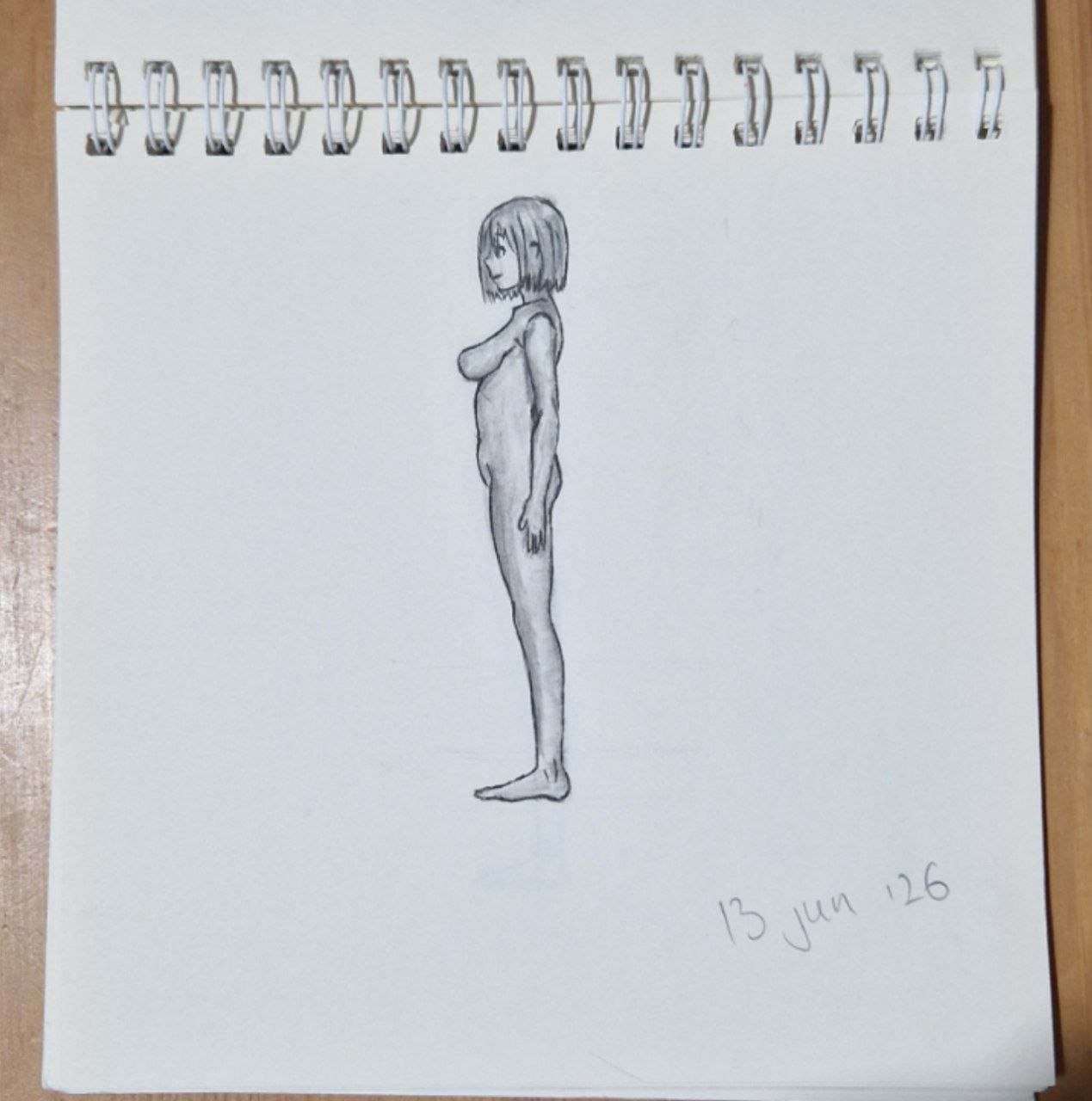
As you can see, I started to carefully experiment with the properties of the paper using multiple tools. Aquarelle pencils and liner pens are relatively safe for this paper, yay!
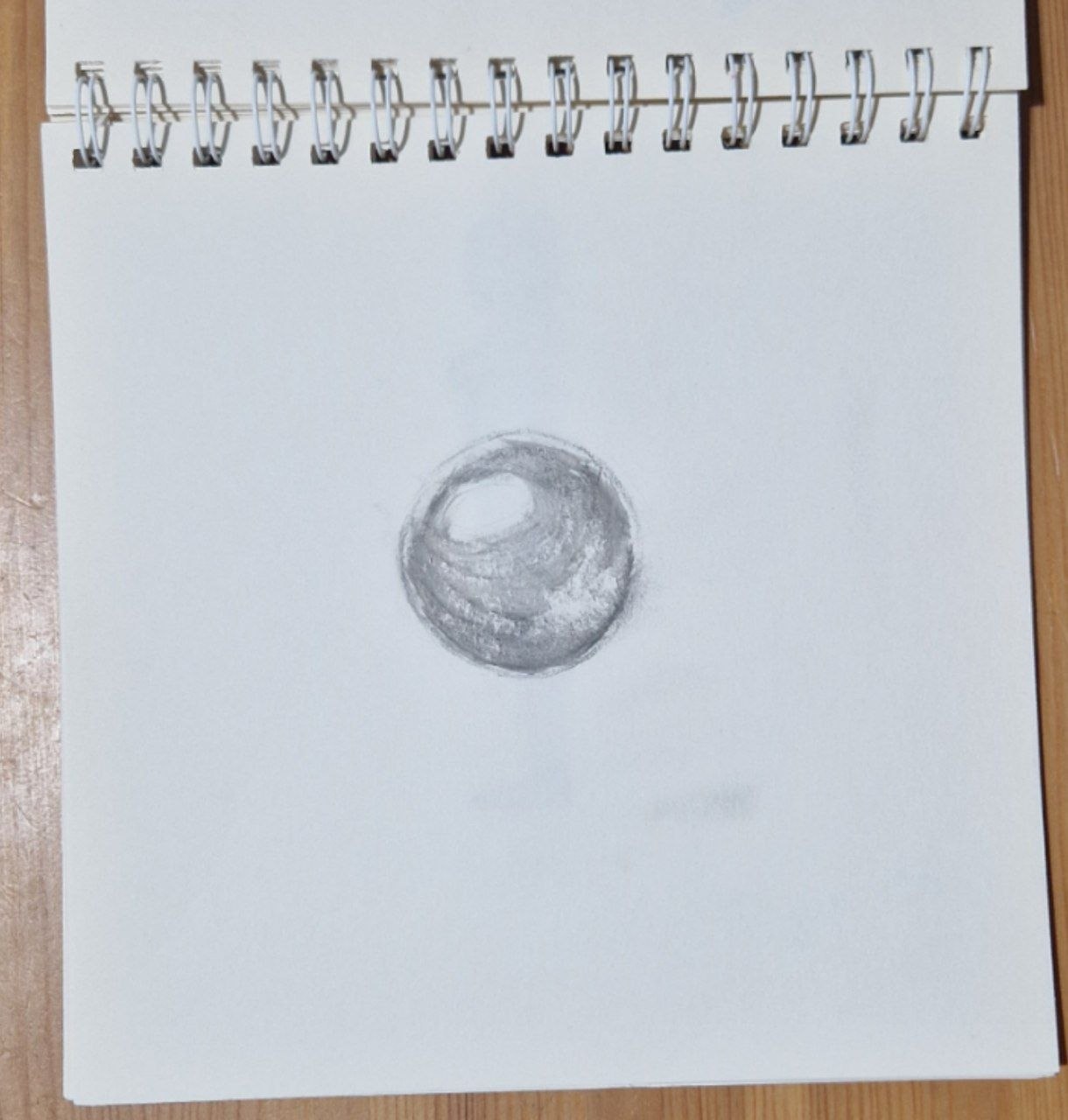
It took me a bit over one hour to complete this lesson.
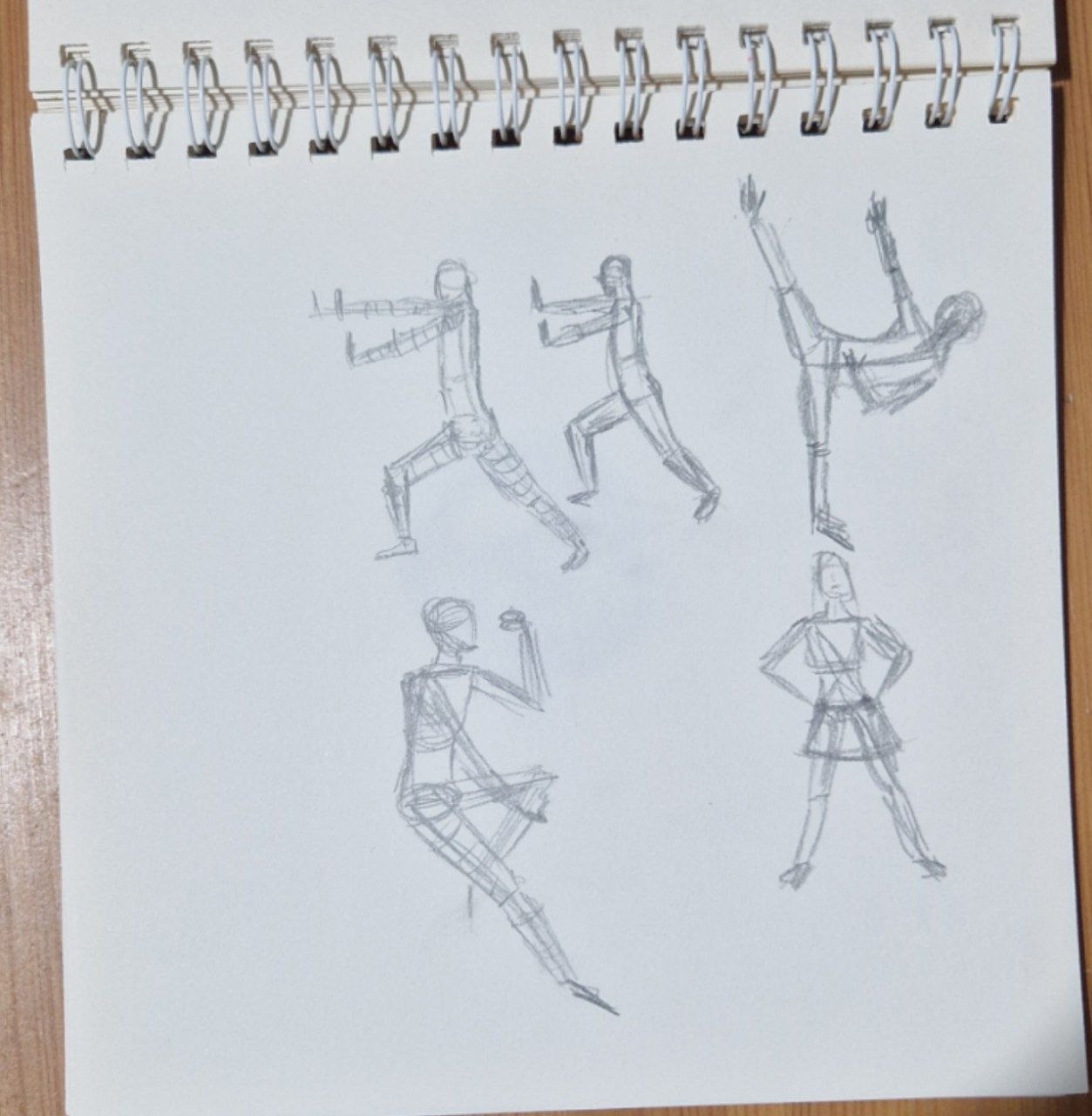
Can I finally start drawing faces?
I got bored with drawing bodies and skipped a few pages of the textbook. Drawing anime faces proved to be a bit too difficult; I've made many mistakes across two pages.
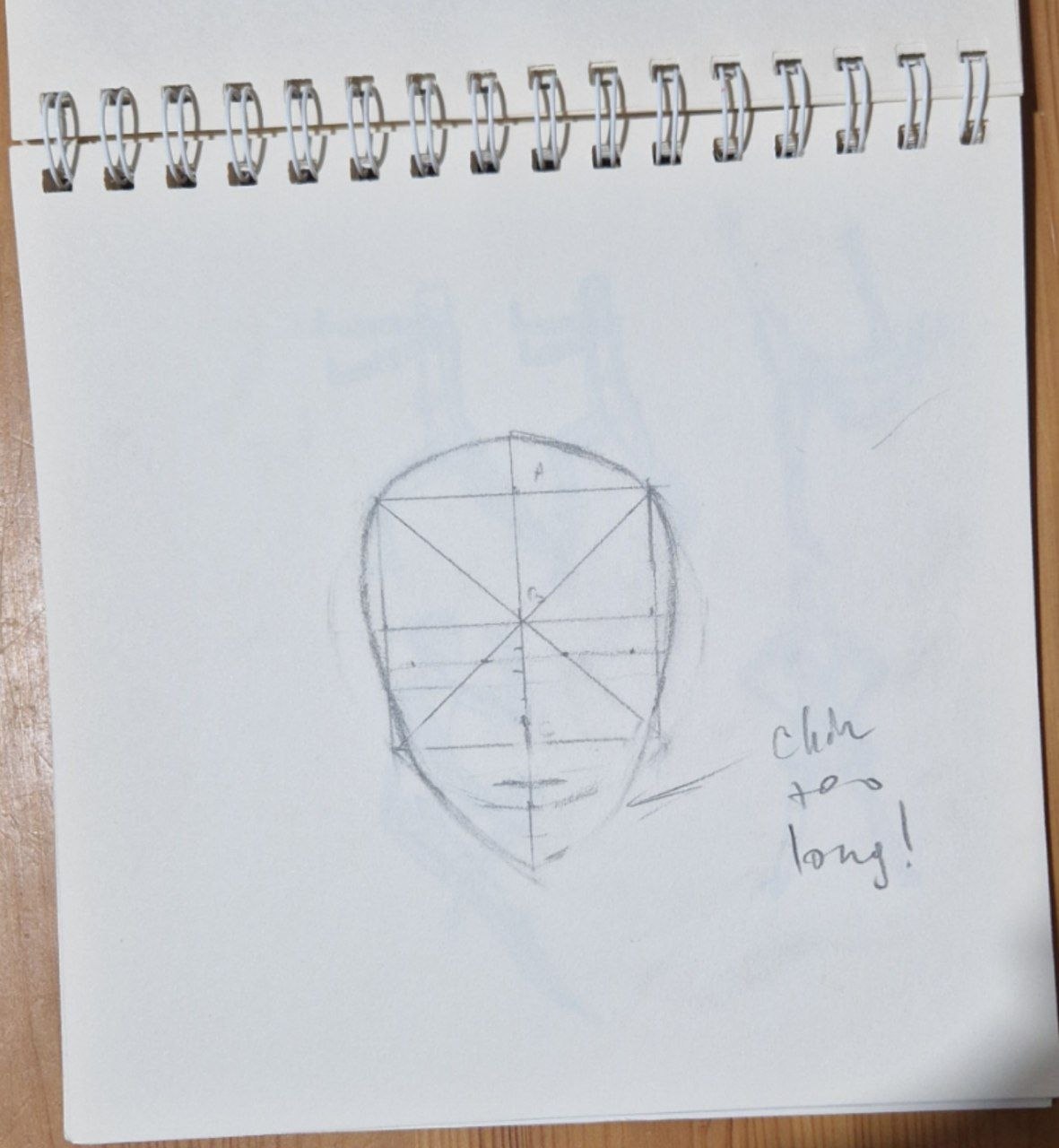
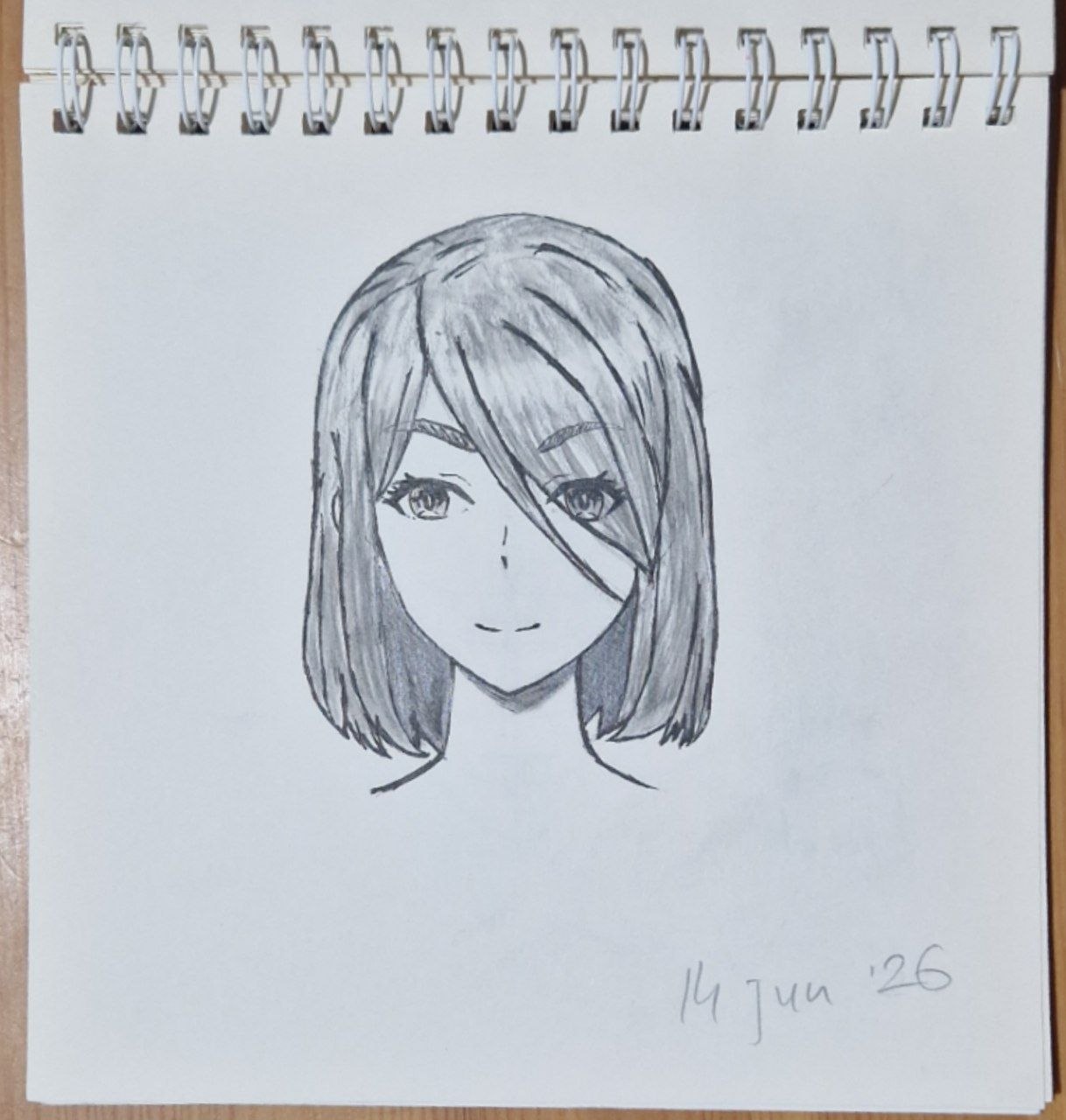
Drawing faces is difficult, especially when you try to draw the likeness of an existing character. Even copying is difficult, as you can witness my failed(?) attempts at drawing Asa from Ikoku Nikki.
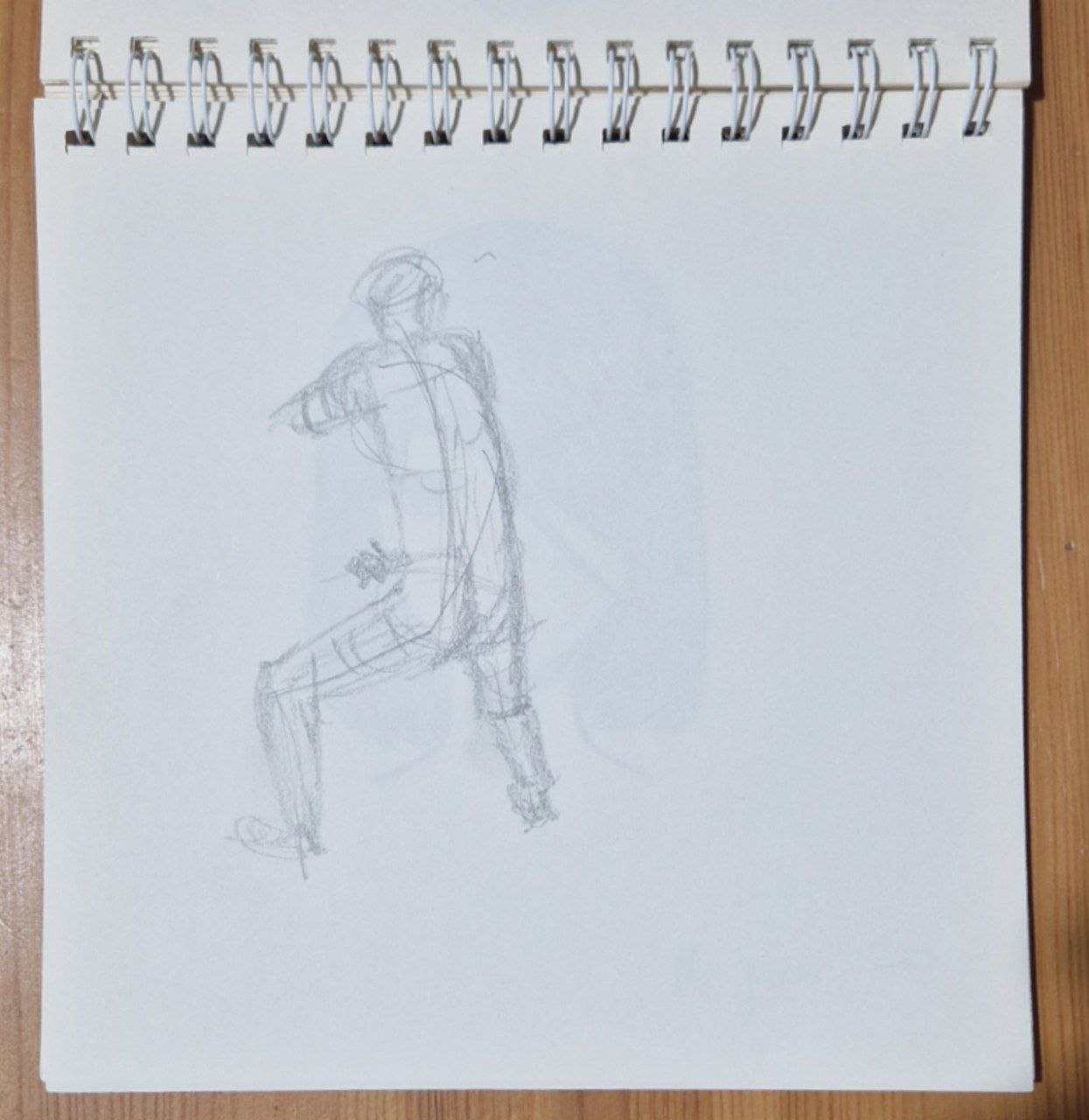
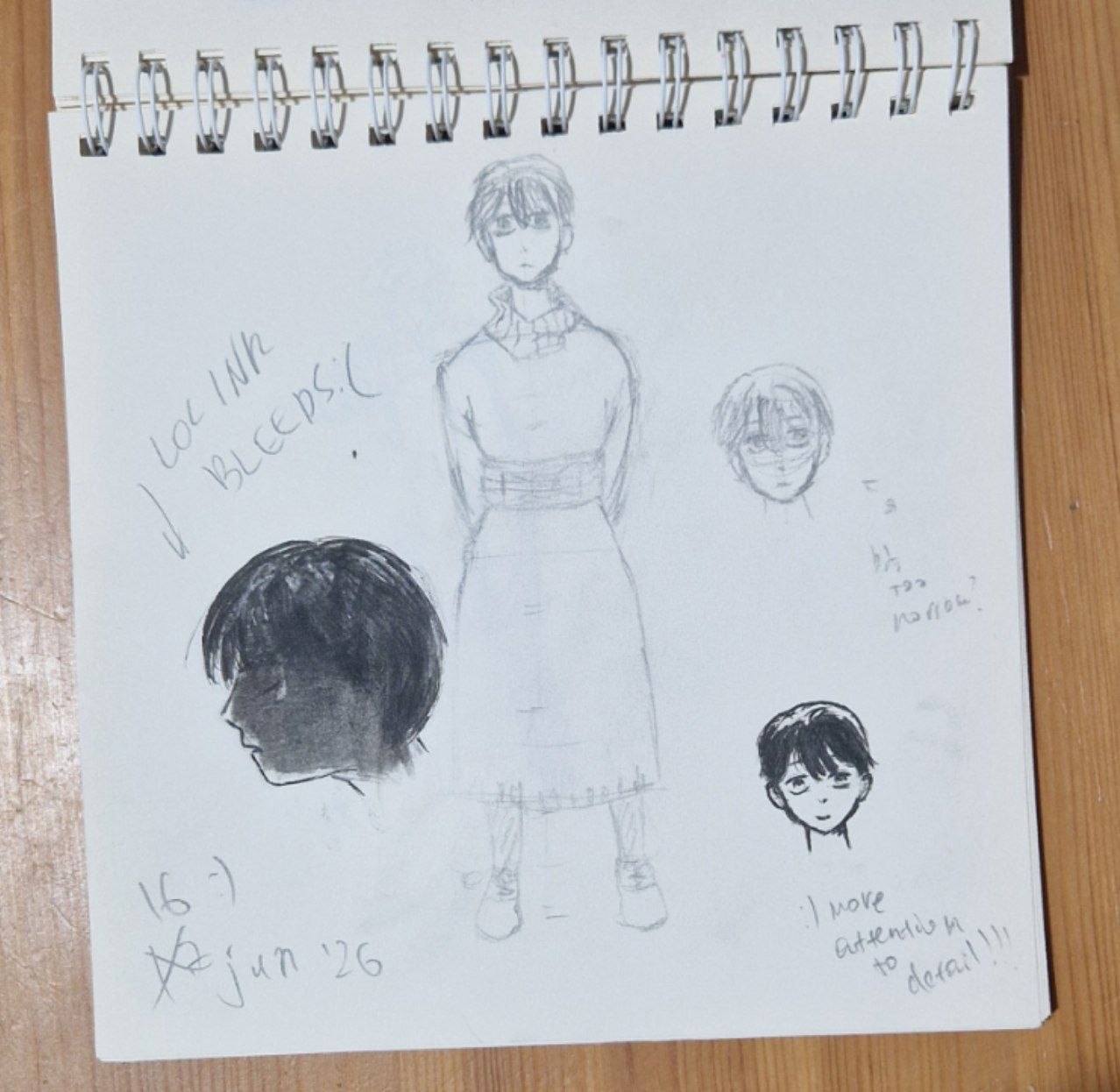
Back to the anatomy
Learning an extra thing or two about anime faces helped me to draw slightly more appealing anatomy studies.
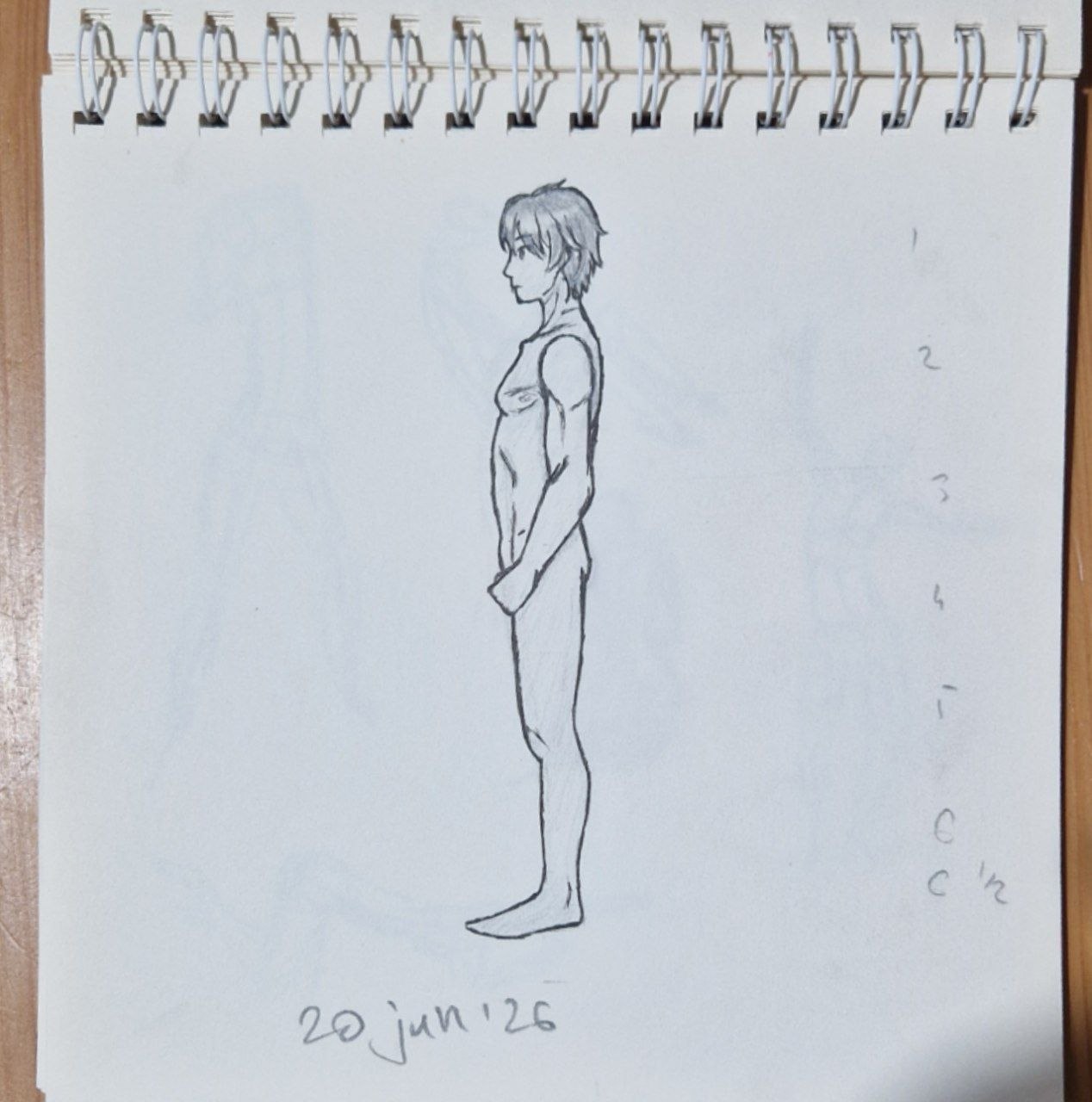
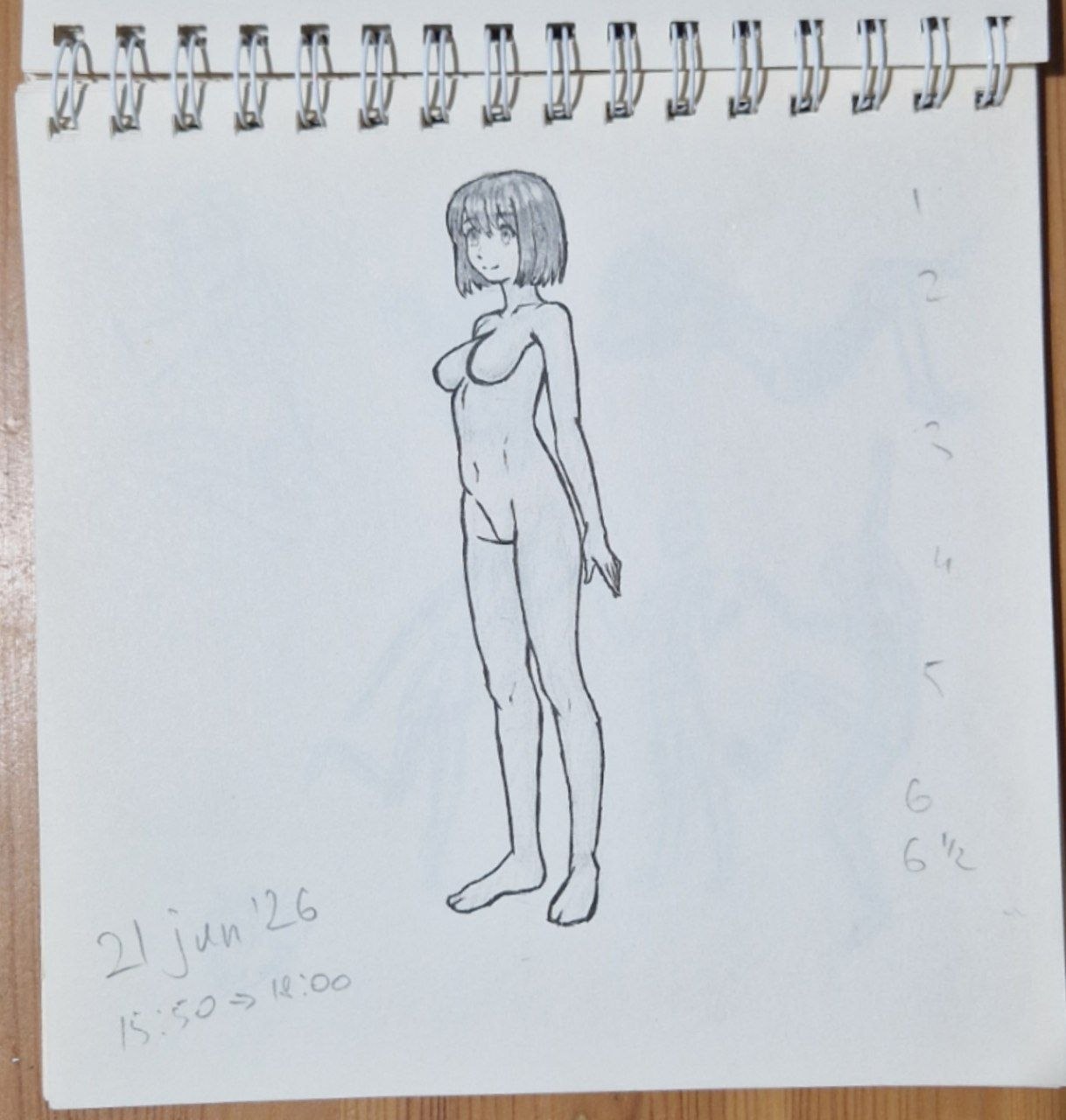
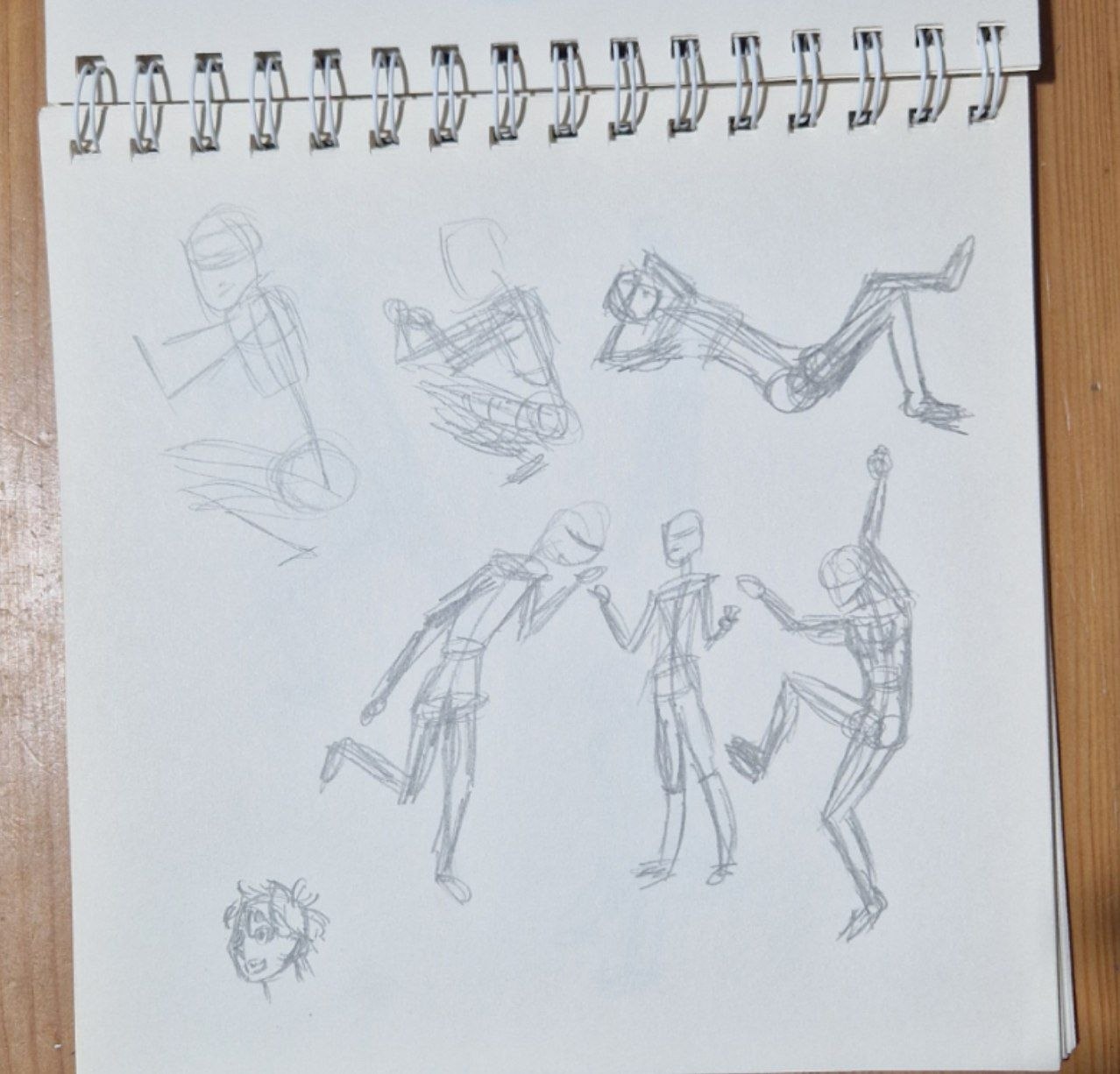
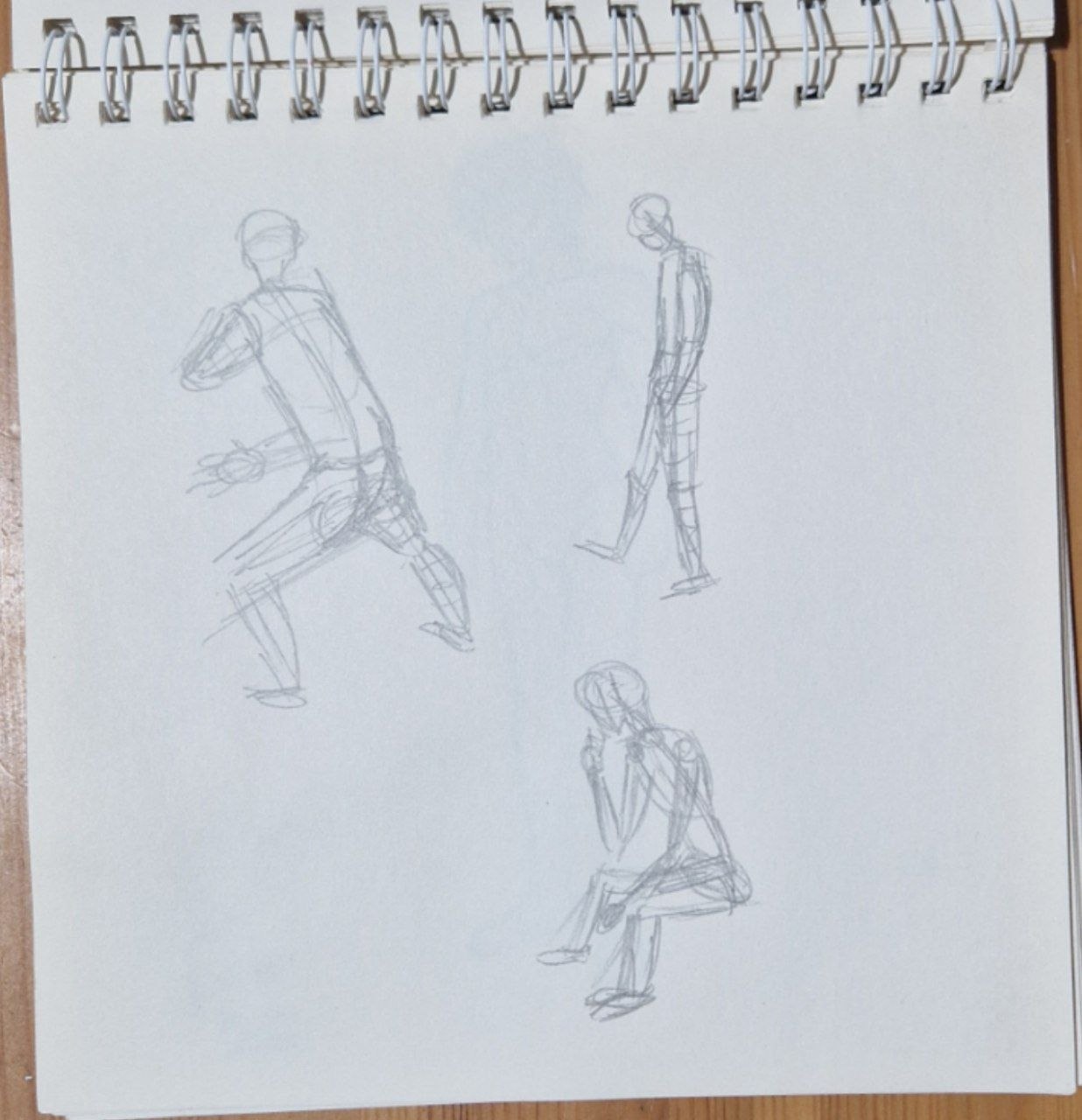
Process
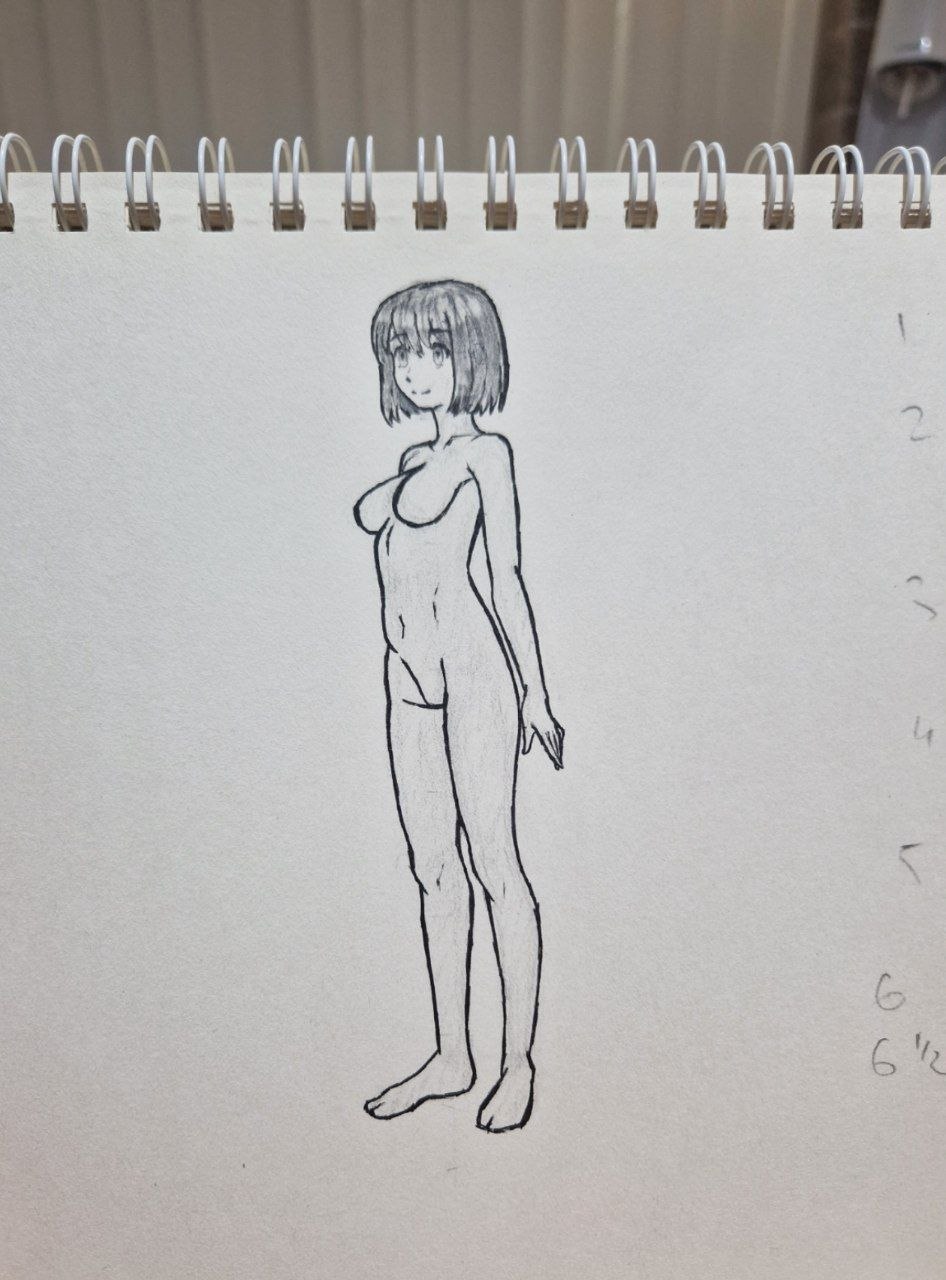
I happened to take a few photos of my drawing process. This is not an original illustration, just a copy of a textbook example.
I start with a ruler, and draw a very rough approximation of what I want to draw.
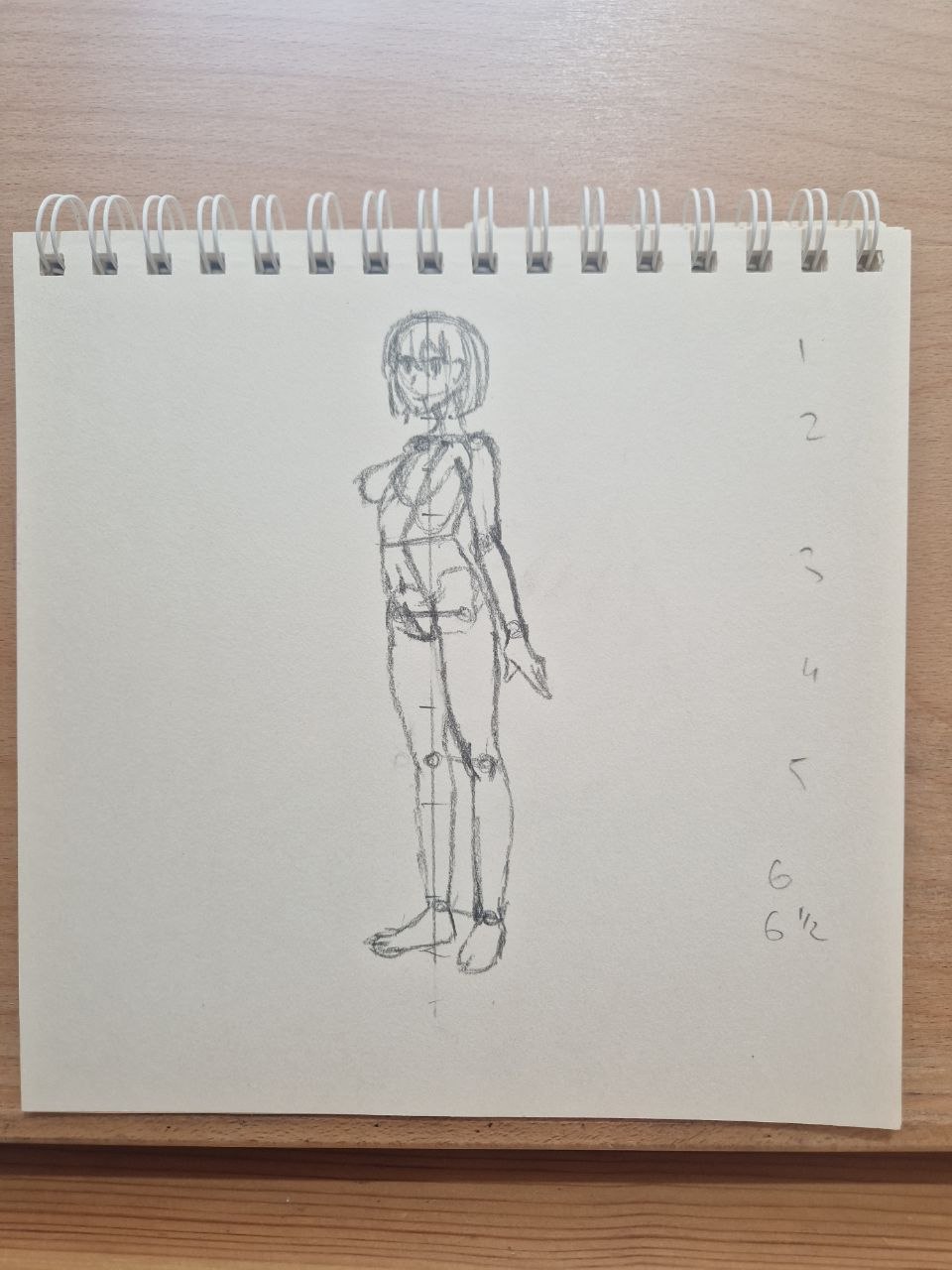
Then I use my kneaded eraser to make the lines thinner, and correct the mistakes I can spot.
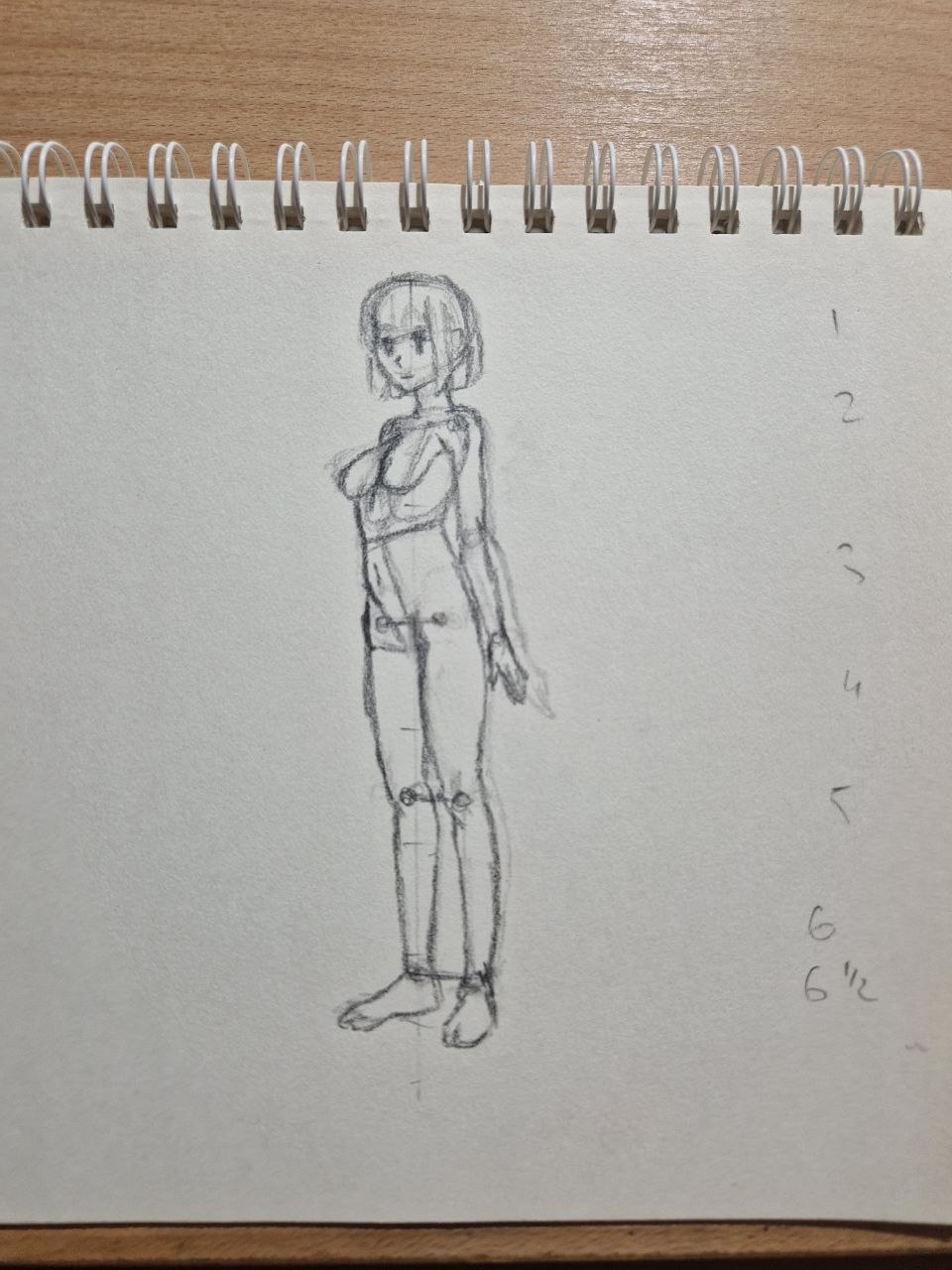
Then I get my kneader eraser to make the lines thinner, and correct the mistakes I can spot.
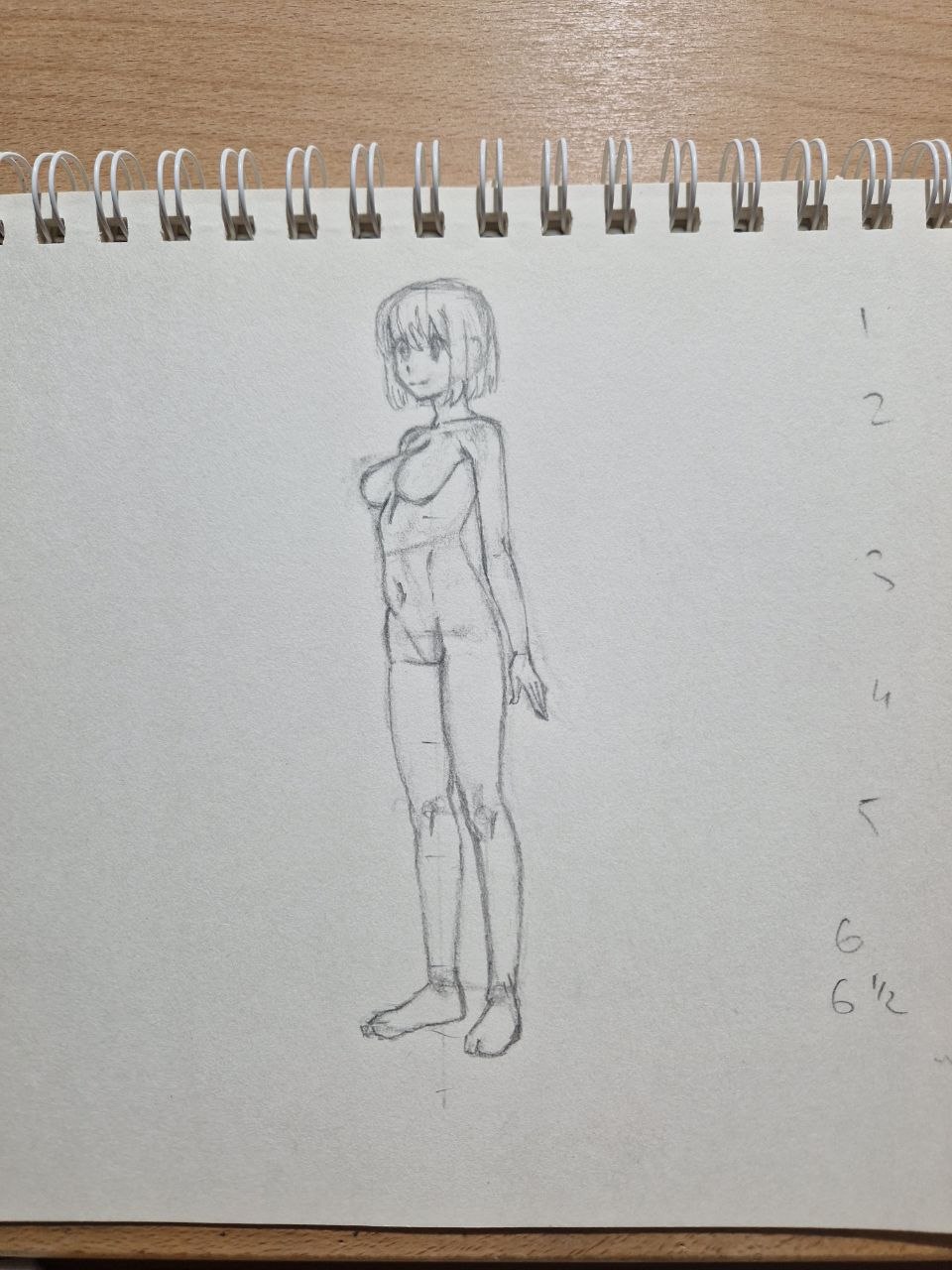
Then I get my kneader eraser to make the lines thinner, and correct the mistakes I can spot - this time with a liner.
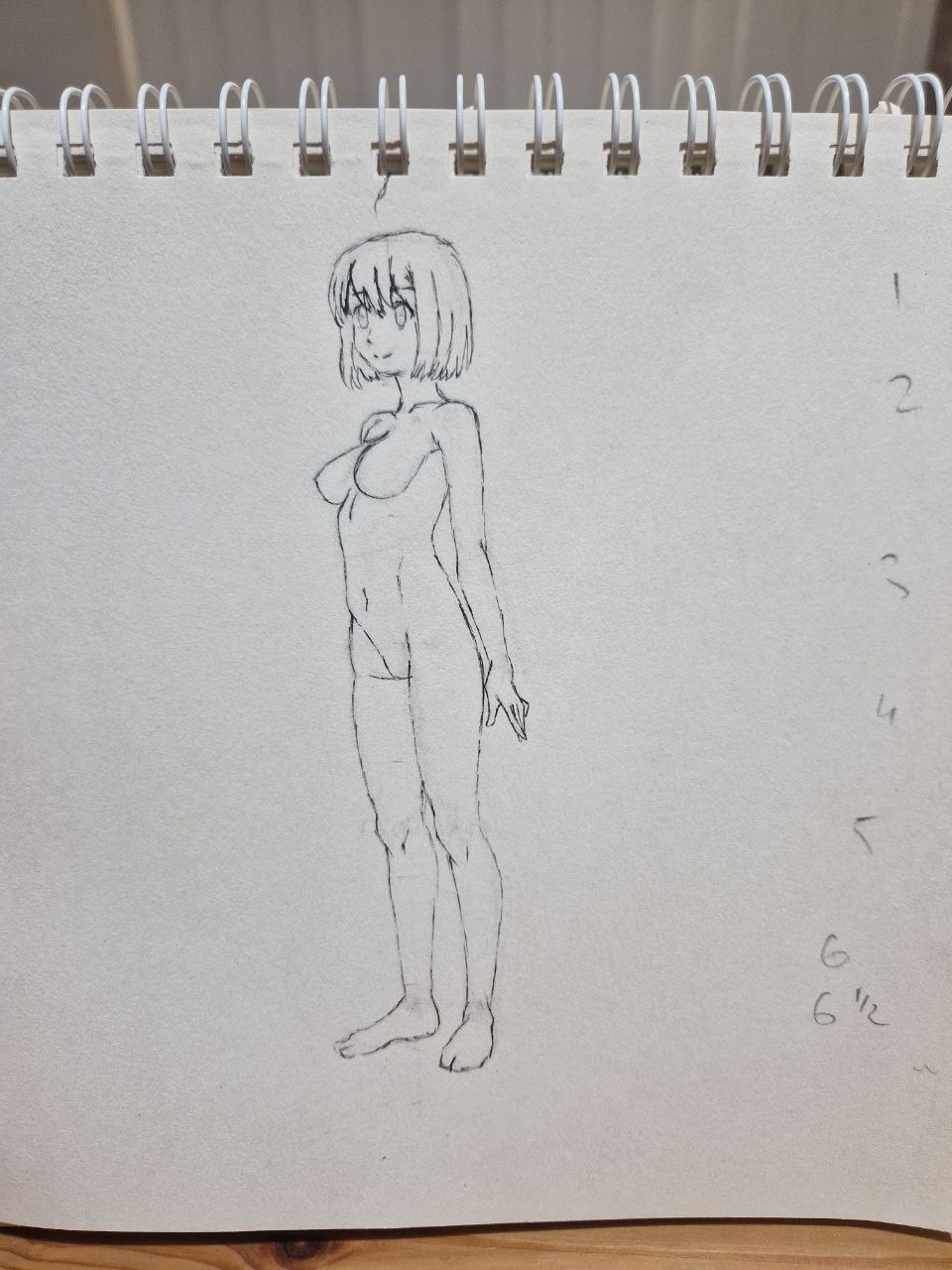
Then I erase the leftovers of the pencil. Some inked lines will be wrong, but I cannot erase them anymore. So, instead, I try to correct them by adding more ink. Usually, this doesn't go too well. Finally, I add some aquarelle pencil for a gentle illusion of shading (I don't know how to do shading yet).
Oh, the human body proportions start to click
Drawing the anime body multiple times made me finally realise how human body proportions are supposed to work. I re-watched a series on "Easy Croquis" by hide and it finally started to make sense.
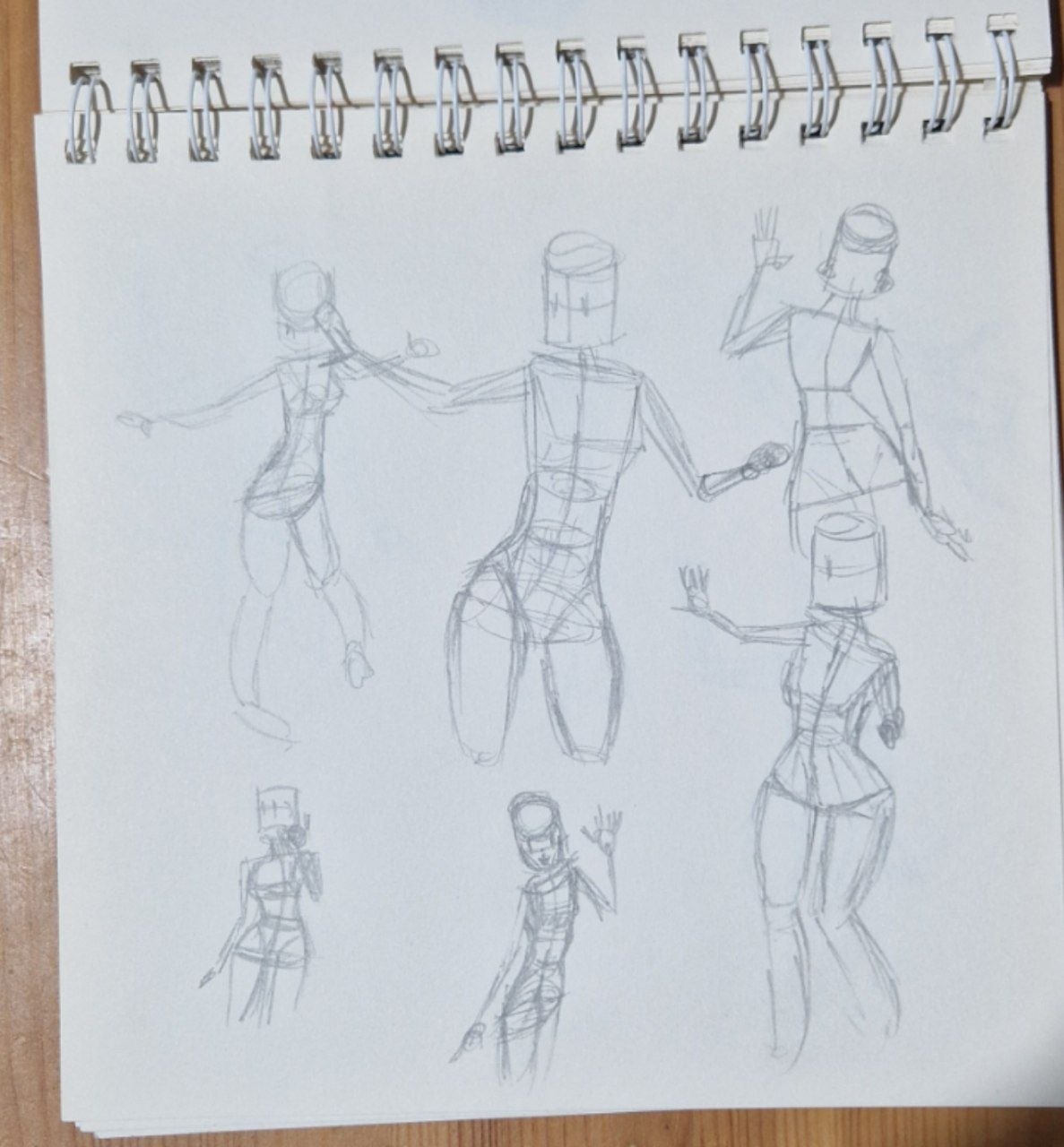
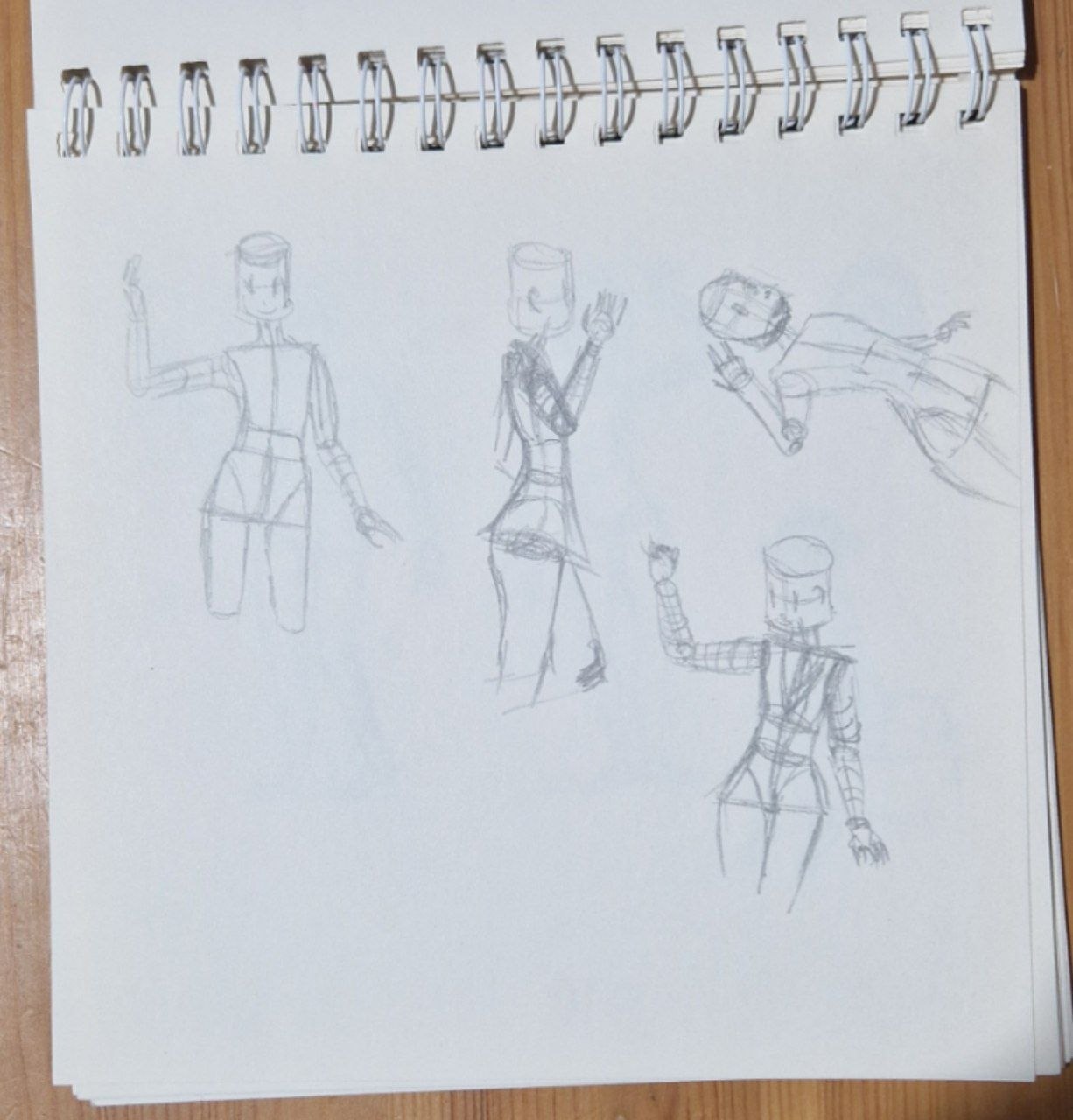
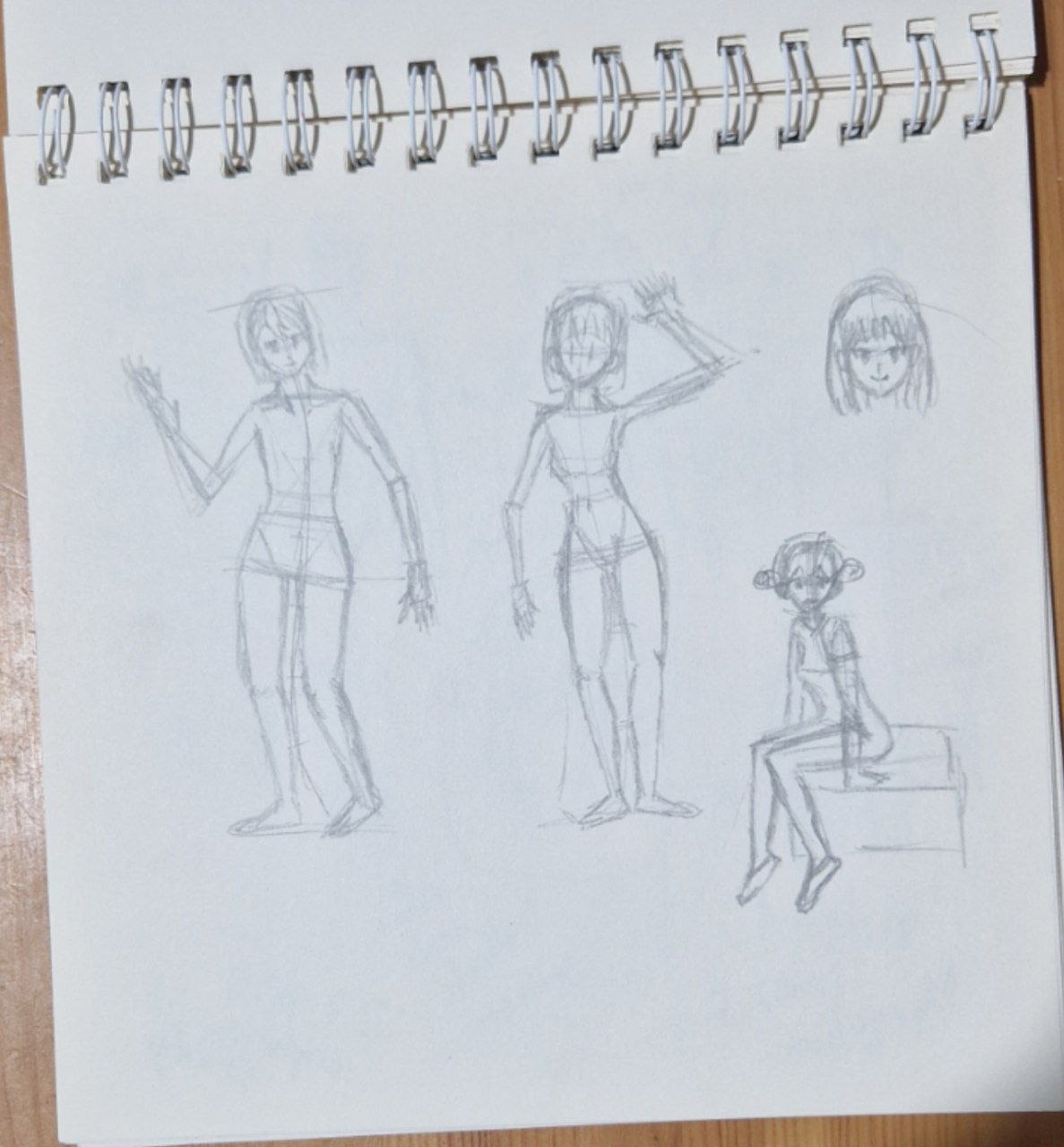
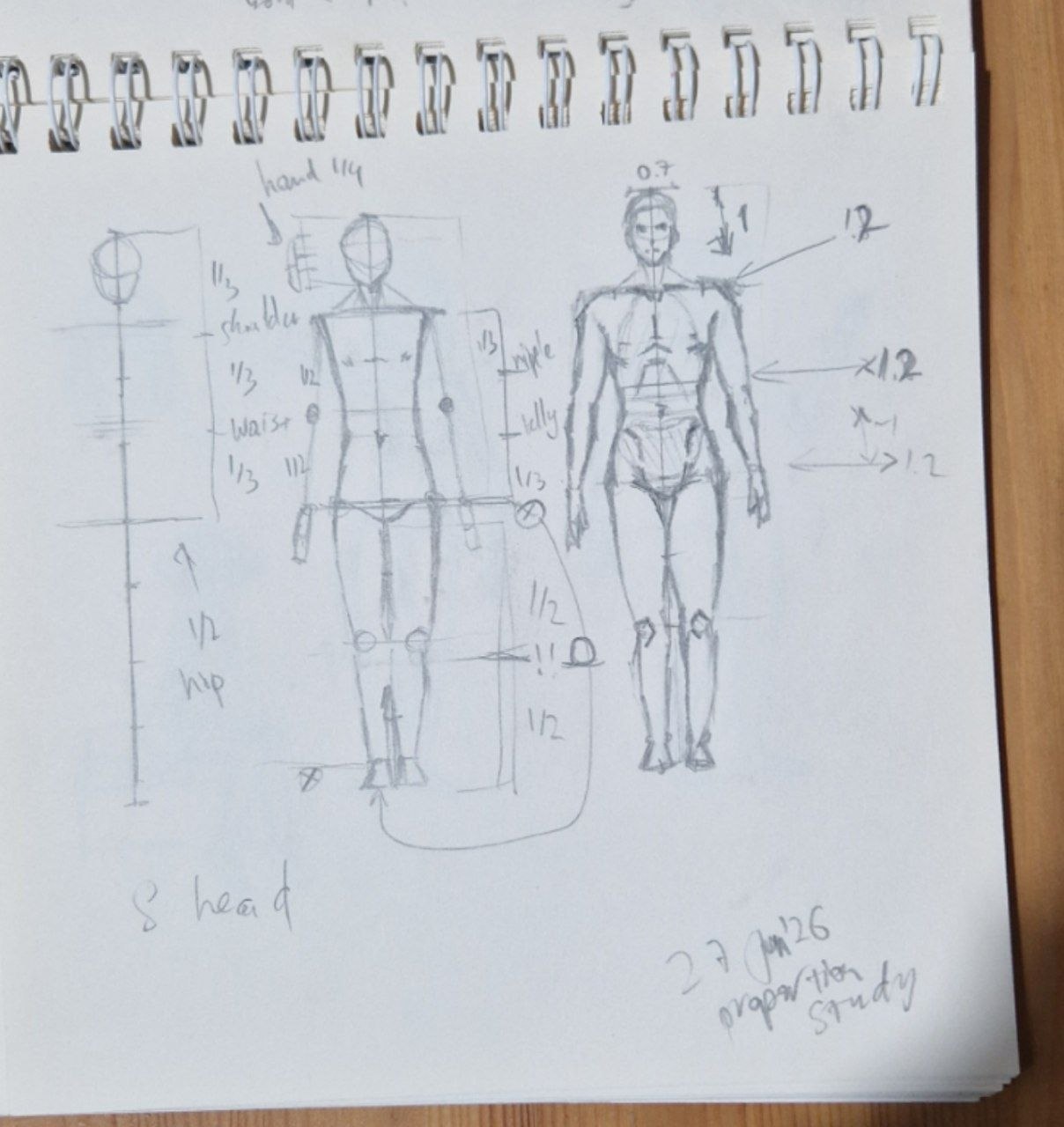
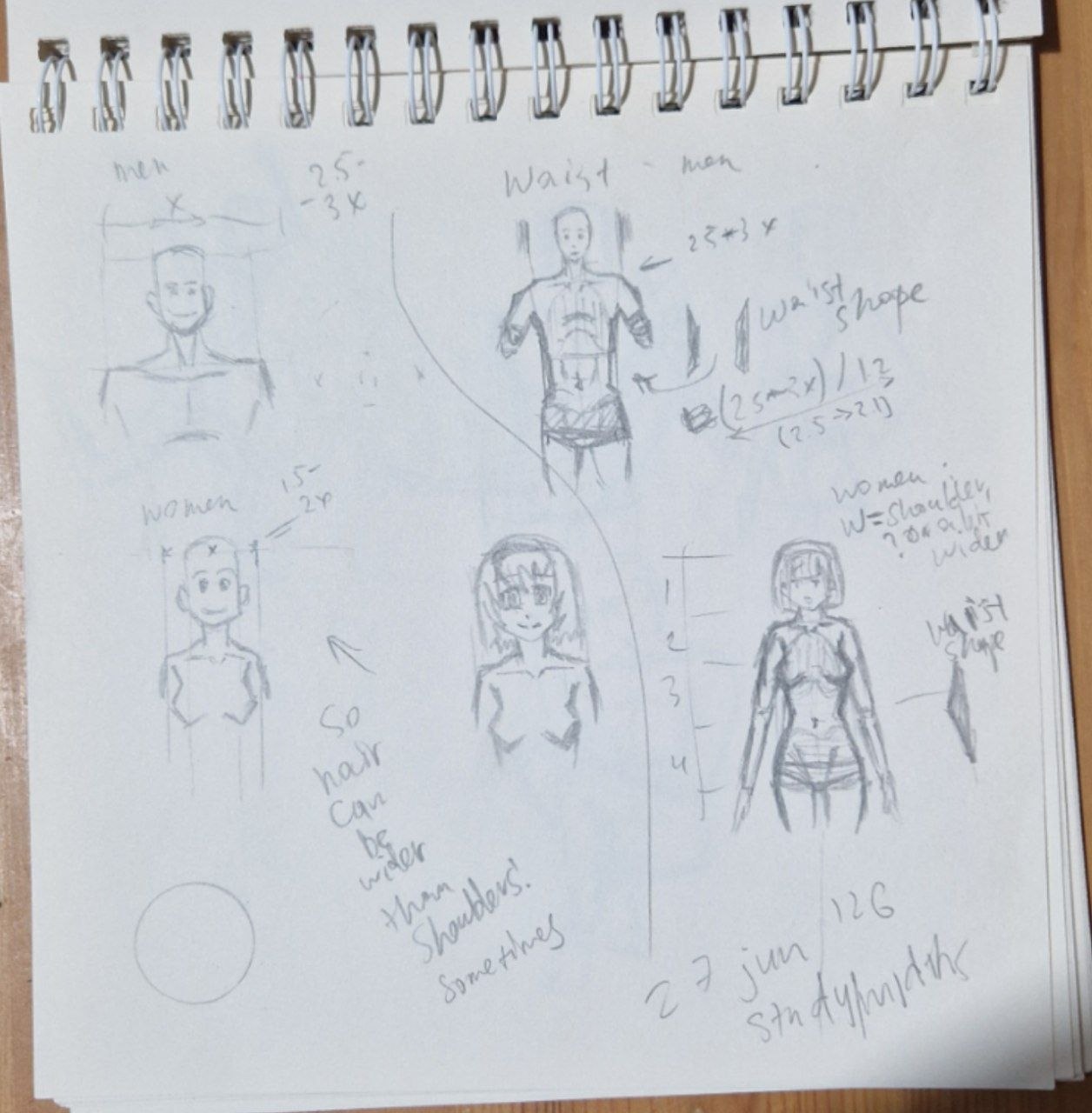
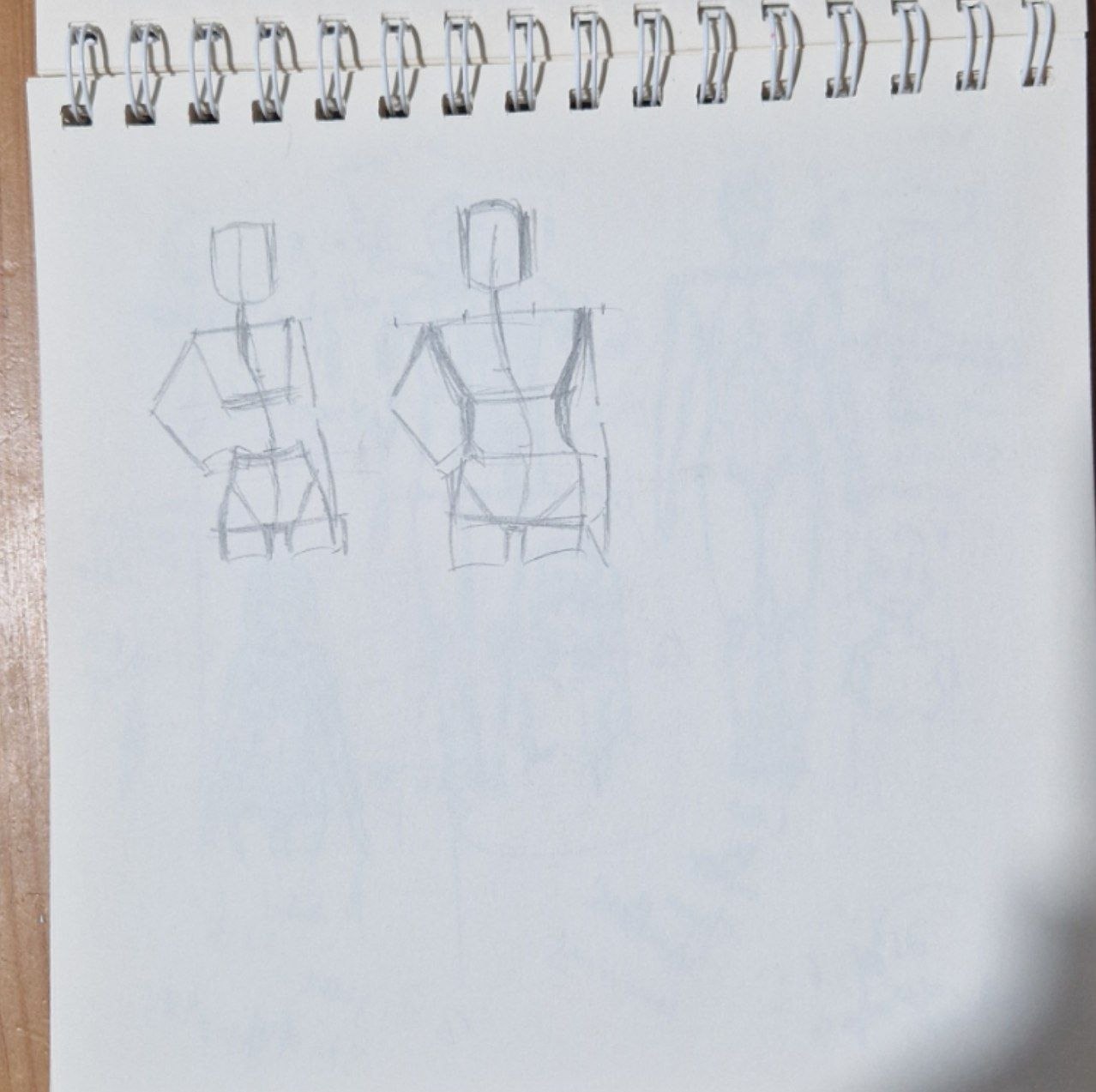
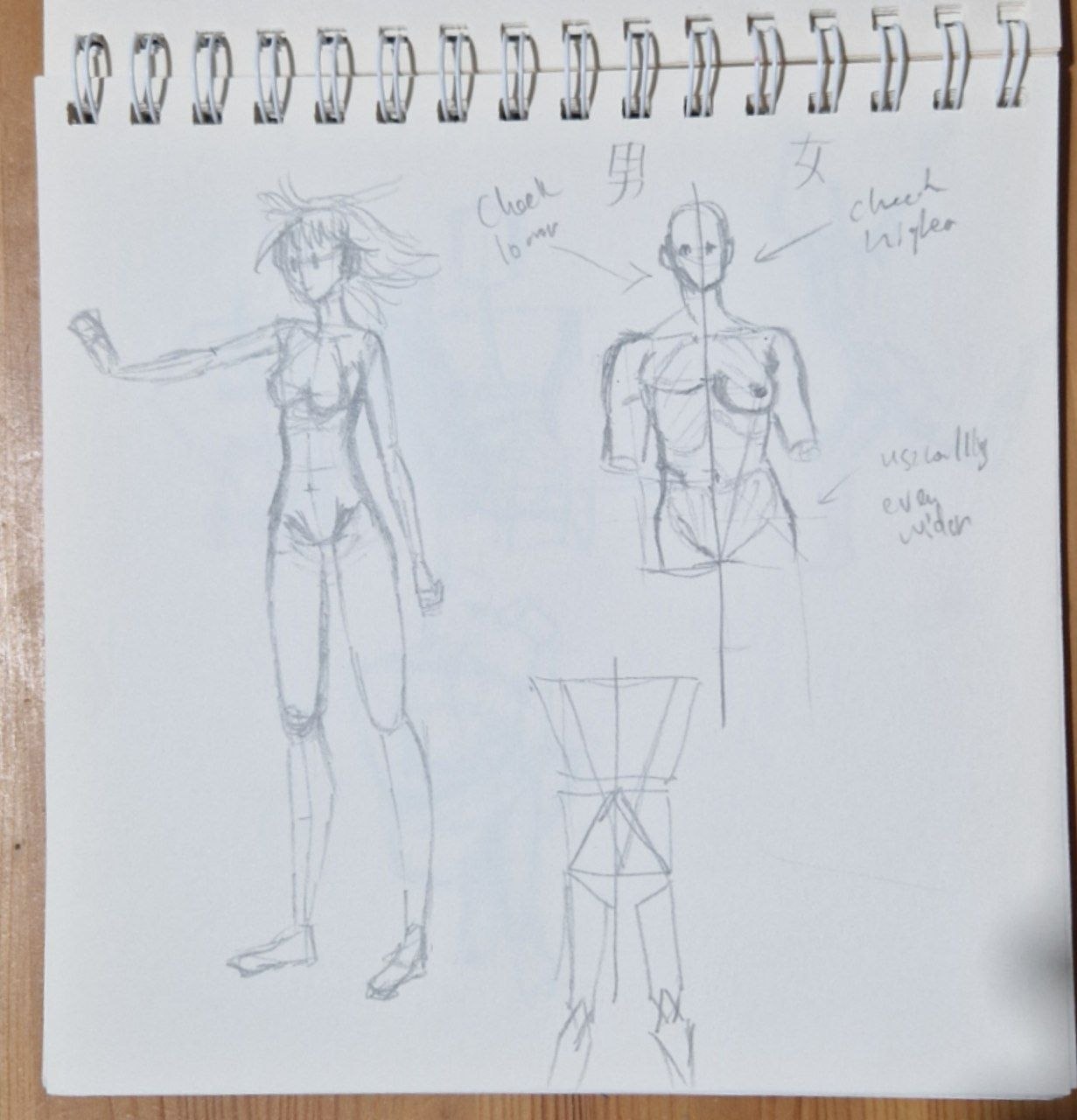
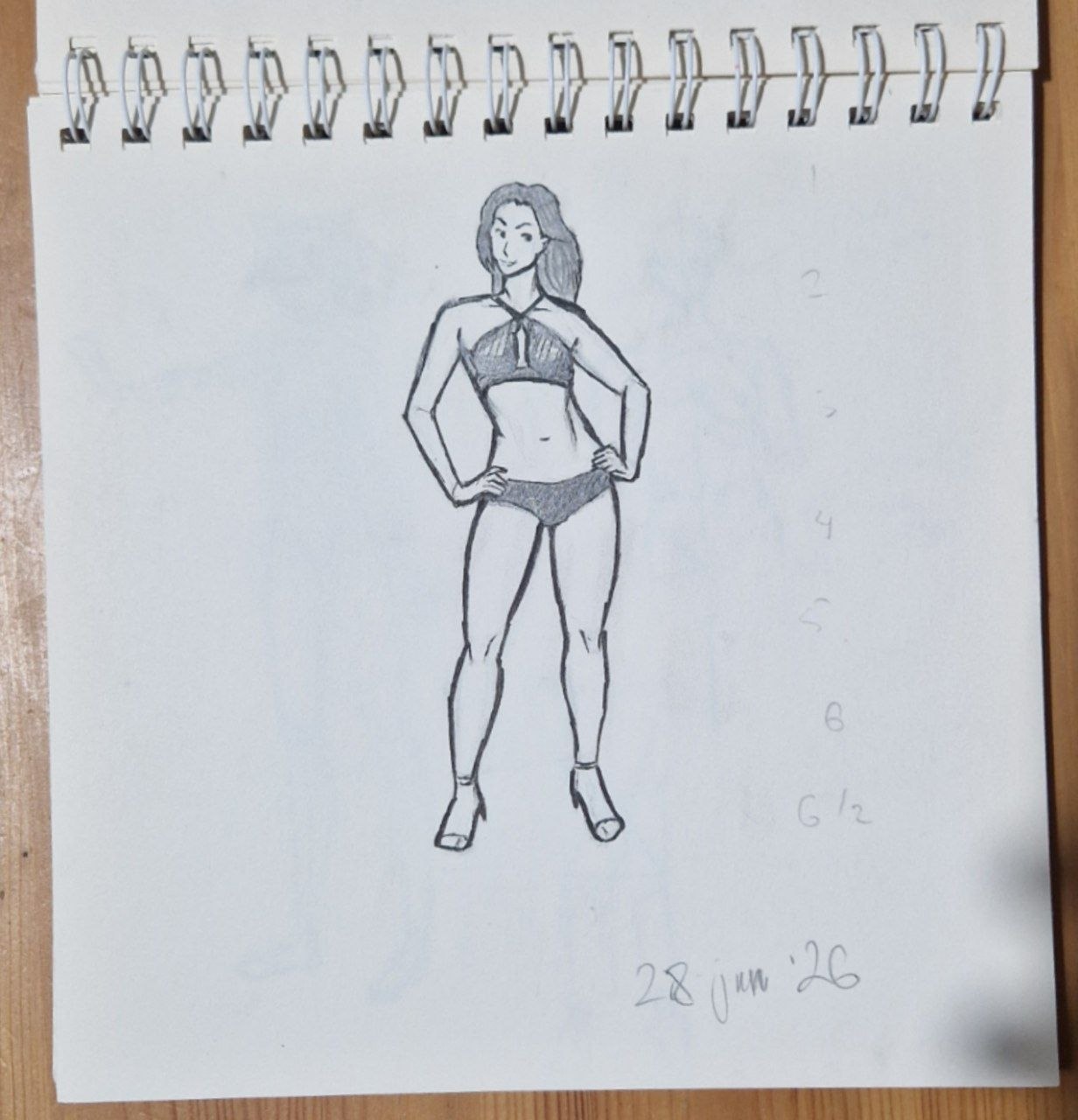
The manga textbook says that at this point I should be able to draw human poses based on photographs, as long as I capture the right things. This study is based on a photo published and broken into parts in the textbook. I got quite a few details wrong, but I think I got a few details right, too.
Wait, I want to draw comics?
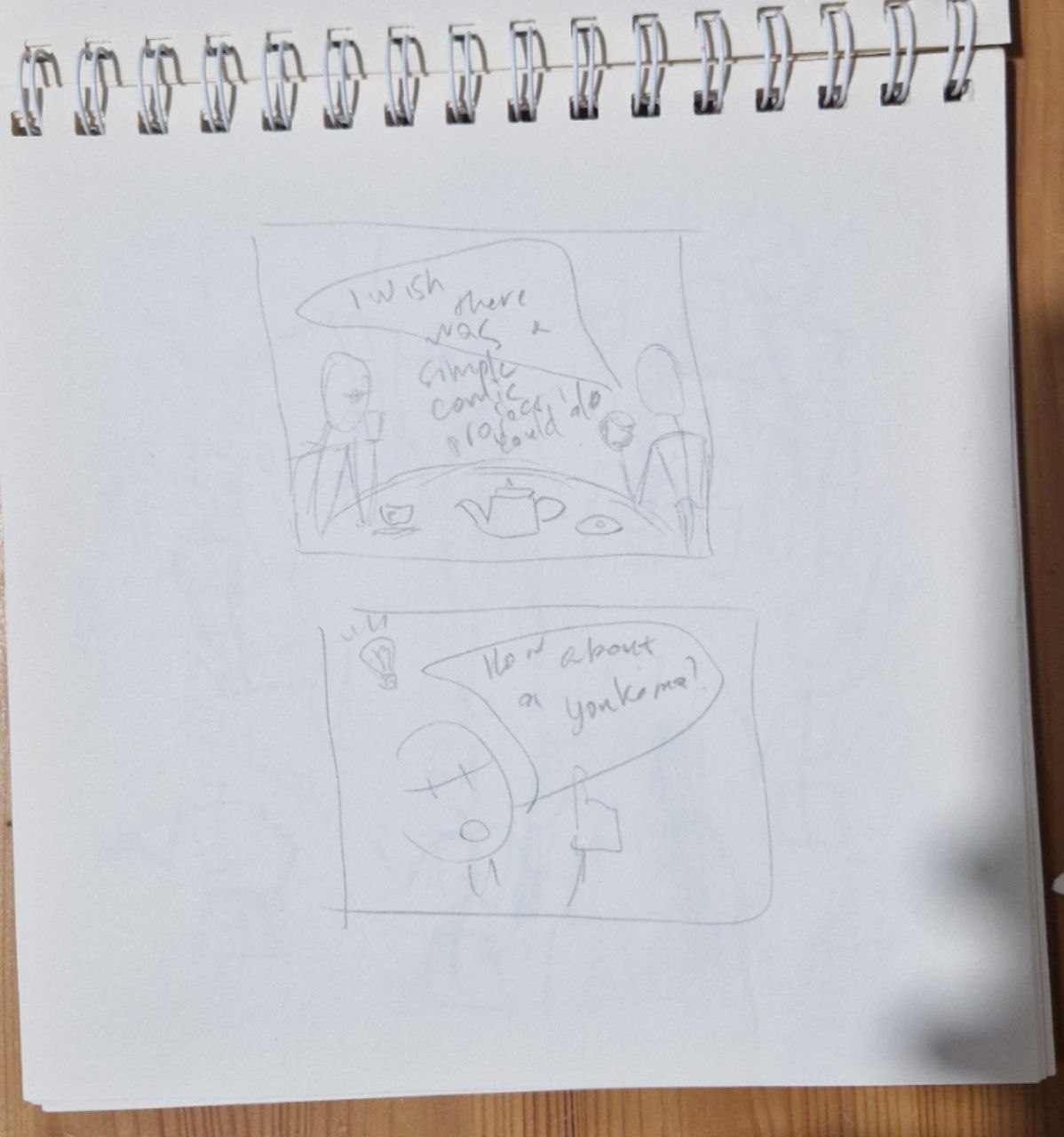
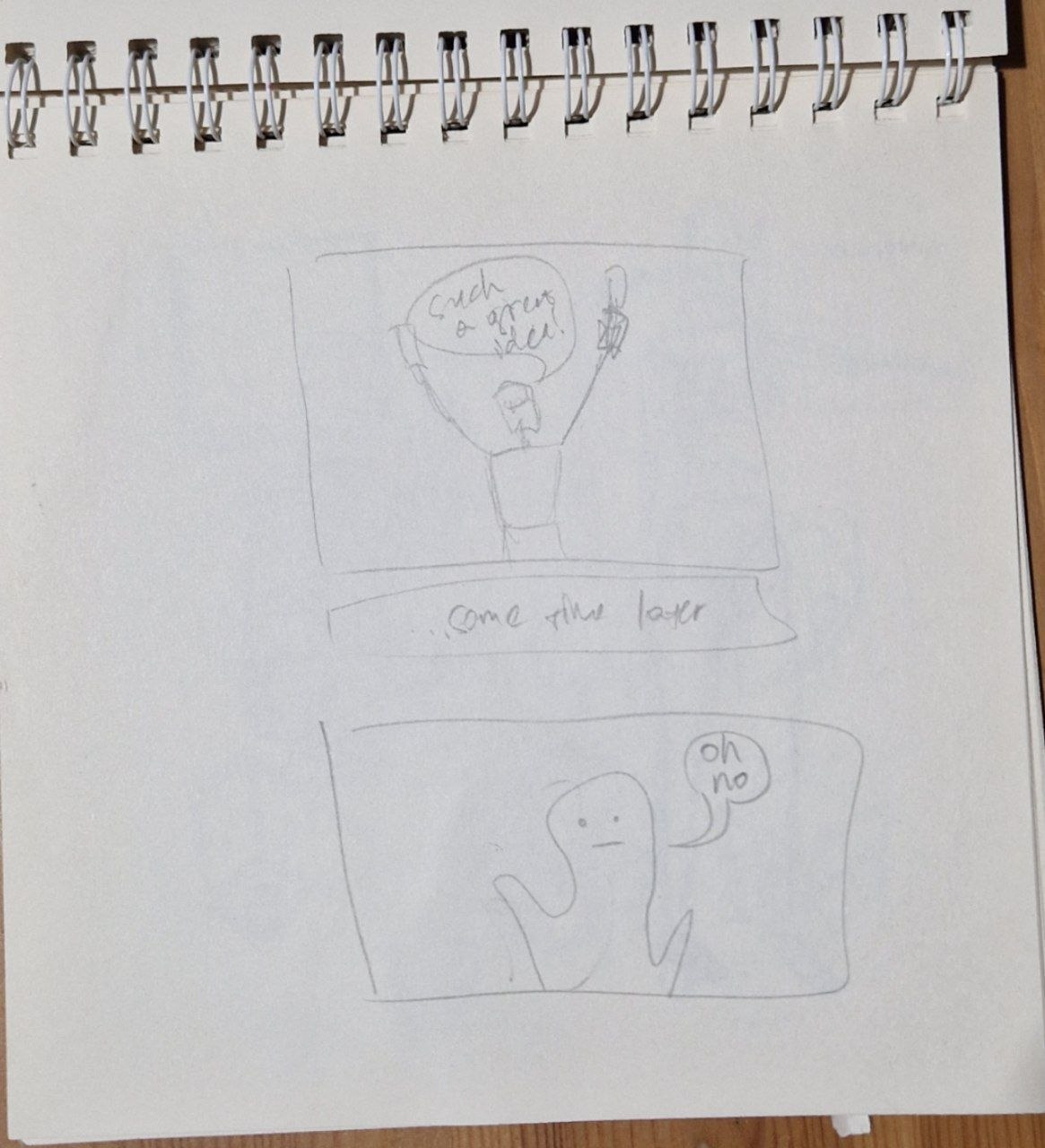
One evening, I realised that I wanted to draw comics. This discovery shocked me. I've been running a couple of webtoons as a writer and producer, so it should not have been surprising. And yet. Uh...
Also, behold: when I draw without references or thinking about checklists, I regress to my pre-practice levels. Apparently, this is normal.
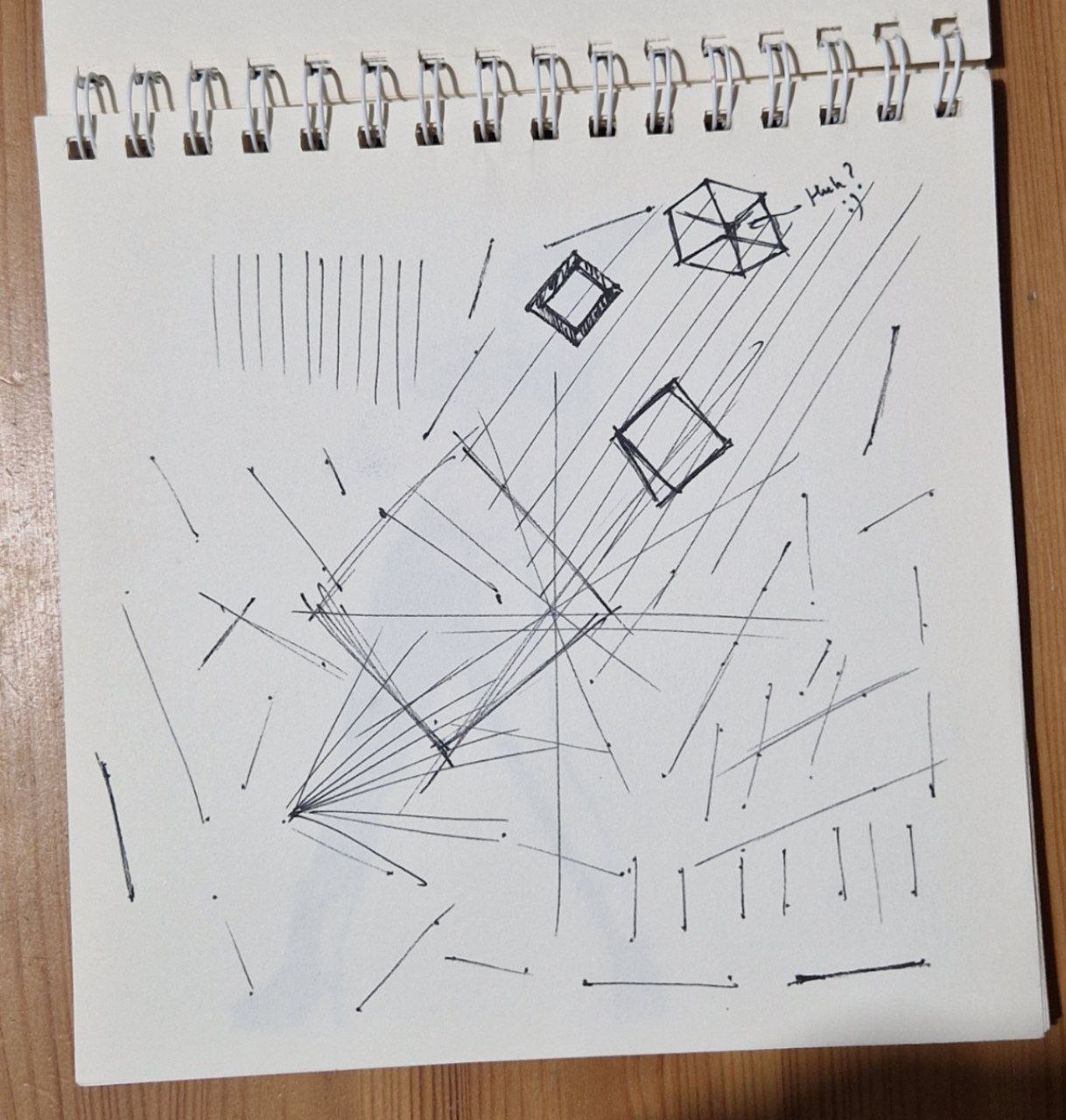
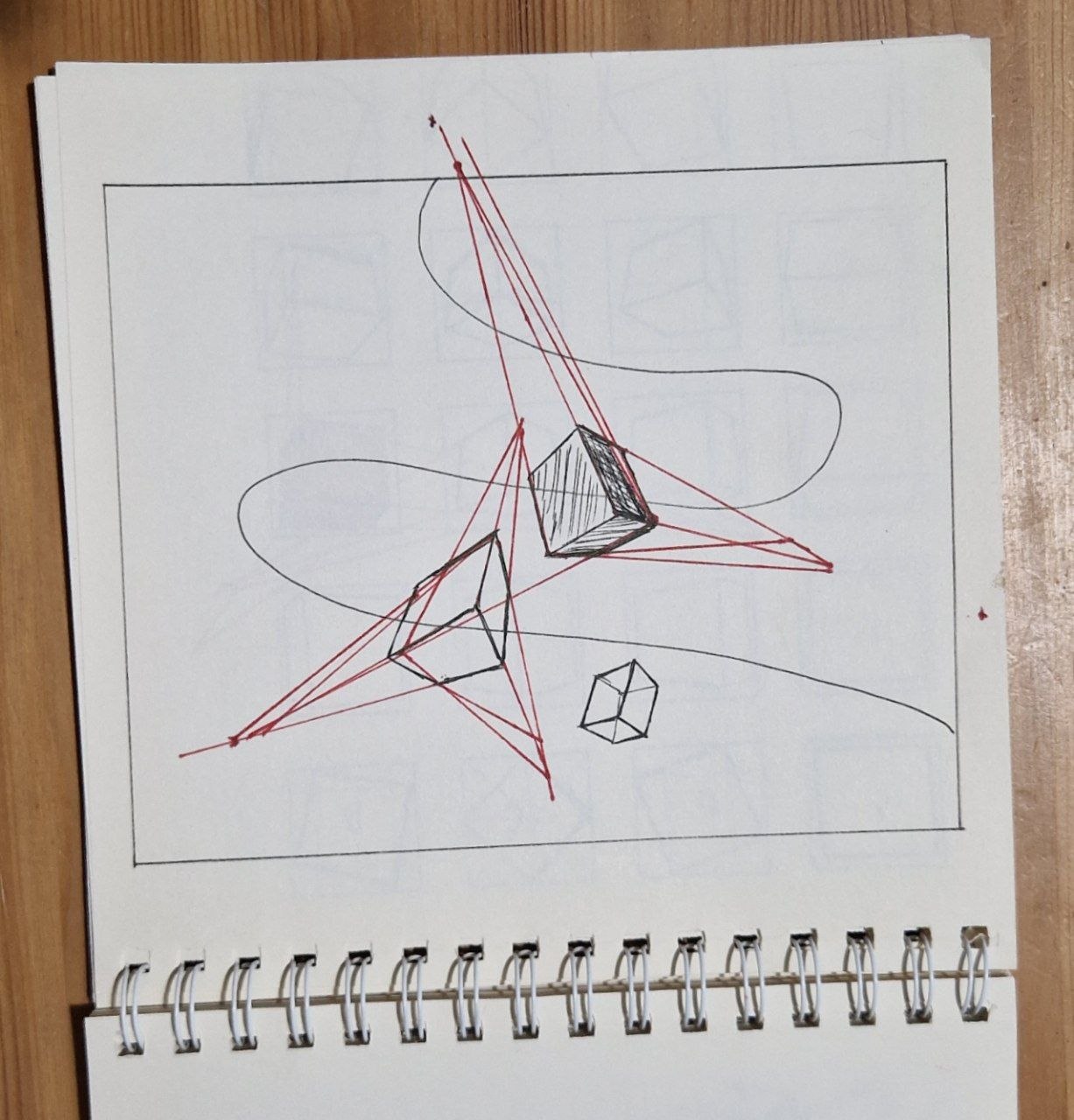
I can't draw a box
As I explained in the "highlights" section above, I discovered that I struggle to draw boxes. Drawing boxes is important for drawing faces.
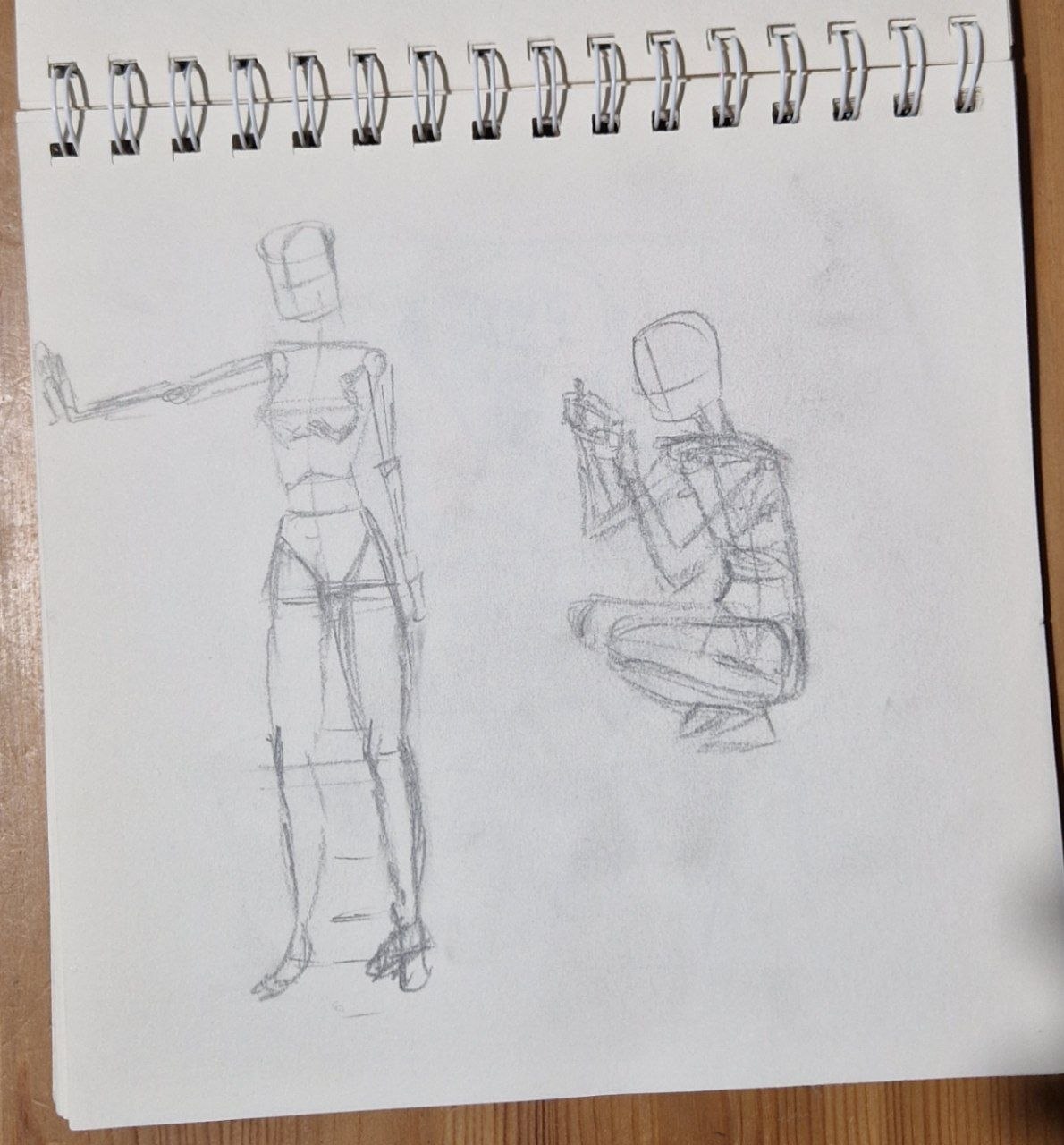
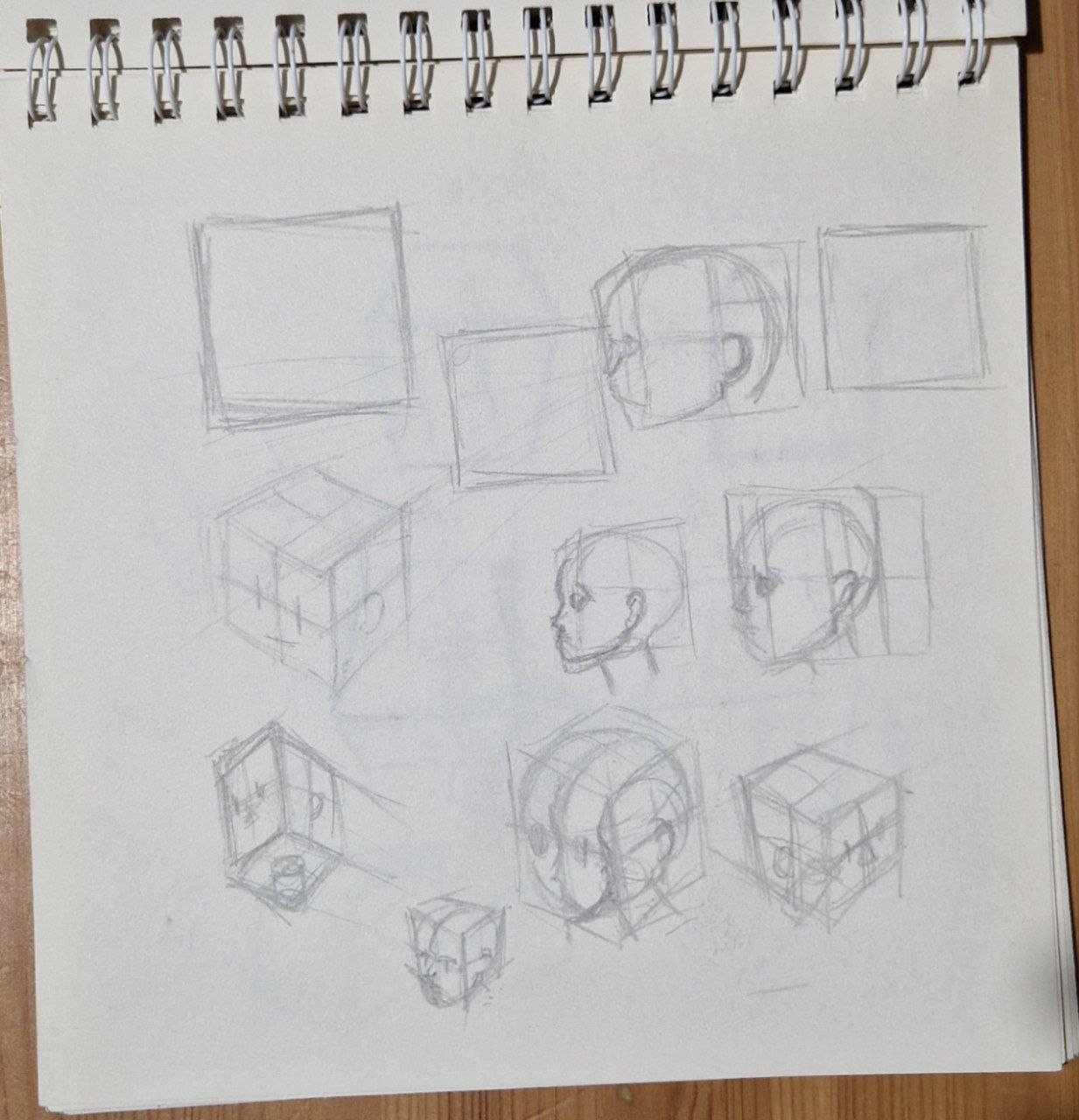
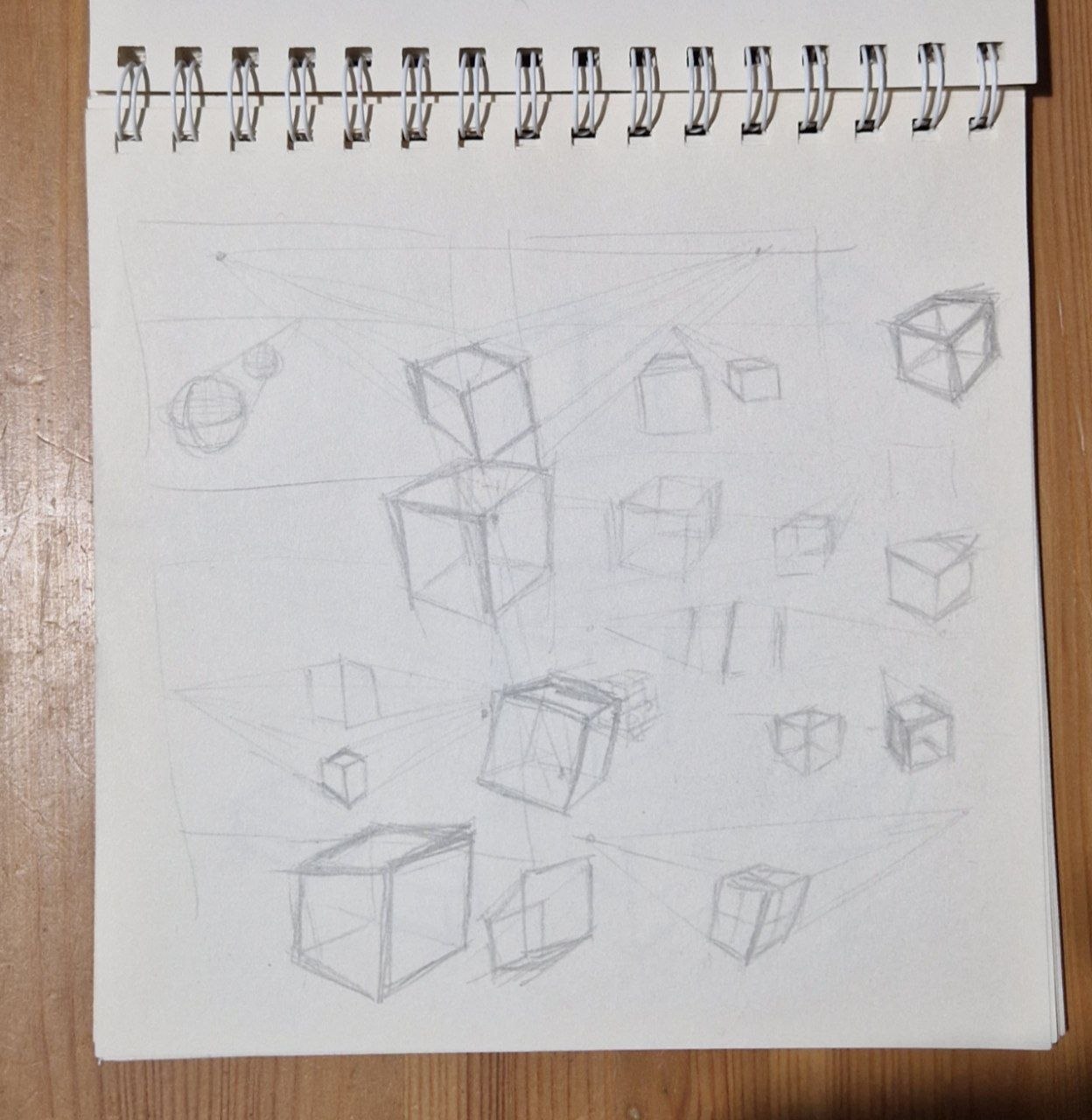
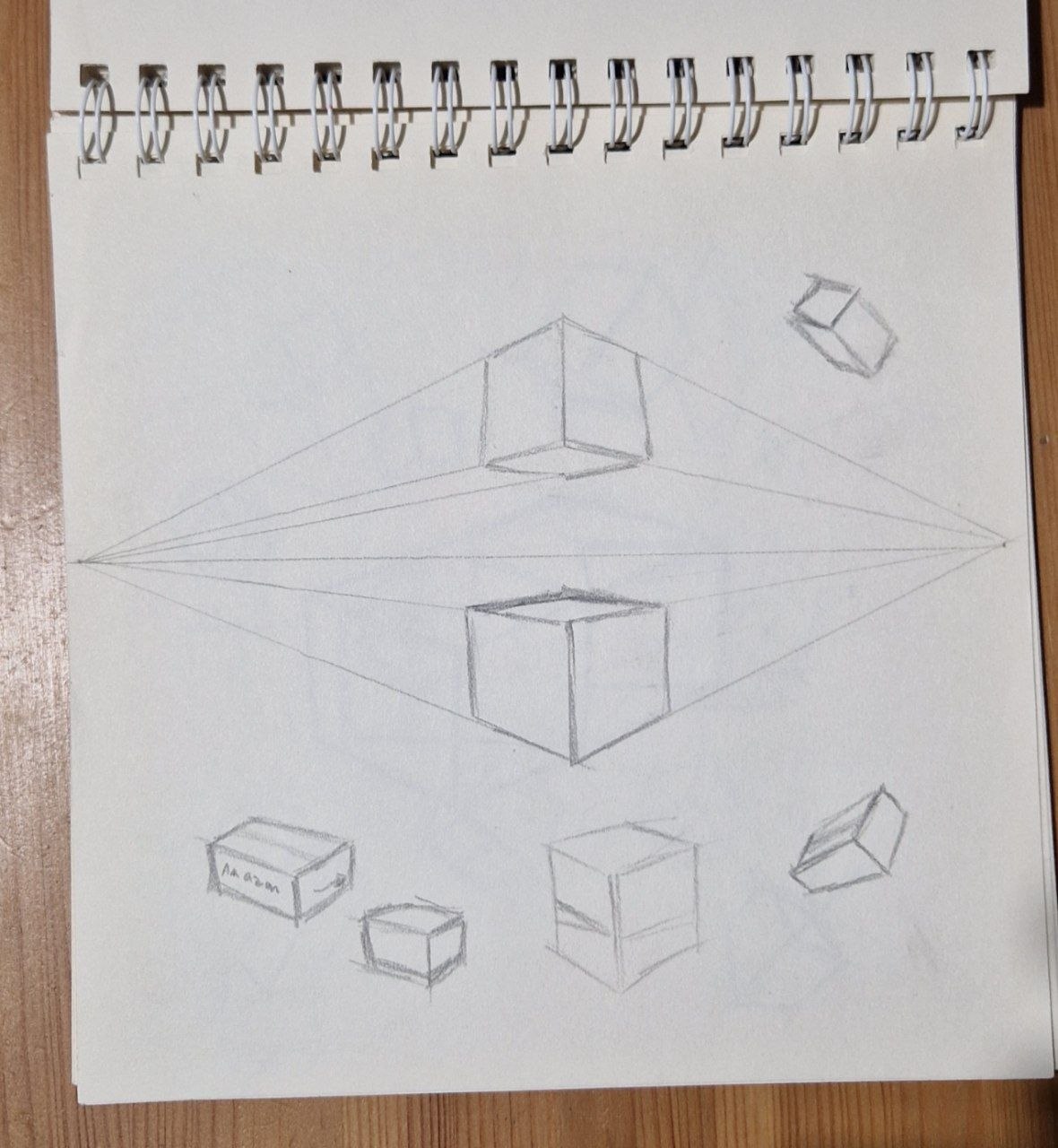
Drawing boxes is much faster than drawing humans, and it is easier to check for mistakes.
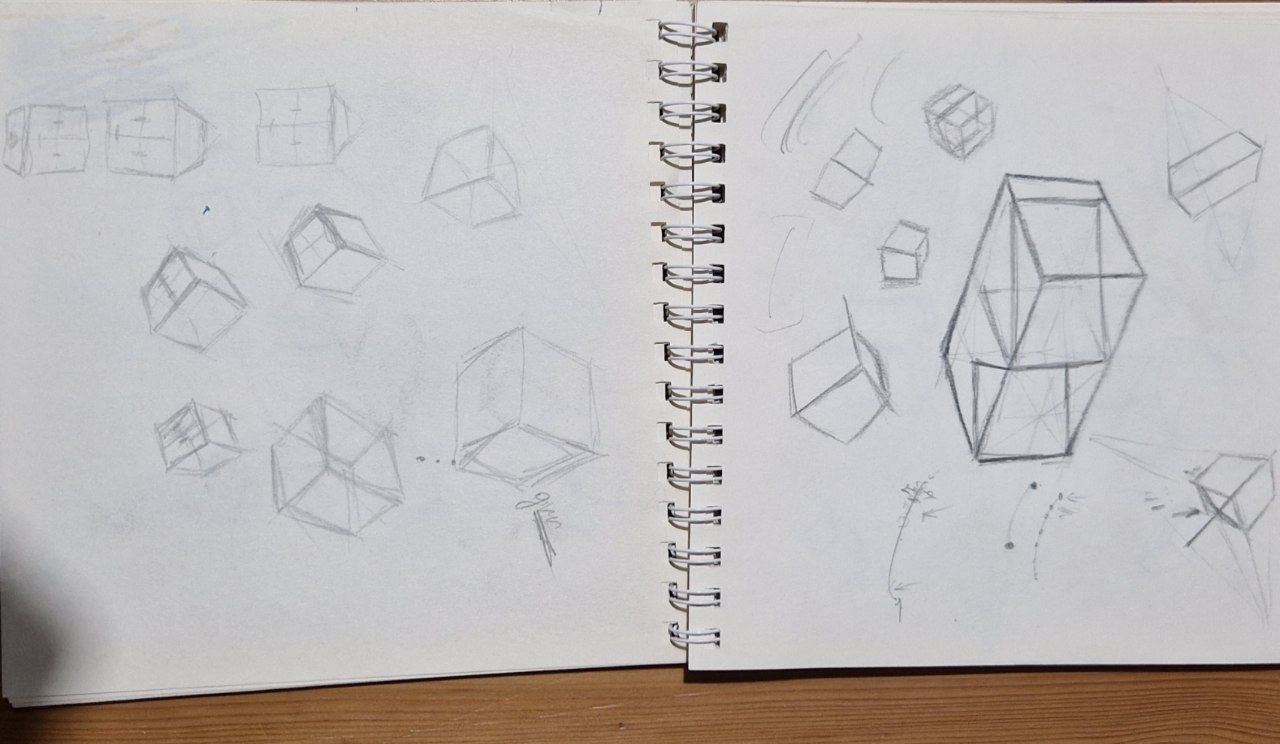
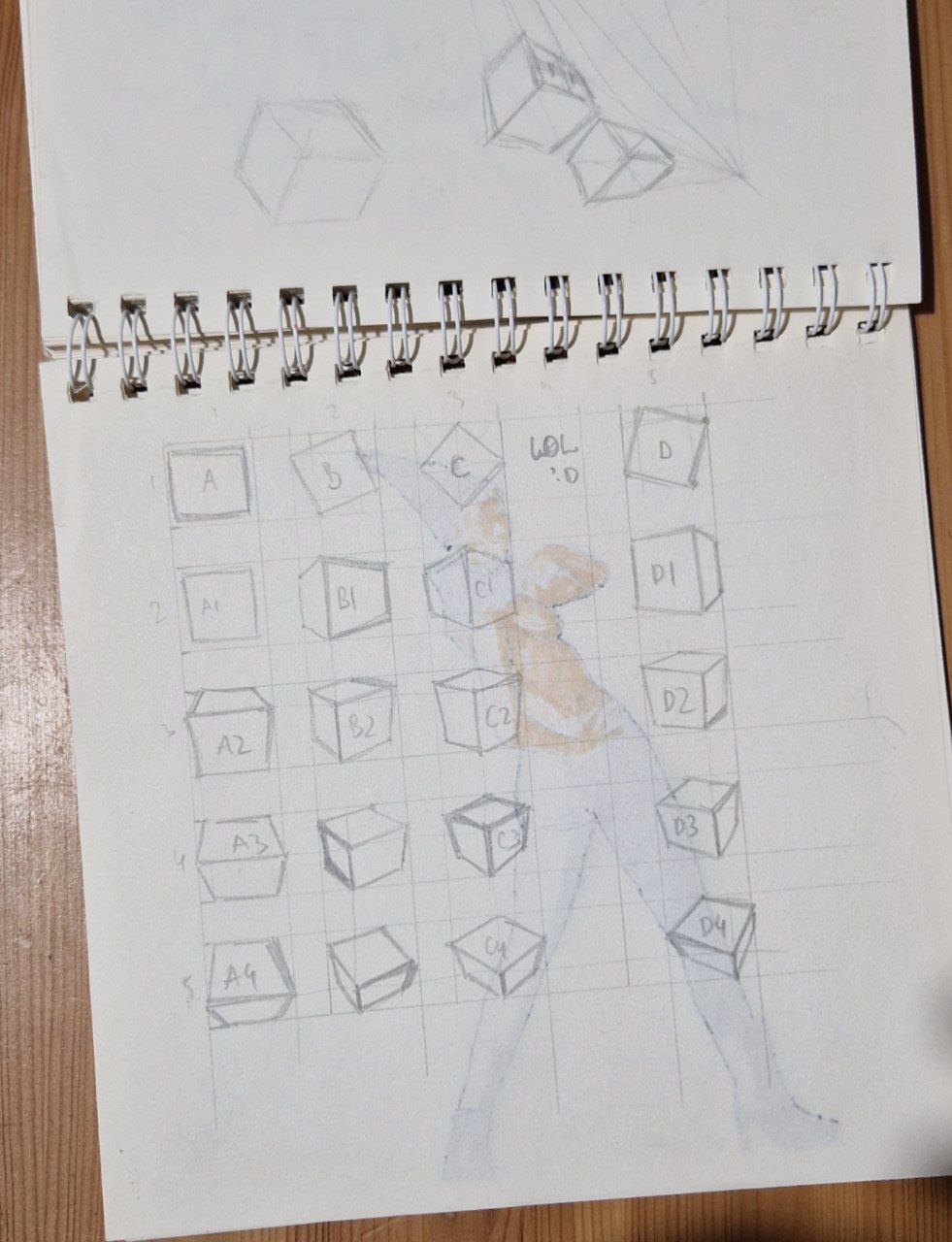
Frustrated with boxes, I decided to apply my new skill of drawing from a photo to practice. The boxes so frustrated me that I was secretly worried that I might have lost the ability to draw completely. But no, it seems I can draw even better than before.
The original photo was found on quickposes.com, and it happens to be a photo by Marcus Ranum from the collection "Random Women" (yikes!).
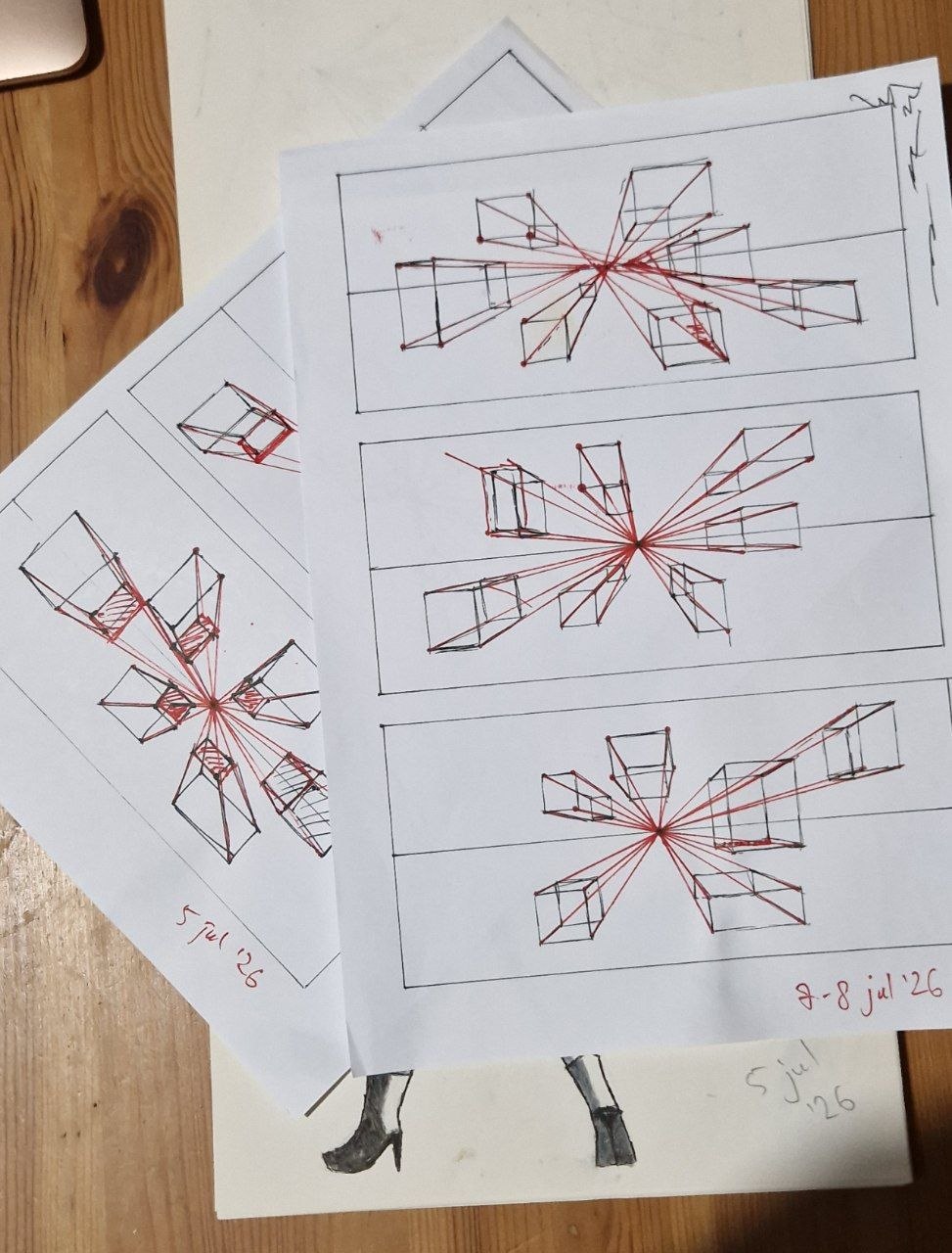
For my box drawing practice, I've loosely followed exercises from drawabox.com. My brain doesn't mesh with the teaching style there, but I found the exercises genuinely helpful when I applied them for my own needs.
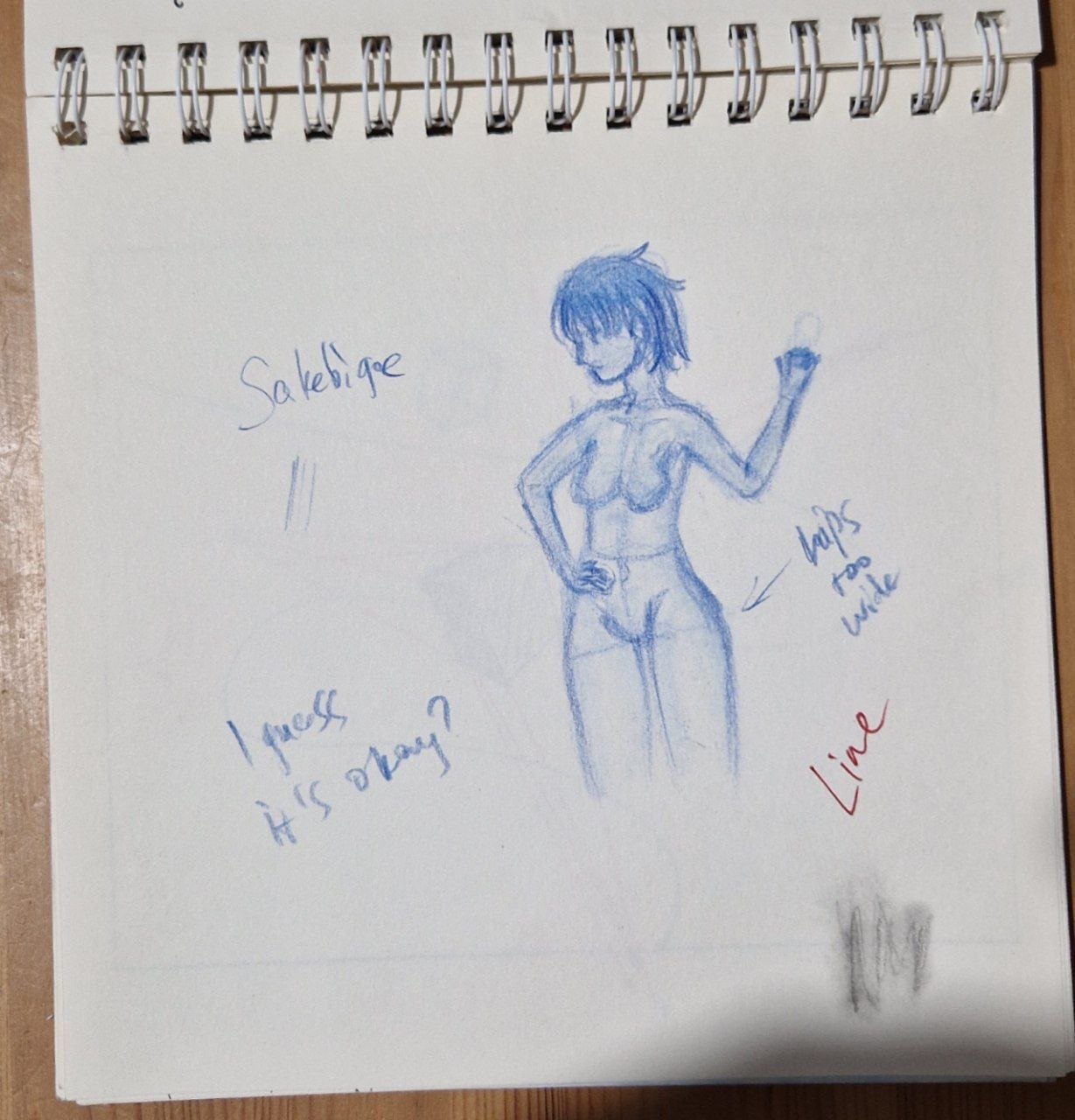
I've found my favourite red-blue pencil, and made a quick sketch of a pose from my head without any references. What a stark contrast with a careful drawing based on a photo!
The last few pages
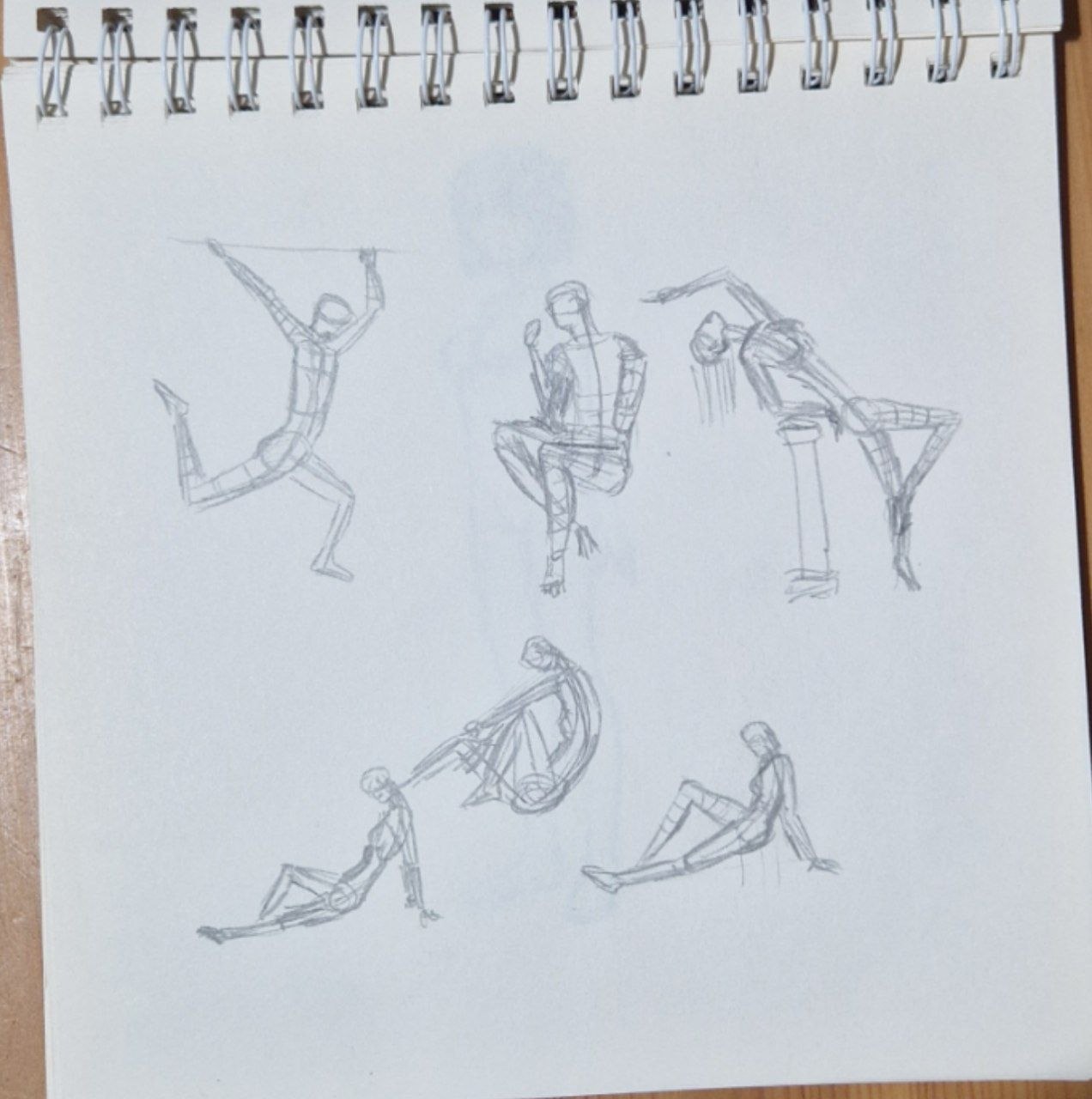
I've done a few more studies based on drawabox and Kren Cushart exercises, and then I realised I only have three more pages of the sketchbook left. Finally, no tiny square pages anymore!
What should I draw? A few quick poses, of course! The time limit was a bit too harsh, so I failed to capture the first pose.
I didn't feel like drawing yet another textbook study for the last sketchbook pages. Drawing something based on a photo with an interesting pose and a complex angle would be a good conclusion for the sketchbook, I thought. Why not draw 2B from Nier Automata then?
As it happens, the reference screenshot I found was from promo material for SoulCalibur VI featuring a DLC with Nier Automata's 2B.
With the last sheet left blank and no energy left, I decided to cheat and do a pen test.
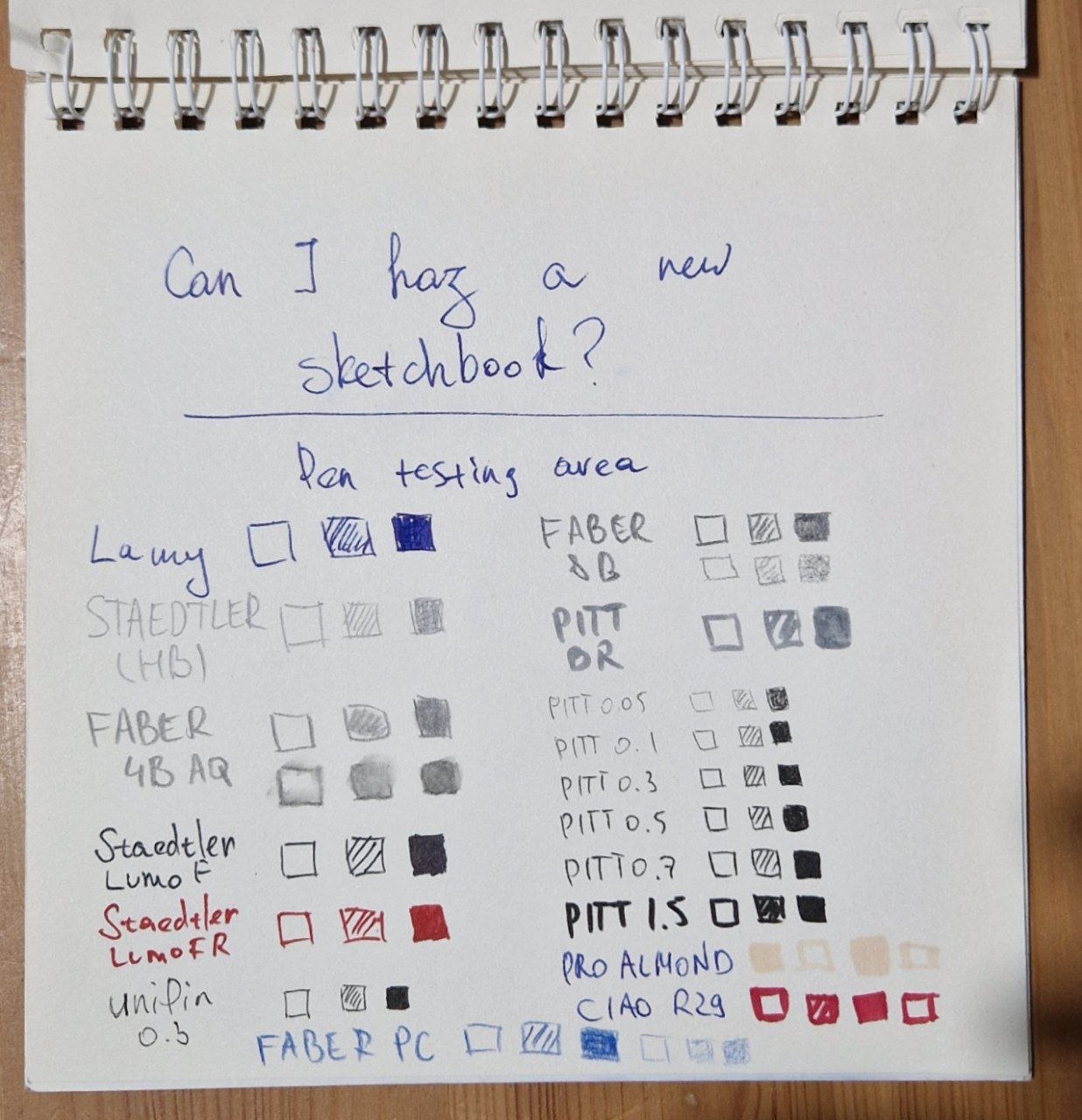
This is not my last sketchbook
I need a new sketchbook, fast, before I lose the habit of nearly-daily drawing that I've built. Nah, just kidding, I already started one.
P.S. I am so close and, at the same time, so far away from being able to draw everything I want to draw.
To be continued...